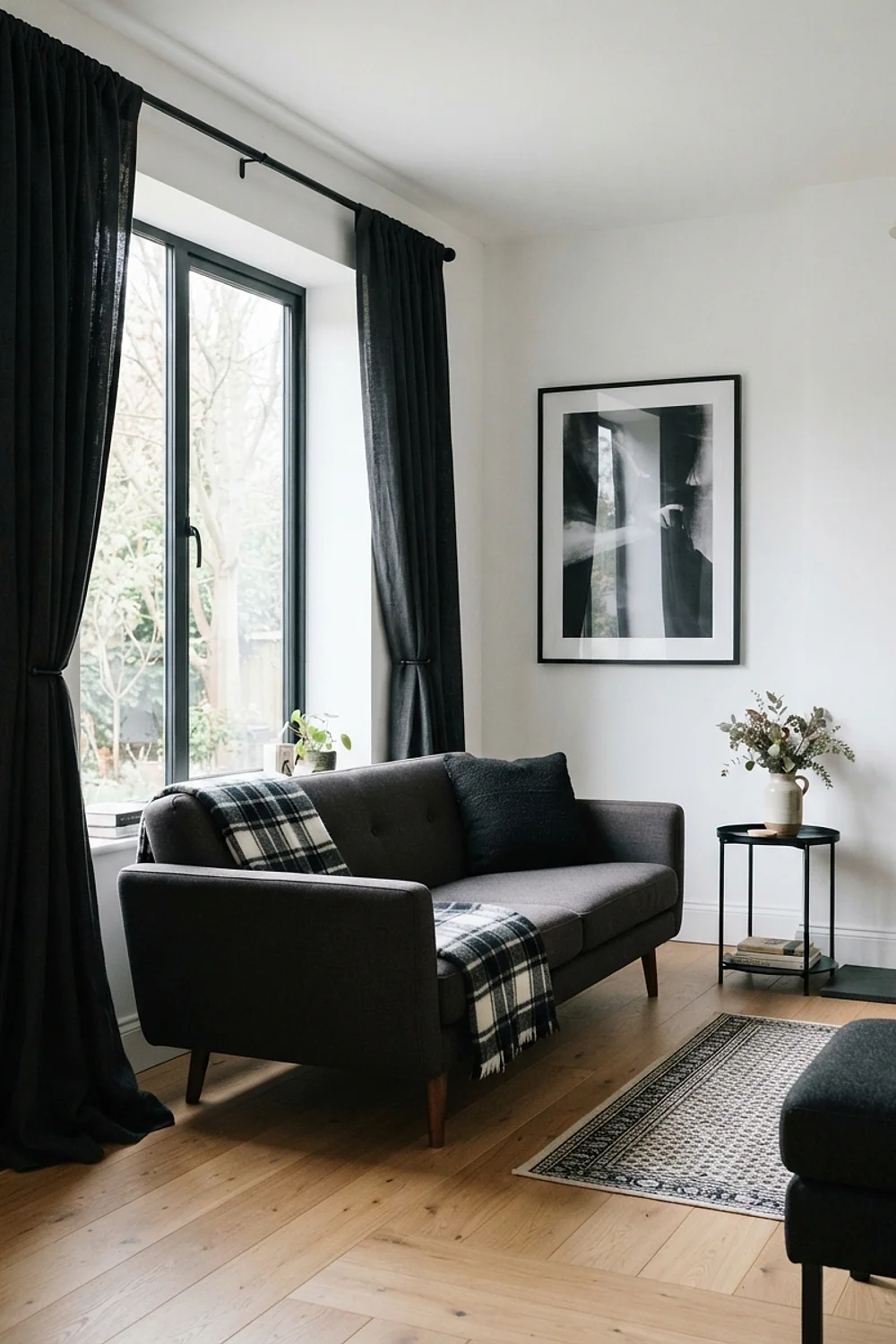
31 Living Room Curtains Ideas With Real Measurements
A 48-inch window, one free Saturday and a tape measure are enough to change how a room feels at 4pm. These living room curtains ideas follow 31 before-and-after changes, including the ones that went sideways.
Each entry covers the starting problem, the fix and the numbers behind it. Skim the headings, steal the measurements, and skip anything that doesn’t fit your windows.
Living room curtains ideas: Starting points for your space
Plain white voile sheers on a builder-beige window
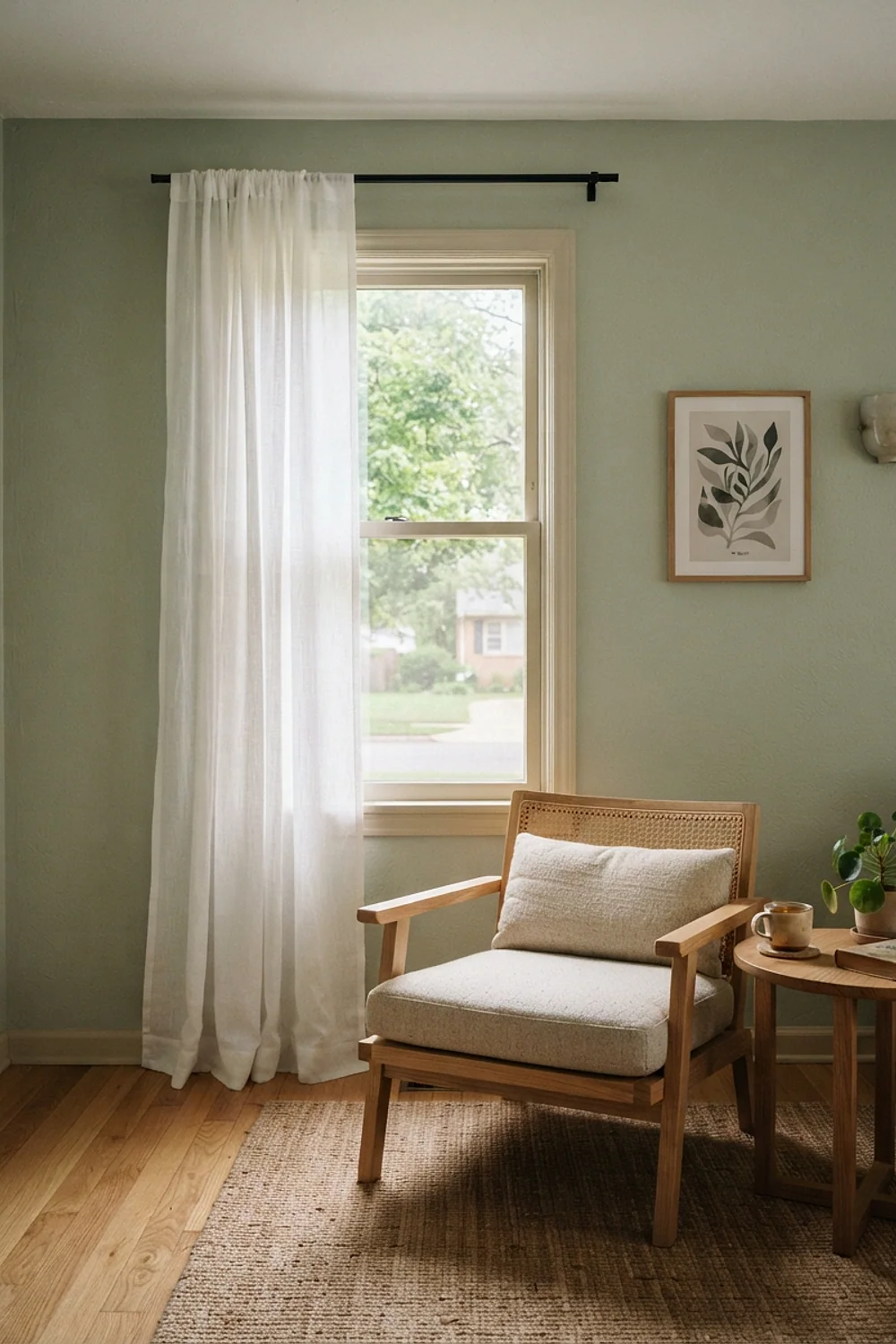
Before: a bare 60-inch window with a dusty mini blind and beige walls that looked flat by 3pm. After: two white voile panels, 50 inches wide each, gathered on a slim rod. The glare turned into soft, even daylight and the beige stopped looking so tired.
This suits north-facing rooms that need every bit of light and a little privacy. The common mistake is buying panels with no extra width. A sheer needs about 2 times the window width in fabric, or it hangs like a stretched bedsheet.
Two ready-made 96-inch sheer panels usually run $40-60, which makes this the cheapest reveal on the list.
Panels hung 6 inches below the ceiling instead of 4 above the frame
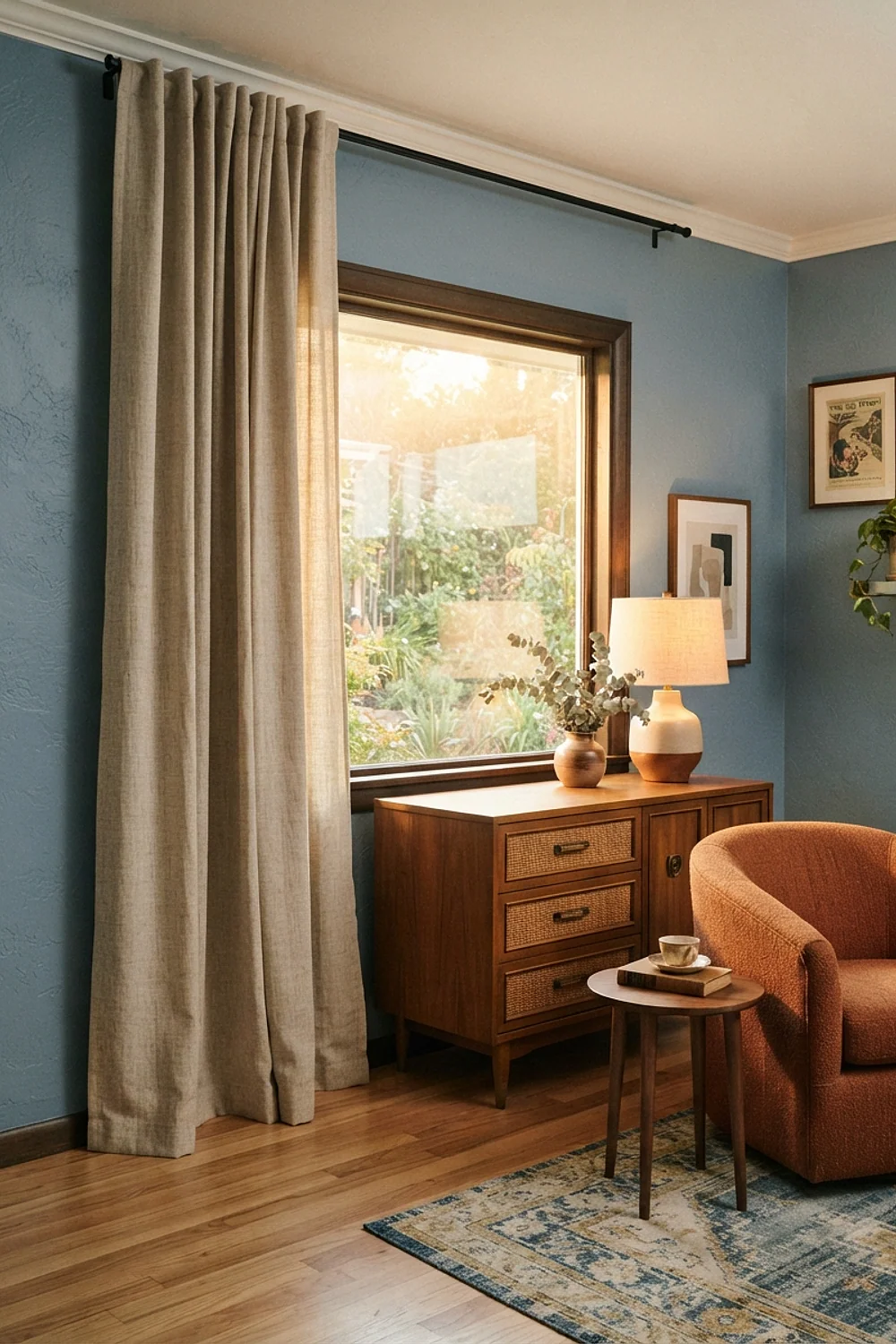
On an 8-foot wall, a 48-inch-tall window had its rod squeezed right over the trim. The window looked like a postage stamp. After: the rod moved up to 6 inches under the ceiling, with 96-inch panels falling to a half-inch above the floor.
That one move adds visual height of 20 inches or more, because the eye reads the curtain line as the top of the window. It works best in rooms with ceilings of 8 to 9 feet.
Watch the bracket screws. Hitting a ceiling joist or crown molding stops the rod from sitting level, so find the studs first.
A 38-inch alcove closed off with a ceiling track
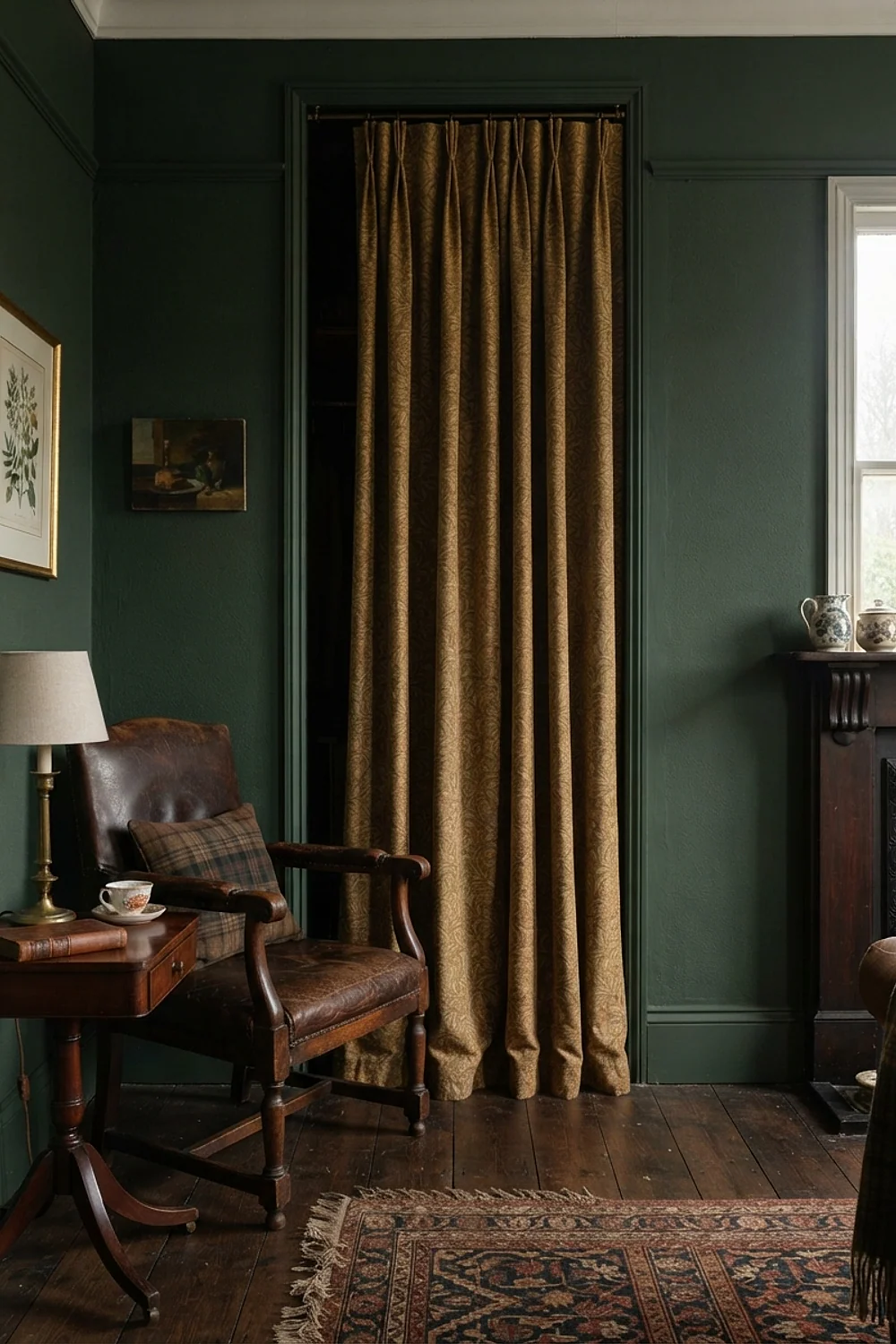
Before: open shelves holding board games, a router and a tangle of cables, all visible from the sofa. After: a white ceiling track and one linen panel cut to 76 inches wide, double the alcove, that slides shut in one pull.
Curtains beat doors here because nothing swings into the walkway. The trade-off is dust, since fabric won’t seal the way a cabinet door does.
Hem the panel 1 inch off the floor so it clears a rug edge. And keep the track at the ceiling line, because a rod at shelf height leaves the top shelf exposed.
Mid-weight linen at about 7 ounces per square yard
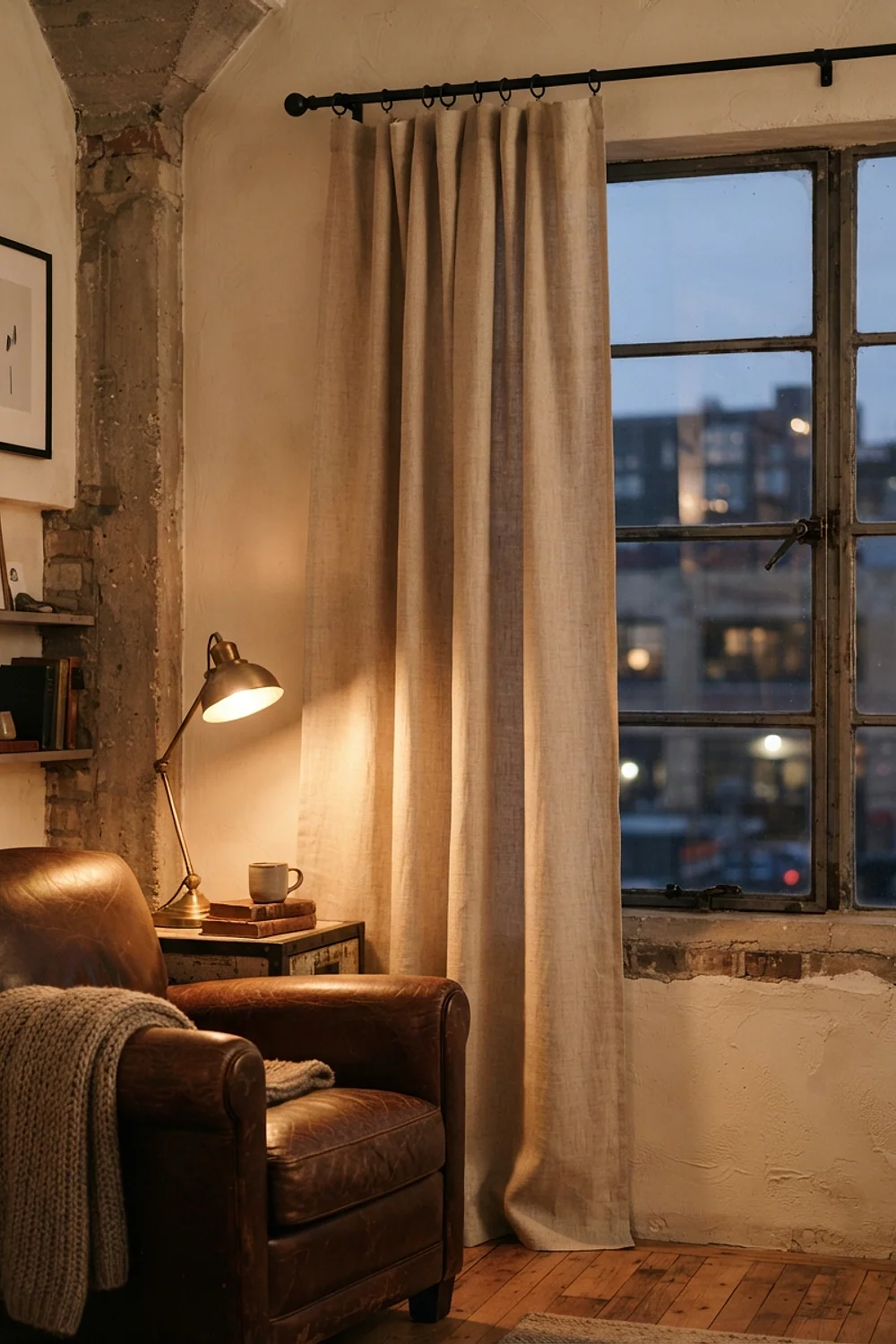
Before: stiff polyester panels that held their pleats like cardboard. After: washed linen with loose, uneven folds that catch window light and soften the whole wall. Hand-feel matters here, because linen has a dry, papery texture that polyester can’t copy.
Linen suits relaxed rooms with wood and plaster, and it hates humidity. Expect it to stretch 1 to 2 inches in damp weather, so hang it slightly short and let gravity finish the job.
Ready-made linen panels in 96 inches typically cost $60-110 each, and lining them adds weight without losing the texture.
A double rod holding sheers behind full drapery
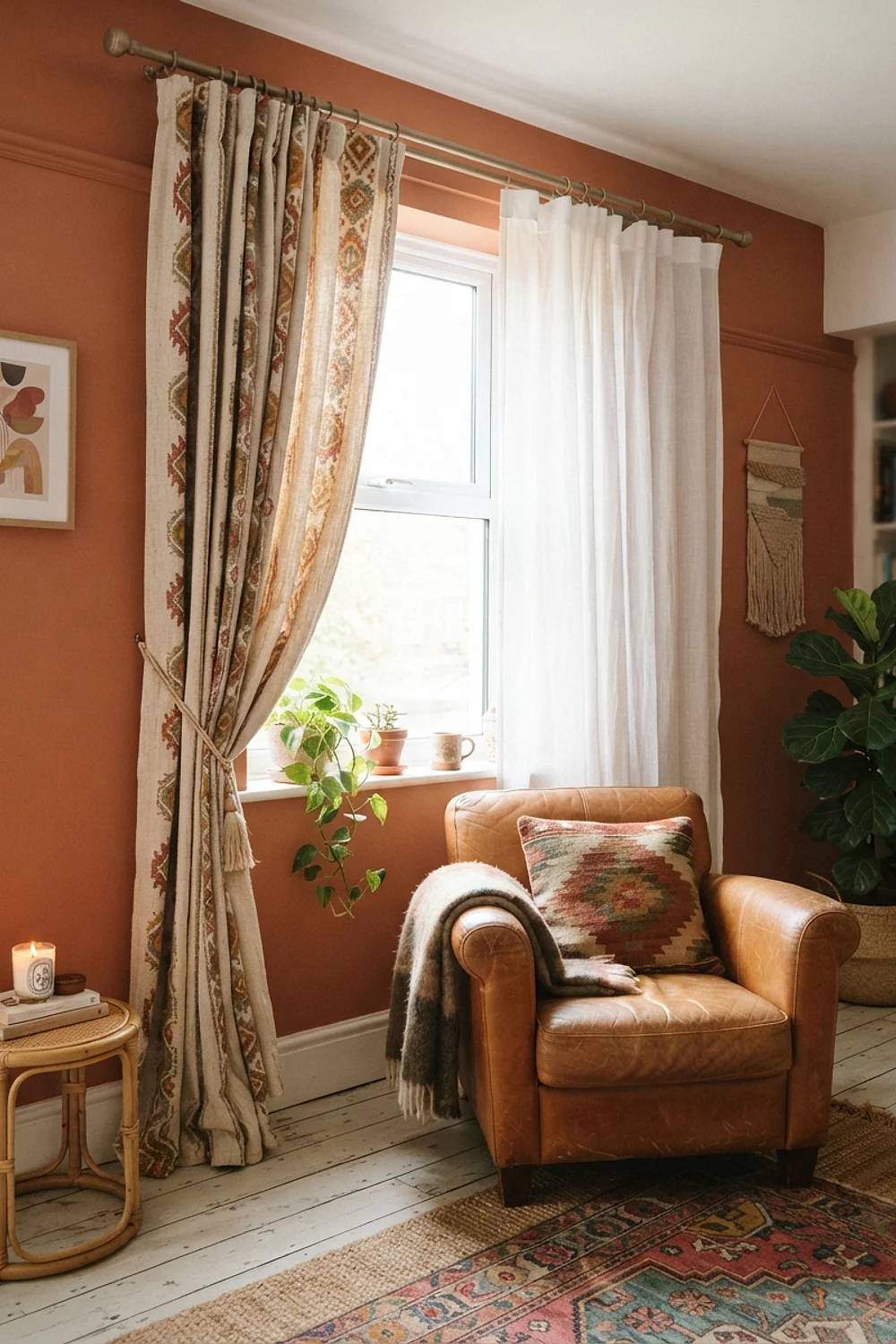
Before: one heavy panel that either blocked the light or left the room exposed. After: a sheer on the back rod for daytime, a lined drapery on the front rod for evenings. Two settings, one window.
This styling works for people who want privacy at noon and a cocoon at 8pm. The rods need a projection of at least 4.5 inches on the front bracket, or the layers drag against each other and snag.
Hang the sheer first, then the drapery. Reversing the order is a headache nobody needs.
Store-bought 84-inch panels that stop 3 inches short

Before: curtains hung at frame height on an 8-foot wall, hovering over bare floor like flood pants. After: 96-inch panels, rod raised, hem sitting a half-inch above the boards. The room stopped looking like it was wearing the wrong size.
This is the most common mistake in the whole list, and it applies to nearly every standard 8-foot room. Ready-made panels come in 84, 96, 108 and 120 inches, so measure from rod to floor before choosing one.
Pooling fabric 2 inches on the floor looks romantic, but it collects pet hair and fights the vacuum.
One continuous track around a three-window bay
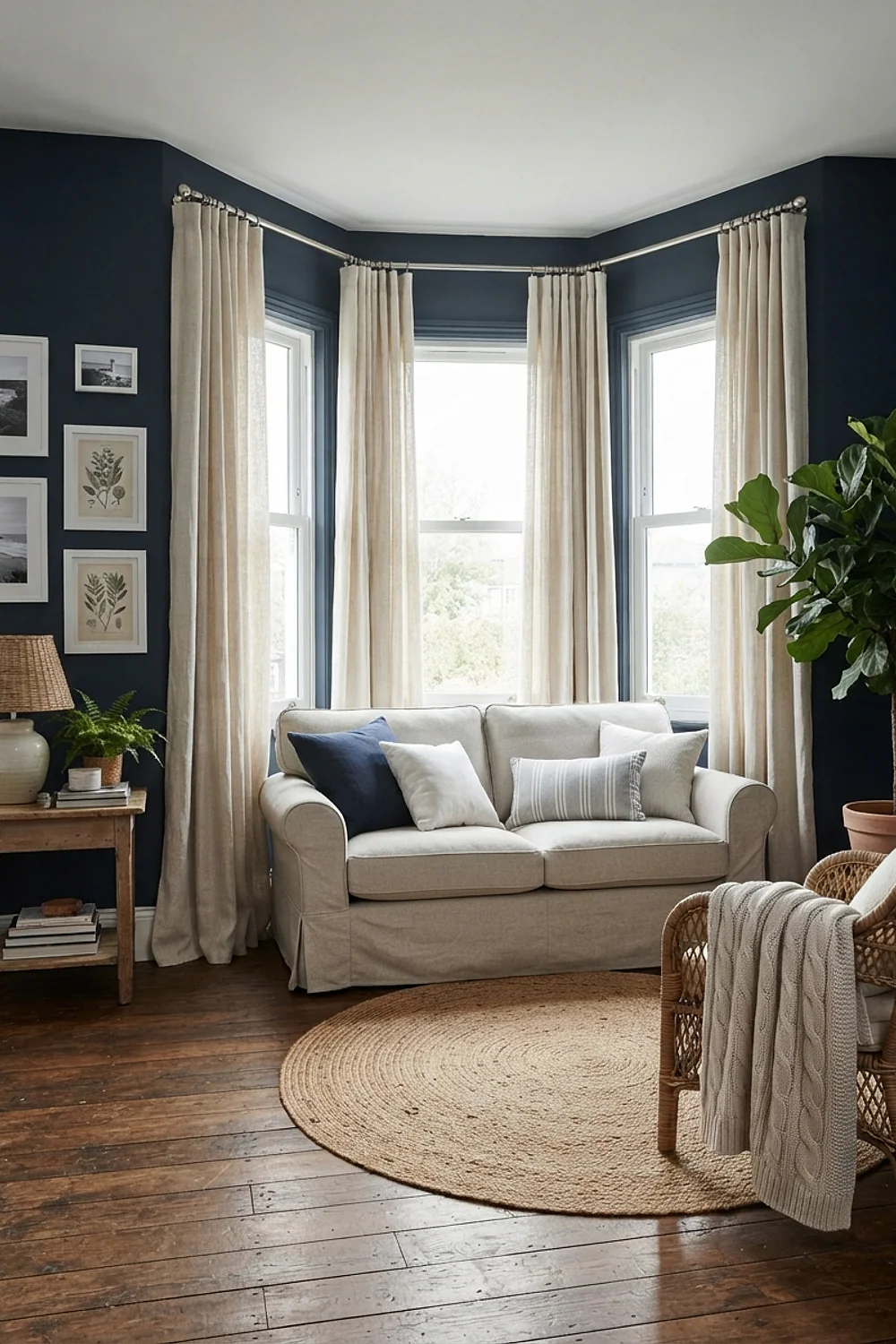
Before: three small curtains, three rods, and a bay that looked chopped into pieces. After: a bendable ceiling track following the 135-degree angles, carrying one long run of fabric.
A continuous line makes a bay feel like a deliberate nook instead of a corner of leftover glass. This works best with a window seat or a reading chair tucked inside.
Check the bend radius before ordering. A track that kinks at the corners stops gliders from passing, and nothing ruins a pull like a sticking runner.
Thermal-lined drapes against a January cold snap
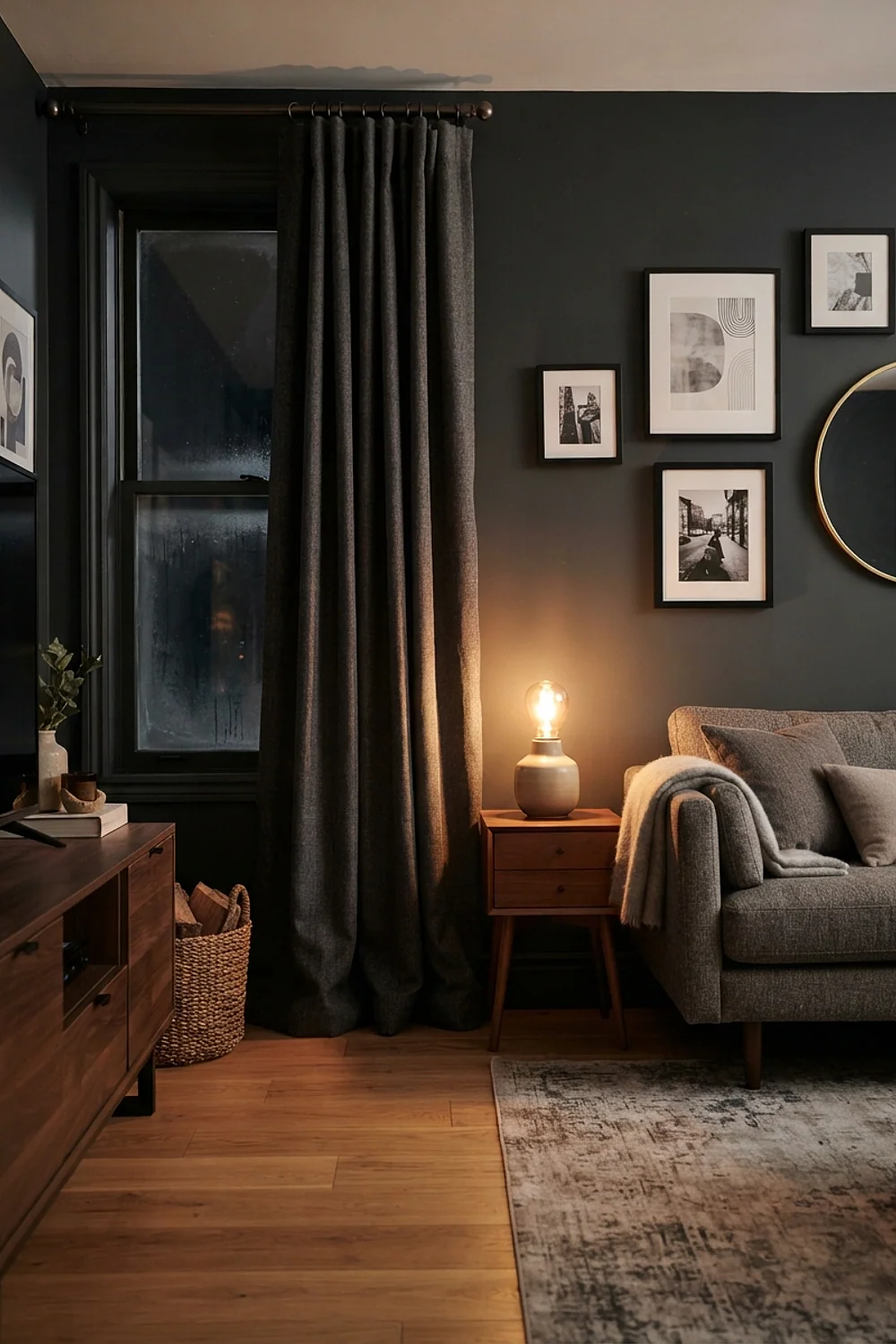
Between the glass and the sofa, a drafty 30-inch gap made the nearest cushion feel like a cold stone. After: triple-weave lined panels with a 4-inch return to the wall, sealing the sides against air.
A few weeks into a project like this, the difference shows up in the room’s temperature, not just its looks. Heat loss through glass drops noticeably when fabric hangs within 2 inches of the pane.
It suits older windows in cold climates. Leaving a 10-inch gap at the top defeats the purpose, since warm air spills over and flows behind the curtain.
A traverse track with a baton wand over a sliding door
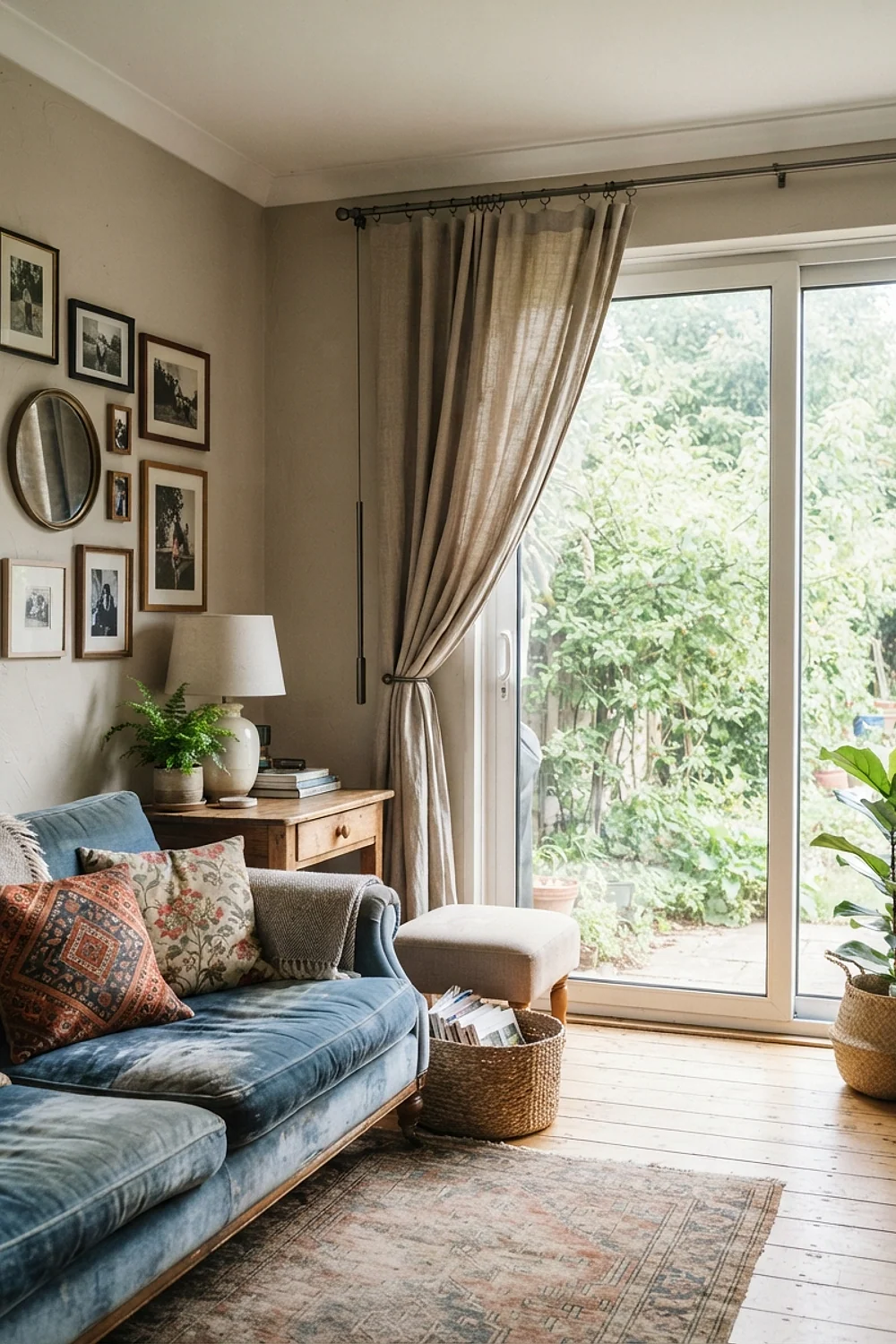
Before: rod rings that jammed halfway across a 72-inch slider, with fabric yanked by hand every evening. After: a 10-foot traverse track and a clear baton, and the panels part in one smooth pull.
This is the right answer for wide openings and for anyone with arthritis or small kids. The track and runners cost about $70-120, and the pull cord saves the fabric’s edges from daily grabbing.
Heavy lined panels weigh around 15 pounds each across an 8-foot run, so anchor into a joist, not drywall.
Light-filtering cotton on a west-facing window

Before: raw 4pm sun cutting across the TV and the sofa, bleaching the rug into stripes. After: cream cotton-poly panels that cut about 35 percent of the light, leaving the room bright but readable.
West windows are where full blackout backfires, since the room feels like a cave exactly when the light is good. A rainy Sunday morning shows the other side: filtering fabric keeps a gray day from feeling gloomy.
Leave the panels stacked off the glass when open, about 12 inches each side, so they don’t dim the window all day.
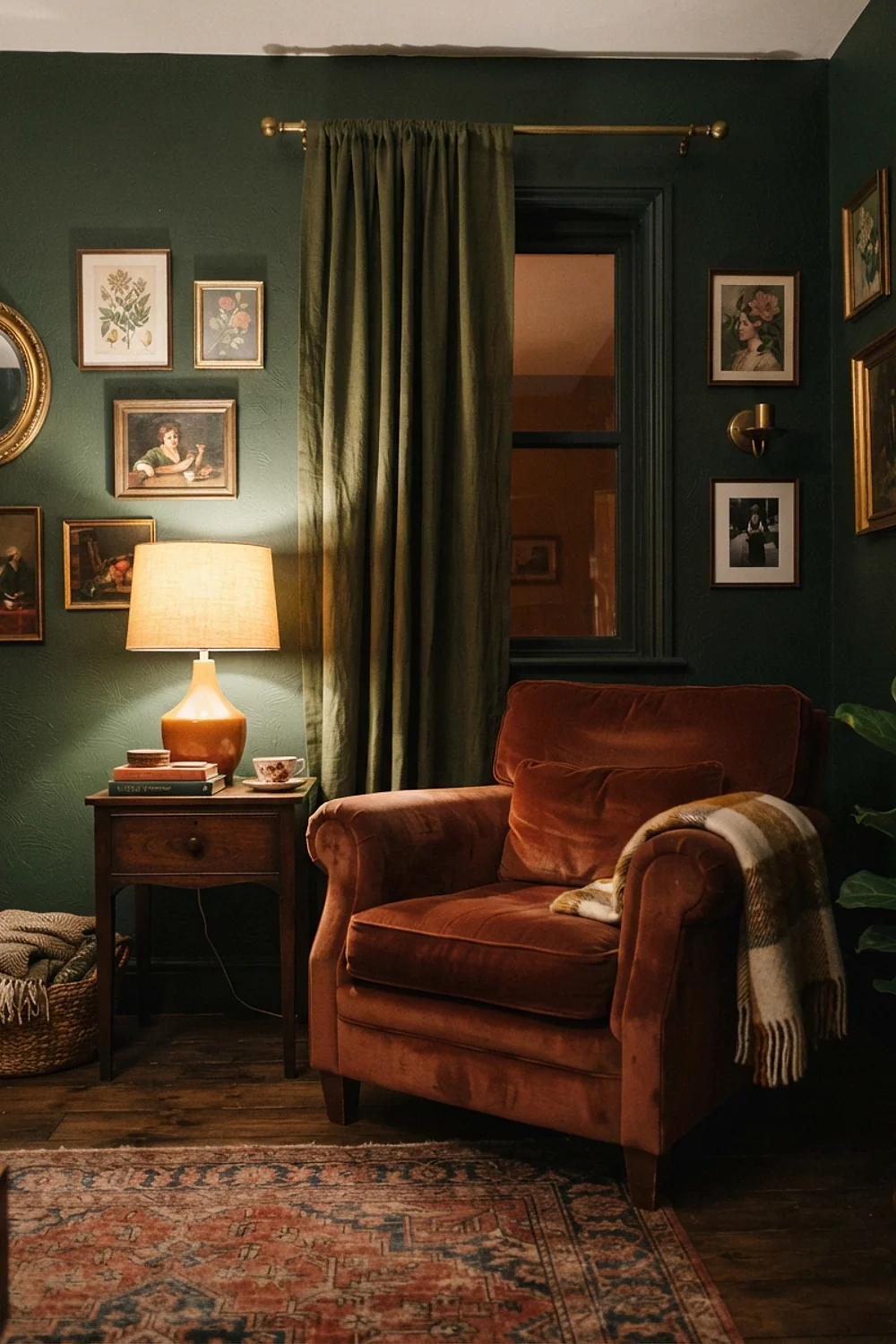
Forest green velvet against cream walls

Before: beige on beige on beige. After: deep green velvet panels that deepen and lighten as the sun moves, running darker in the folds and brighter at the edges.
Velvet needs 2.5 times fullness to drape properly, so a 60-inch window wants about 150 inches of fabric. It looks best near brass, walnut or aged leather, and it shows every vacuum stroke across the pile.
South-facing glass will fade it within a few seasons. Line it, or choose a polyester velvet that resists UV better.
An oversized botanical print on a 72-inch window

Seen from across the room, a tiny check pattern blurred into noise. After: a leaf print with a 25-inch repeat, large enough to read as a picture when the panels are open.
Pattern needs to match the window’s size. A 72-inch-wide window can carry a big repeat, while a 30-inch one is better with a quiet texture.
Align the repeat at the hem on both panels, or the leaves land at different heights and the eye keeps catching it. Fussy to fix after sewing, easy to check before cutting.
Panels stopping at the cushion above a window seat
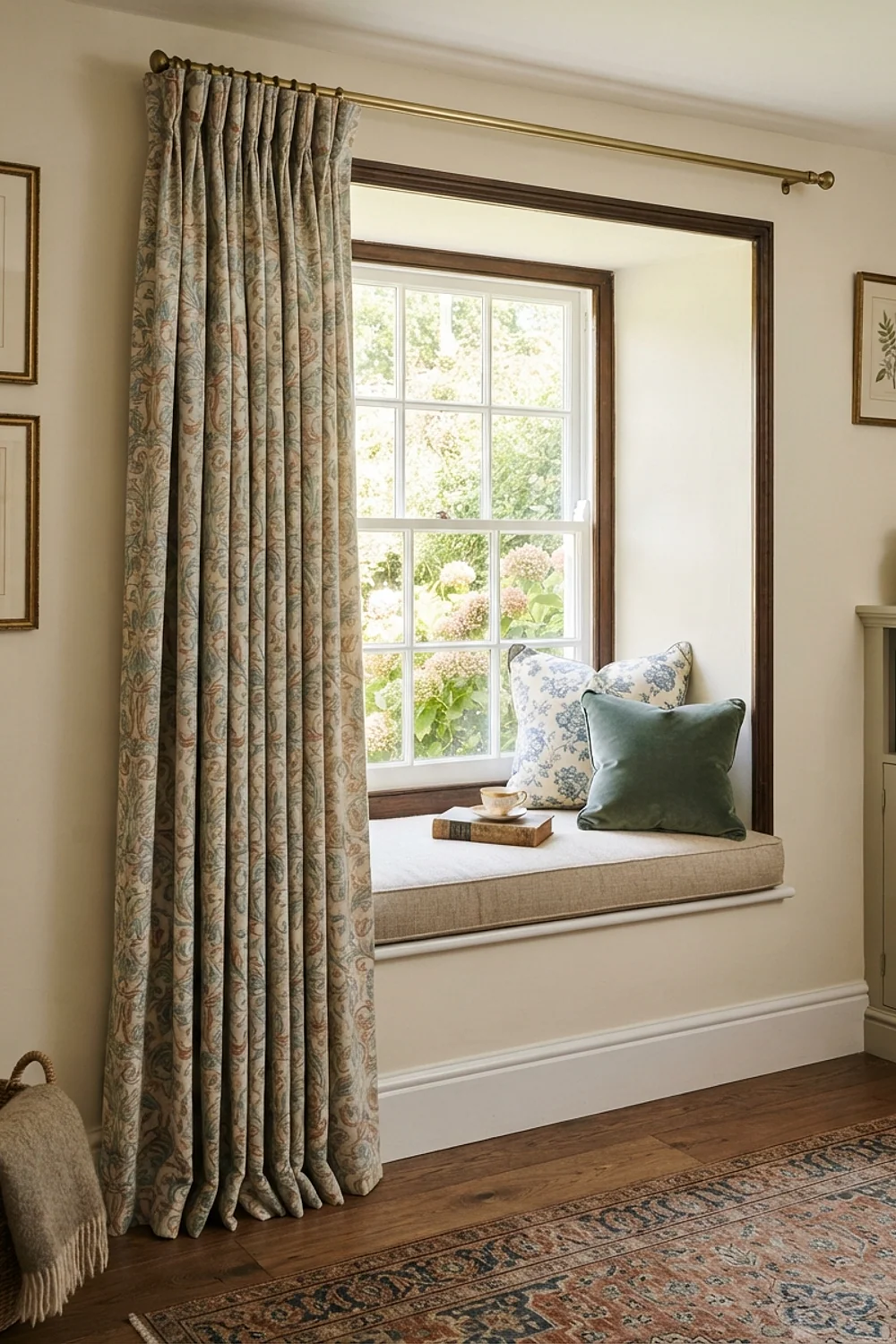
Before: floor-length curtains trapped behind a built-in seat with two 24-inch drawers that wouldn’t open. After: sill-length panels ending 1 inch above the cushion, with the drawers sliding free.
This suits a bay or dormer with built-in storage underneath. It trades the dramatic floor line for something practical, and it’s worth it every time a drawer needs opening.
Add 2 inches to the hem if the cushion compresses over time. Otherwise the fabric starts kissing the seat after six months.
Cotton canvas drop cloths, washed twice

Before: bare glass and a very tight budget. After: two 9-by-12-foot canvas drop cloths, washed, ironed and hung with clip rings, about $25-35 apiece. The texture reads as relaxed and slightly rustic.
Canvas shrinks 5 to 10 percent on the first wash, so cut long. It also arrives with lint and uneven color, which softens with each cycle.
It’s heavy and fairly opaque, so a thin rod will bow under the weight. Use a 1-inch rod with a center support past 60 inches.
Brass holdbacks fixed at 42 inches off the floor
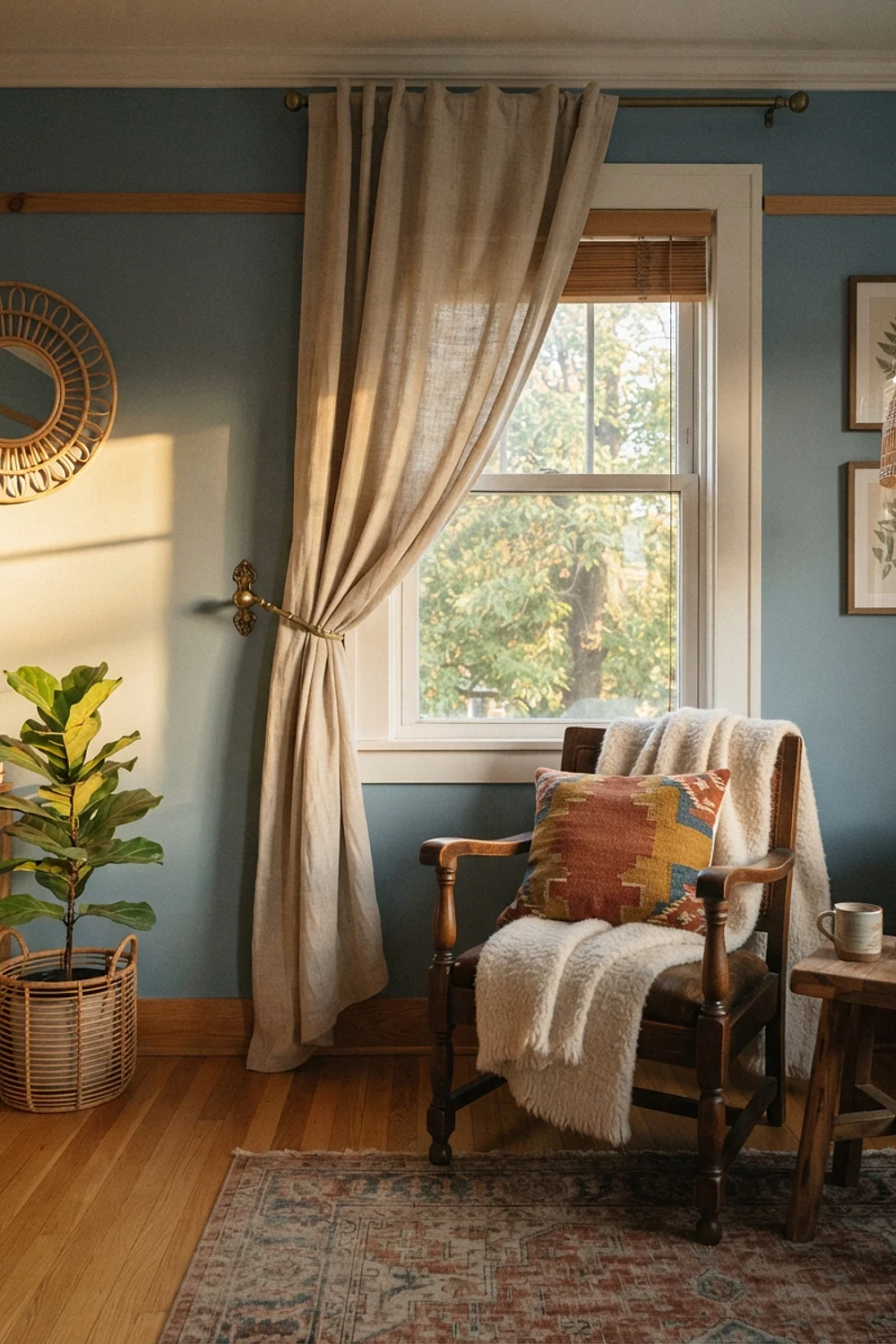
Before: panels hung straight and sealed the window shut by day. After: a holdback on each side, curving the fabric into a gentle swoop that opens the glass without opening the panel.
This styling suits formal rooms and traditional trims. Place the hook at roughly 42 inches, about halfway up the curtain, so the swoop looks natural and not pinched.
Mounting too low squeezes the fabric into a bow tie. And metal holdbacks scratch painted walls, so use a 1-inch backplate.
Flat panels at one times fullness, replaced with two times

Hung on a 50-inch rod, one 50-inch panel looked like a stretched sheet. After: three panels gathered across the same rod, the fabric rippling in soft folds even when closed.
Skimping on width is the usual way to ruin an otherwise good curtain. The math is rod width times 2 for sheers and times 2.5 for heavy fabrics.
This applies to any window and any fabric. A tight panel just looks cheap, no matter what the label says.
Where the inspiration comes from
French doors with one panel stacked to the hinge-free side
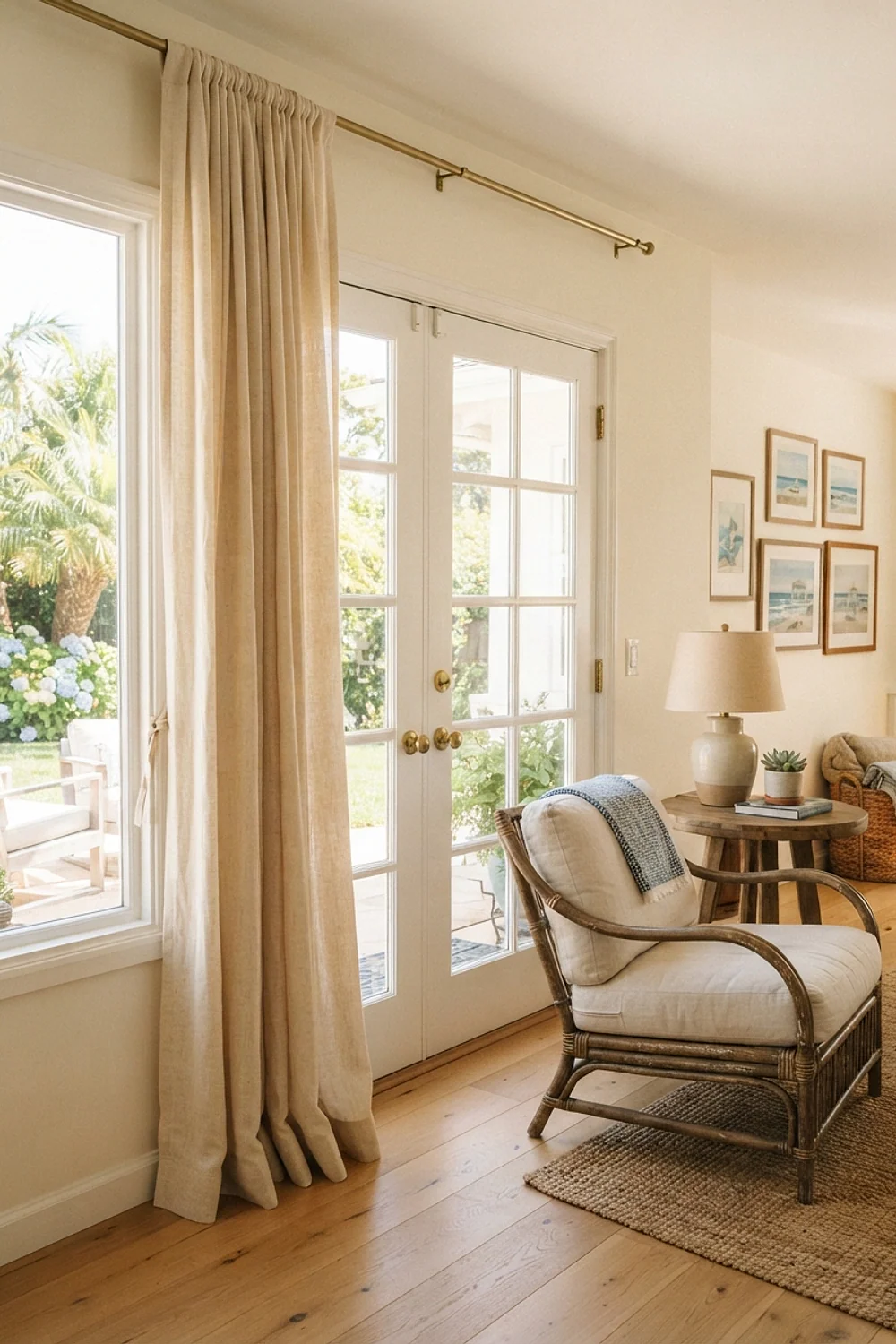
Every time someone walked out, curtains hung across both doors banged against the handles. After: a single panel on a rod above the header, stacking to the side opposite the hinges.
The panel clears the swing path with at least 4 inches to spare. That layout suits narrow rooms where a door must open fully.
Pair it with a sheer on a tension rod fixed to the door itself if privacy matters. Otherwise the main panel stays open all day.
Lined cotton drapes against a 14-by-20-foot echo chamber

Hardwood floors and bare walls turned the room into a place where every voice bounced. After: heavy panels on the two longest walls, weighing 16 ounces or more per square yard, absorbing the ringing.
Soft fabric is the cheapest acoustic panel there is, and it fits open-plan living rooms best. A thin sheer does almost nothing for sound.
Rooms with rugs and upholstered furniture need less. Stack the fabric on the wall side, not tight against glass, for the most absorption.
Clip rings on a slim 1-inch rod
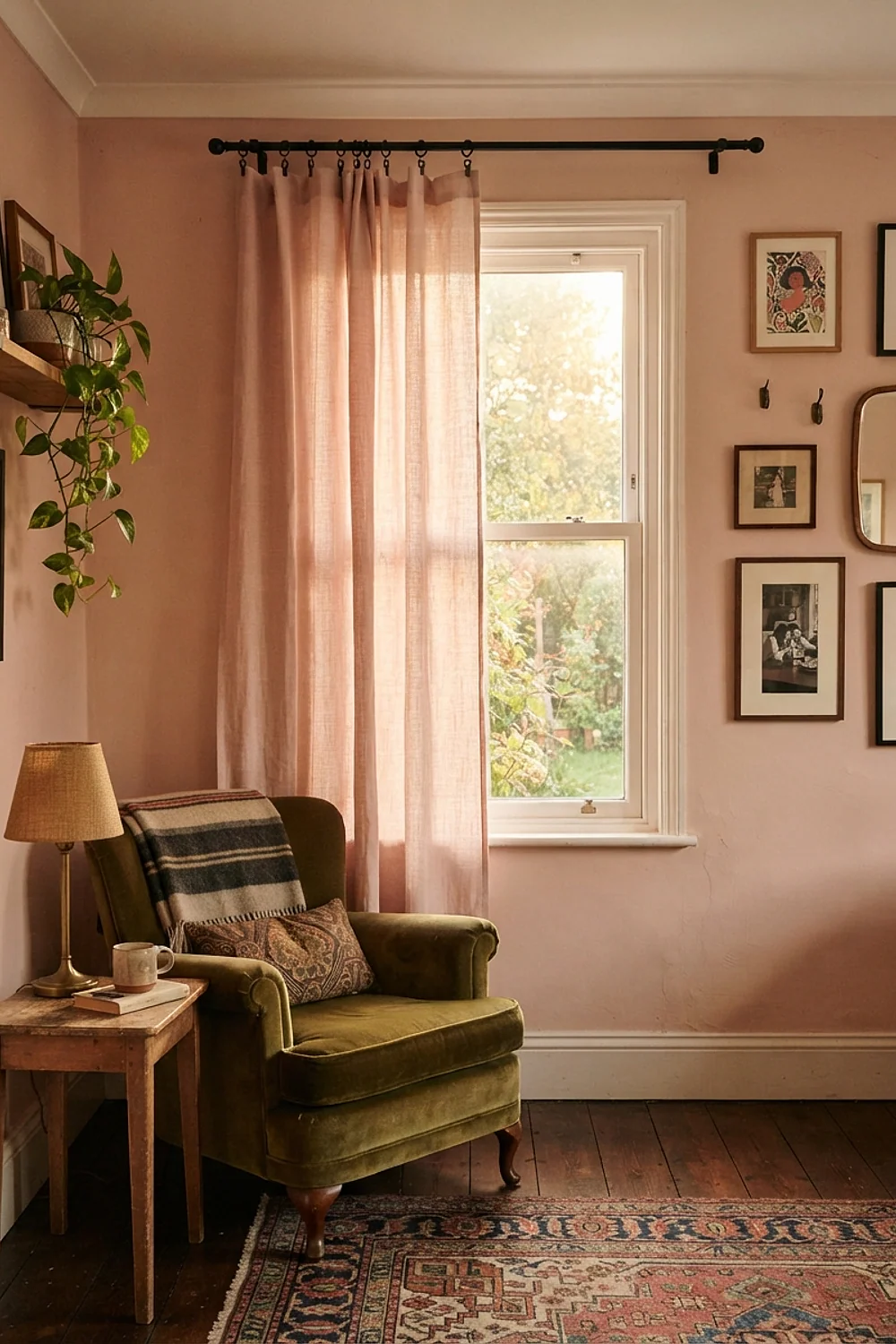
Before: rod-pocket panels that stuck and bunched whenever someone slid them open. After: a 1-inch rod and clip rings that let the fabric glide, with the hem adjustable by 2 inches in either direction.
Clip rings are the forgiving choice when panels come from different batches or different lengths. A rod set runs about $20.
Clips can leave small dents on delicate silks. For those, sew in pinch-pleat tape and use hooks instead.
Blackout roller shade tucked behind sheer panels
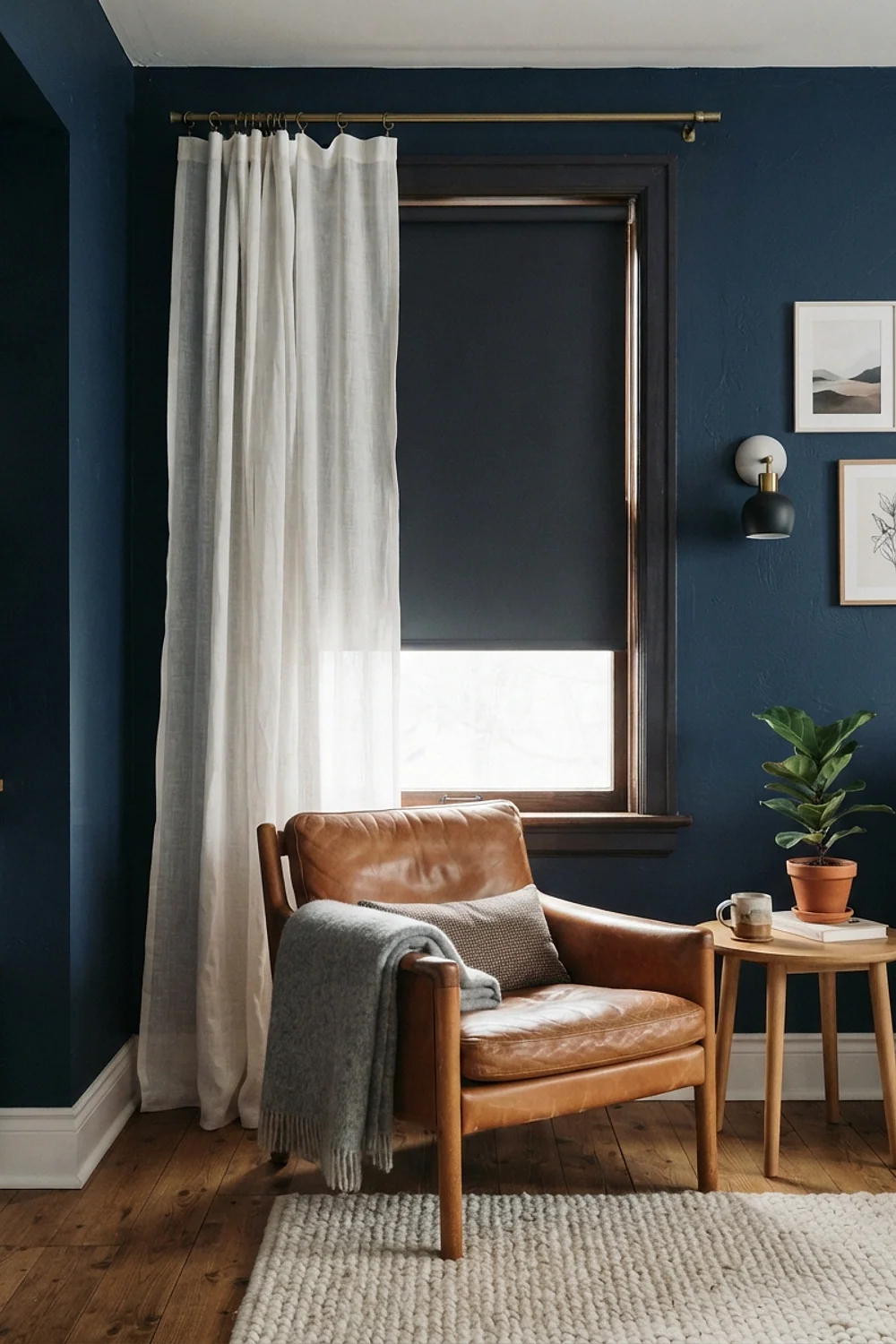
Before: noon glare bouncing off the TV and washing out every scene. After: a roller shade for movie hours, sheer curtains for everything else.
Layers like this suit living rooms with screens. A shade needs 2.5 inches of depth to clear the sheer, so the rod bracket should extend at least 3 to 4 inches from the wall.
Skipping the shade and relying on blackout curtains alone means the room goes dark in the morning too. Two layers give two moods.
Panels matched to wall paint, one shade deeper
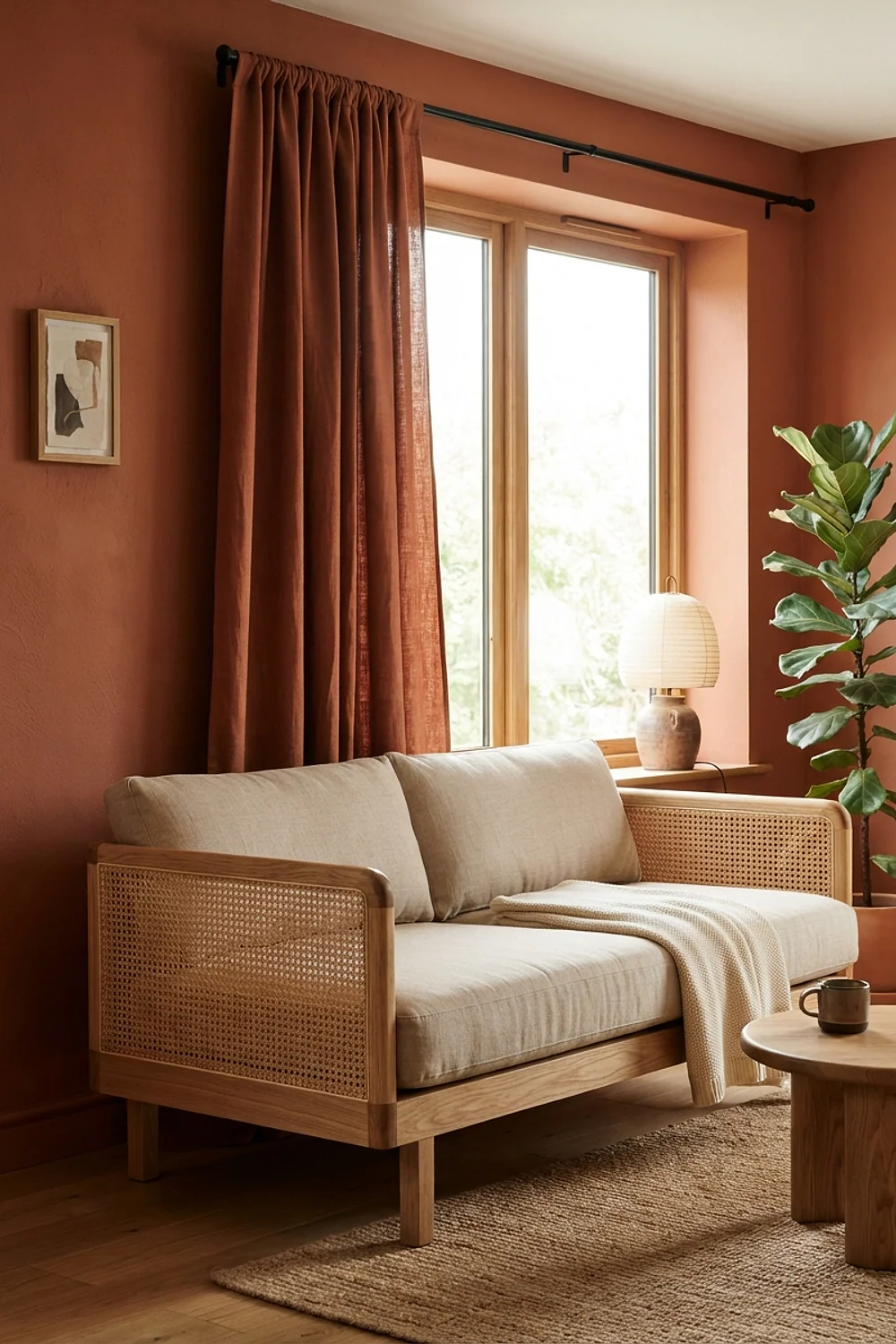
Before: white curtains cutting a sage wall into vertical stripes. After: panels sampled from the same paint chip strip, one step darker, so the window and the wall read as one surface.
Pairing curtains with your room colors this way shrinks visual clutter in small rooms. Exact matches look flat, so add texture through linen or slubby cotton instead of a different hue.
Test a swatch in daylight and under lamps. Fabric and paint can drift apart after sundown.
A 120-inch panel on a 10-foot ceiling
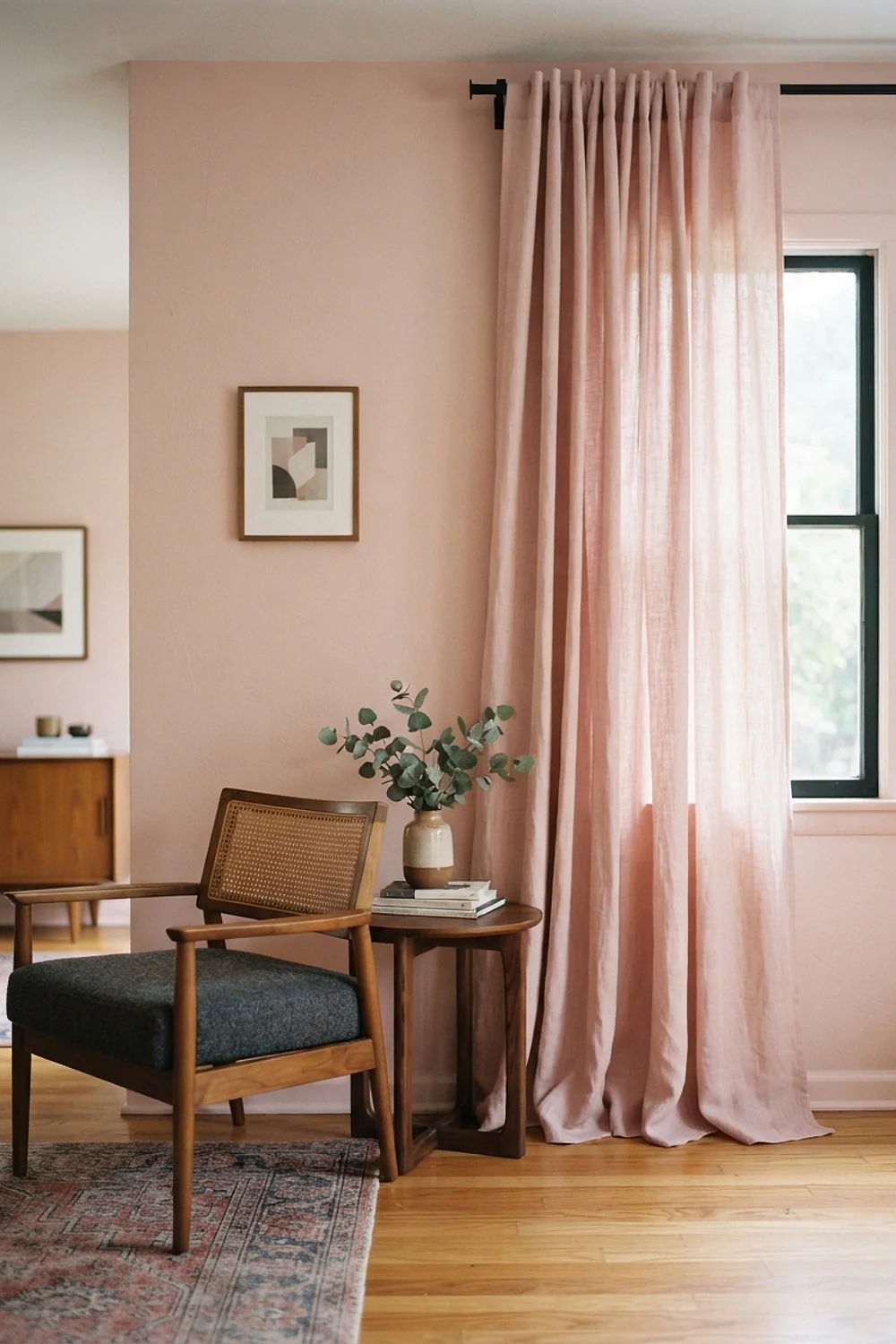
Before: 96-inch curtains on a tall wall, finishing at the halfway point like a short dress. After: 120-inch panels on a rod 4 inches from the ceiling, falling to a half-inch above the floor.
Tall rooms take longer panels than most shops stock. Ready-made options top out at 120 inches, and anything taller needs hem extensions or a custom order.
The extra fabric also helps the room’s acoustics. Just double-check the rod’s weight rating before hanging.
A ceiling-track curtain behind the sofa

Over the back of the sofa, a laptop, printer and cable bin sat in plain view. After: an 8-foot ceiling track and a floor-length curtain that closes the desk nook off from the living area.
It works in studios and open plans where the office has nowhere else to go. Ceiling-mounted tracks hide hardware better than a rod and let the curtain move without hitting the sofa.
Leave 18 inches between the sofa back and the curtain, or the fabric snags every time someone sits down.
Slubby cotton blend with visible texture
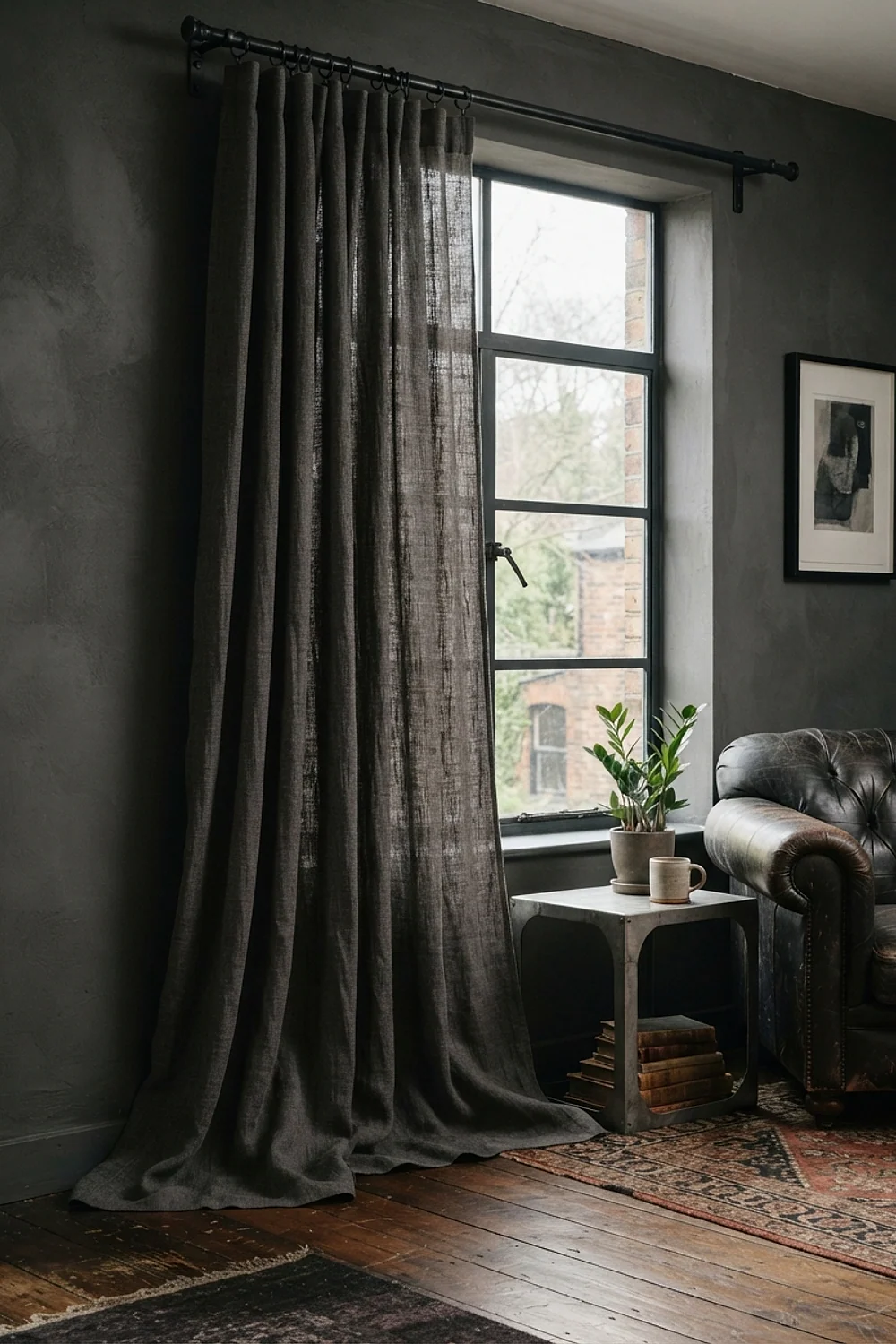
Flat and solid, the old fabric read as plain from across the room. After: a cotton-blend weave with irregular slubs, about $45-80 per panel, that gives the wall a pattern without any print.
Texture shows from about 8 feet away, which suits neutral rooms where color is limited. Loose weaves snag on cat claws, so check the thread tightness before buying.
Lining it adds body and blocks the light that would otherwise show every slub.
Vertical stripes 3 inches wide for a low ceiling
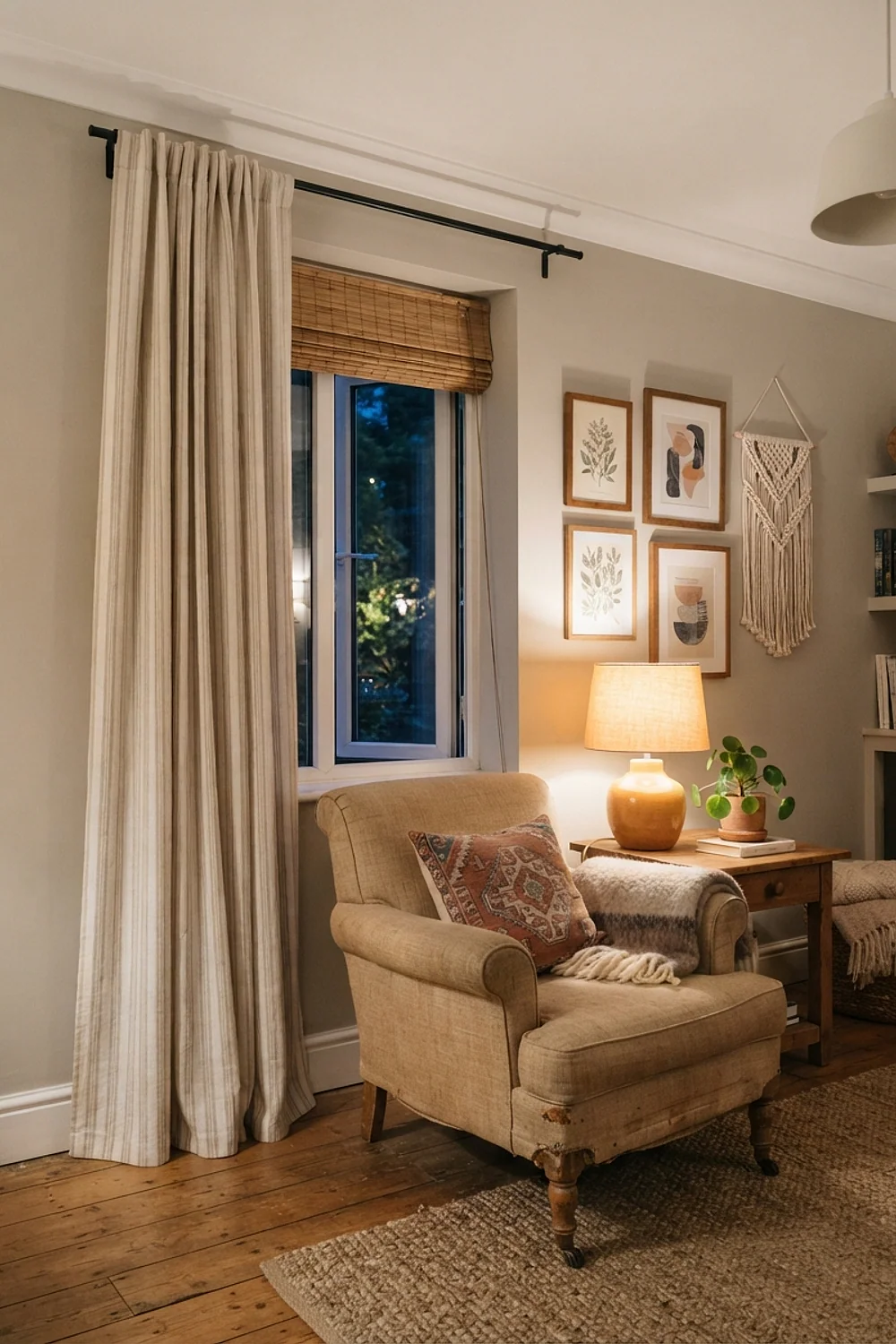
Before: an 8-foot ceiling that felt closer than it was. After: ticking-style stripes running the full drop, pulling the eye upward.
Stripes only work when folds are even, so use 2 times fullness and check alignment at the hem. Anything wider than 4 inches starts to look like a deck chair.
Skip stripes if the room already has a busy rug or wallpaper. One pattern is a statement; three is noise.
Washing fabric before the hem goes in

Hemmed to a perfect half-inch above the floor, the panels looked right until the first laundering. By the second wash, cotton had shrunk 3 to 5 percent and the hem sat 3 inches high. After: fabric pre-washed, then hemmed, with 2 inches left for a final adjustment.
This is the classic mistake with natural fibers. It catches anyone who sews or has panels altered before laundering.
Hem tape and a hot iron fix a short hem in 15 minutes. A long one is far easier to cut than a short one is to lengthen.
A rod extended 10 inches past the frame on each side
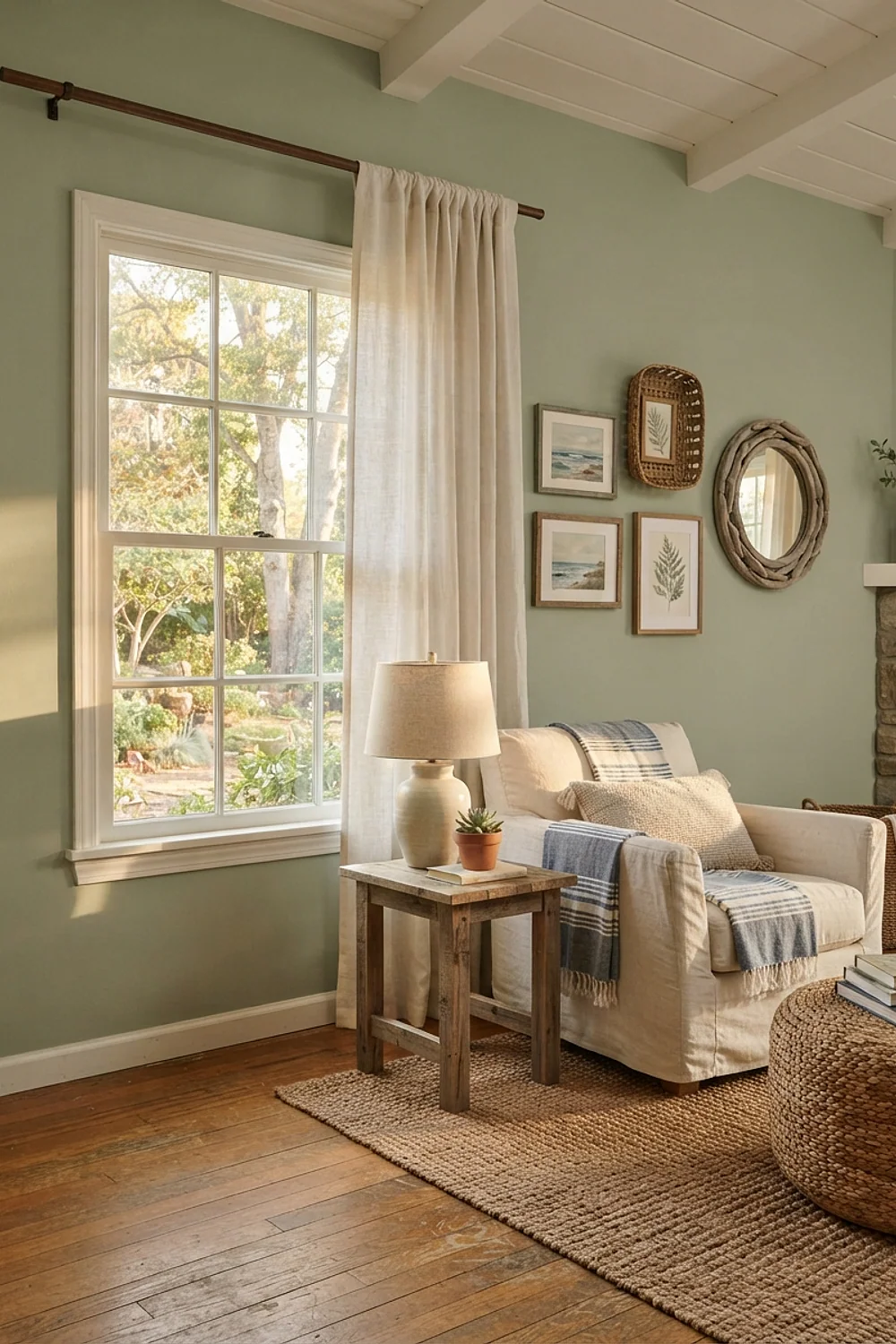
Panels on a 40-inch window covered 6 inches of glass on either side. After: a 60-inch rod, so the fabric stacks on the wall and the whole pane stays clear.
Here’s the counterintuitive part: wider curtains make the window look bigger and let in more light. The glass stays fully exposed when the panels are open.
Leave 2 inches between the rod end and any corner. Otherwise the stack presses into the wall and wrinkles.
Two sets swapped with the seasons
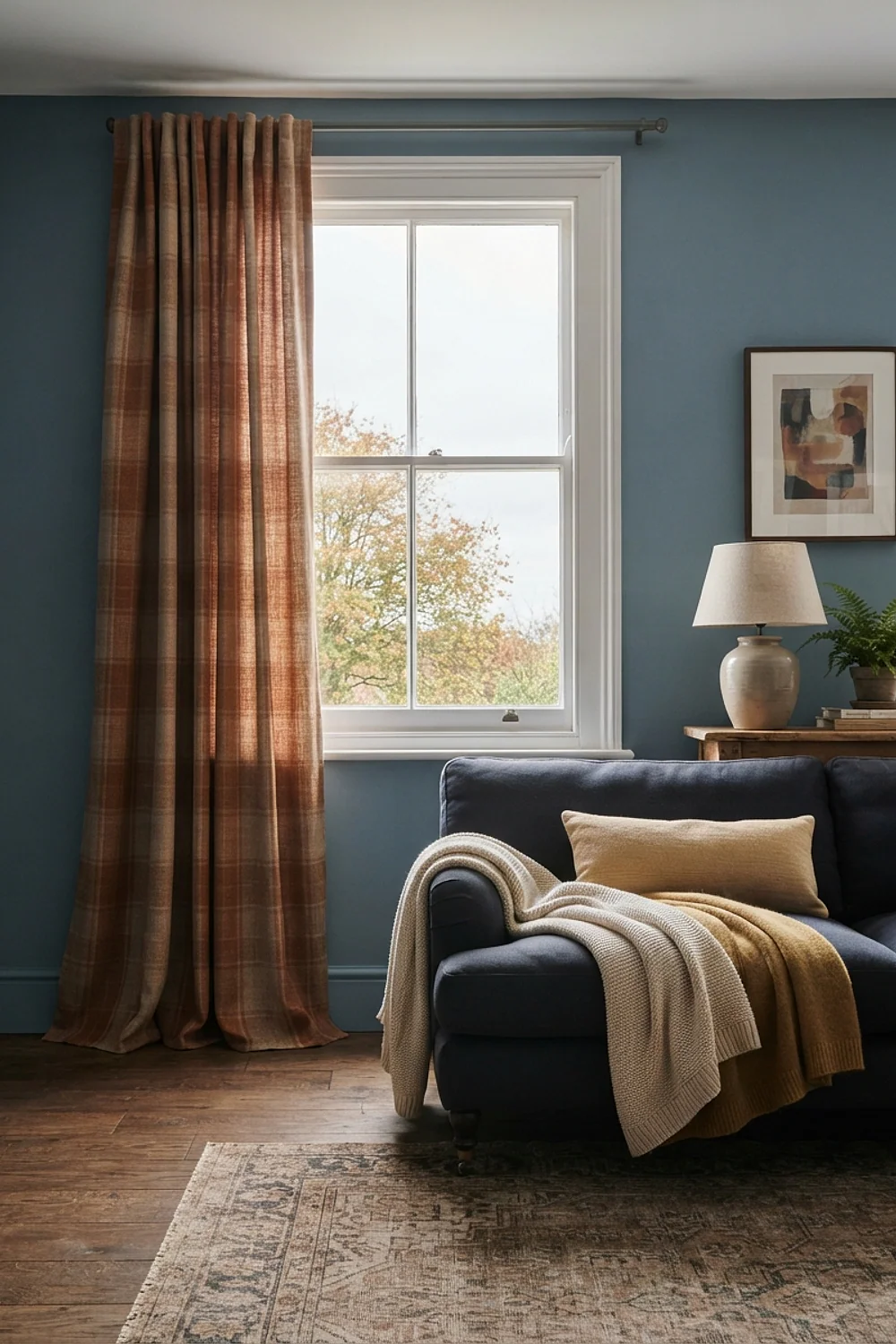
Before: heavy velvet still hanging in July, trapping heat. After: velvet in November, light linen from May to September, each folded flat in a 14-by-18-inch storage bag.
The change is as much about touch and temperature as appearance. Light fabric breathes in summer, and heavy lined fabric blocks drafts in winter.
Store them clean and fully dry. Folding damp linen leaves musty creases that take two washes to lose.
Outdoor-rated acrylic panels on a pergola
At 3pm, a bare patio baked in the sun and offered no privacy. After: solution-dyed acrylic panels, about $50-90 each, hung from a 1.5-inch rod across the pergola beams.
For backyard decoration, outdoor fabric resists UV and mildew in a way indoor cotton never will. Tie-backs or weighted hems keep the panels from billowing in wind.
Skip anything labeled indoor-only. It’ll fade and rot within a single season.
Closed lined curtains for lamp-lit evenings
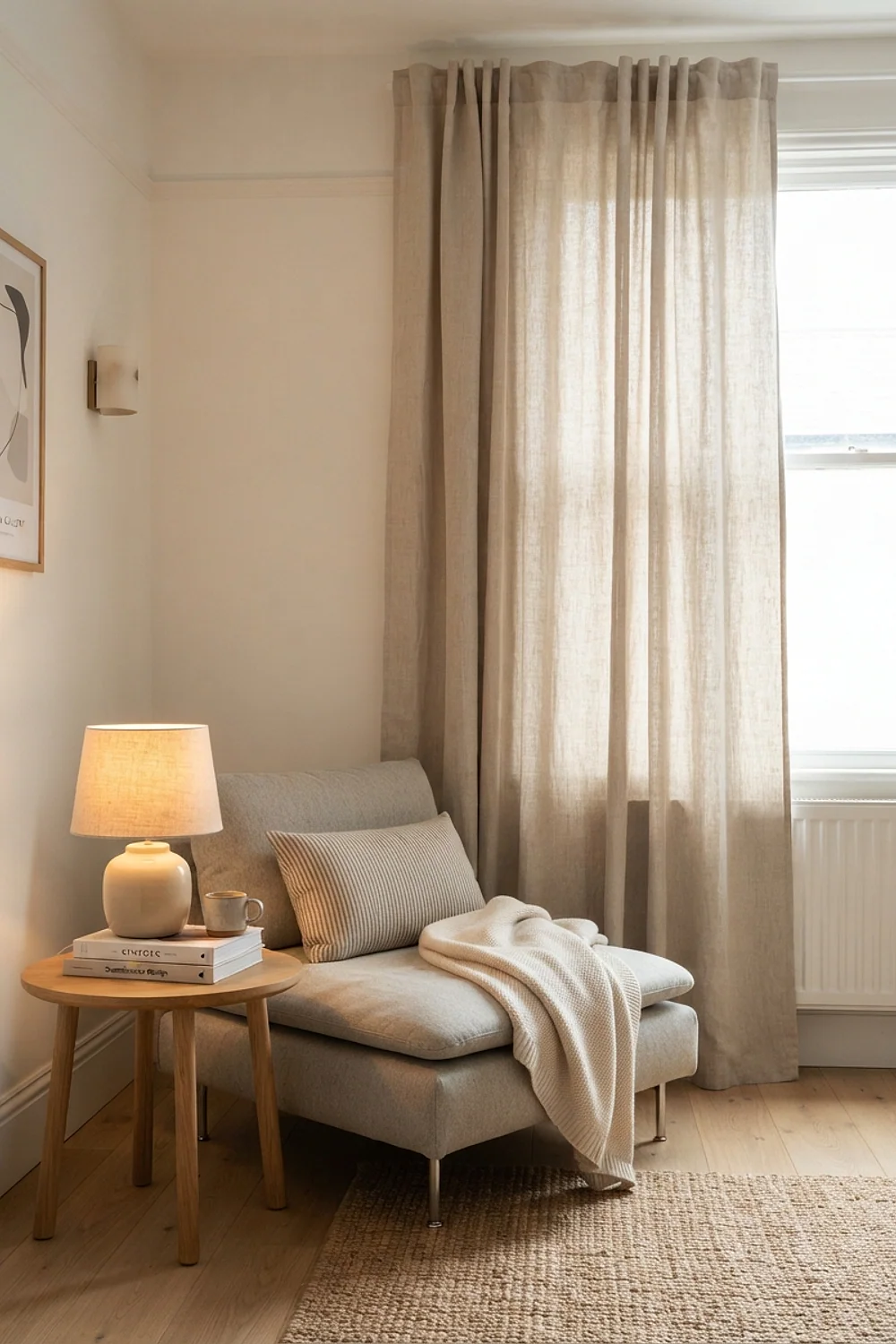
Reflecting every lamp and every person on the sofa, a black window dominated the room at night. After: lined panels drawn at dusk, with 2700K bulbs and the shades kept at least 8 inches from the fabric.
Dark glass acts like a mirror after sunset, and fabric turns it back into a backdrop. This helps living rooms on the ground floor most.
Keep hot bulbs away from the curtain’s edge. Fabric near a lit lamp is a risk, however good it looks.
Rust-toned cotton panels in a gray room
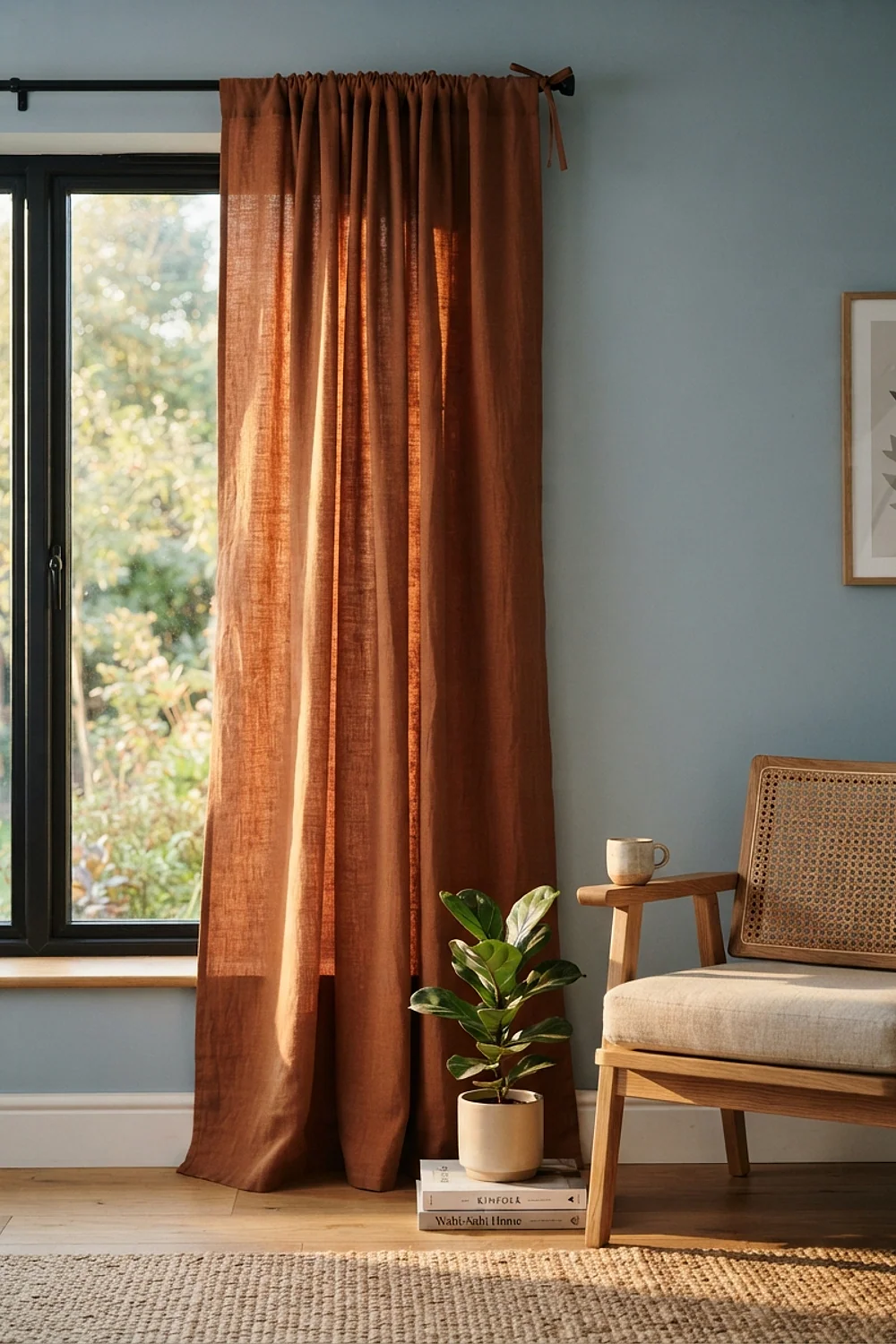
Cool gray walls left the living room with no focal point. After: rust cotton panels on a single window wall, picking up a throw and a ceramic lamp elsewhere.
Use curtains as the accent in a 60-30-10 color split, where they take the final 10 percent. Tape a 12-by-12-inch swatch to the wall and check it at 4pm and again at 8pm.
Saturated rust across a very small room can feel heavy. Keep it to one wall, and let the other windows stay neutral.
What these makeovers cost
Living room curtains ideas vary widely in price, but measurements drive the total more than fabric does. Width and drop decide how many yards you need, and length decides whether ready-made panels will do.
- Ready-made panels, two per window: $60-120
- Ready-made plus a double rod and tailored hem: $150-250
- Custom or workroom-made drapery: $400-900 per window
A 72-inch window at 2 times fullness needs 144 inches of finished width. That’s three 50-inch panels, or roughly 3 yards of 54-inch fabric per 96-inch drop, plus 12 inches for hems.
The real savings come from avoiding re-dos. A short hem or a rod hung at the wrong height costs more to fix than the first purchase did.
The finishing touches
Before choosing any of these living room curtains ideas, measure three things: window width, rod-to-floor drop and the wall space on either side.
- Measure the glass width, then add 16-20 inches for the rod.
- Measure from the planned rod height to the floor, then subtract half an inch.
- Check 12 inches of wall on each side for the panels to stack.
Rotate fabrics by season. During late spring, switch heavy lined panels for a 4-ounce linen so the room stops trapping afternoon heat, and the light changes from amber to white.
Rentals have a workaround. This is the move for a lease that bans drilling: a tension rod inside the frame holds a light panel, and adhesive hooks handle tie-backs for a weekend.
Scandinavian homes lean on sheers. In Nordic countries, where winter daylight is scarce, unlined linen panels let in every available hour of light.
Leftover hem becomes something else. Day-two scraps from a shortened panel make cushion covers or a tie-back, so nothing goes in the bin.
Skip the custom workroom. Use ready-made 96-inch panels and a strip of hem tape, since nobody can tell the difference from the sofa. It’s not foolproof. But it works.
Your windows are next
Living room curtains ideas come down to rod height, panel width and a hem that stops where it should. Get those three right, and nearly any fabric looks deliberate.
Save or pin this list so it’s there when the paint is dry and the tape measure is out. Start with item 2 or 16, measure your rod height and fullness first, and decide on the fabric afterward.
Frequently Asked Questions
What are the best living room curtains ideas for a small room with low ceilings?
Hang the rod 2 to 3 inches below the ceiling and use panels that reach a half-inch above the floor. Vertical stripes or a solid in a shade close to the wall paint make the room feel taller, as long as the fullness stays at 2 times.
Can I hang curtains in a rental without drilling?
Yes. A tension rod works inside a window frame for lighter panels up to about 5 pounds. For heavier drapes, adhesive hooks rated for 10 pounds each can hold a lightweight rod, though they struggle with velvet.
How much fabric do I need for a 72-inch window?
Plan for 144 inches of finished width at 2 times fullness, or 180 inches at 2.5 times for heavy fabrics. Many ready-made panels are 50 inches wide, so that means three panels. Add 12 inches to the drop for the hem and rod pocket.
Should curtains match the sofa or the walls?
Match them to neither exactly. Panels one shade deeper than the wall tie into the room’s colors, while one tone from a sofa pillow works as an accent. Living room curtains ideas look best when the fabric and the walls share an undertone, not a hue.