
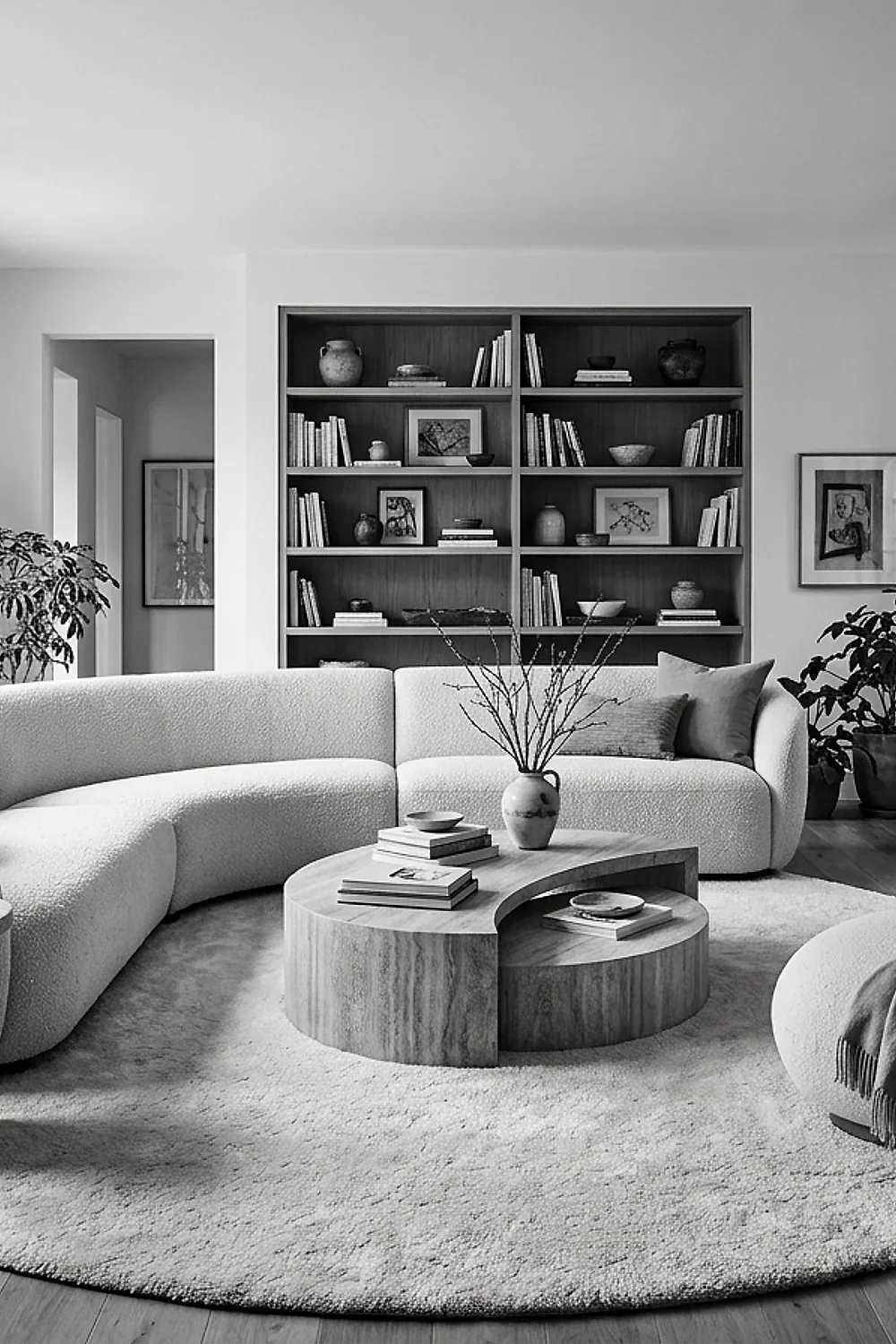
20 Curved Furniture Living Room Ideas for Every Room
A standard sofa leaves roughly 30 inches of walkway beside it in most living rooms, and that’s exactly where sharp corners catch hips and shins. A curved furniture living room swaps those corners for arcs, so traffic flows around the furniture instead of into it.
This guide goes room by room, with sizes, clearances and the trade-offs that decide whether a curved piece earns its floor space. Each idea is framed as a before and after, so the lesson is clear.
Curved Furniture Living Room for Every Space
A curved furniture living room usually starts from a familiar “before”: a 13 x 16 foot room with a boxy sofa, a rectangular coffee table and a rug that never quite fits. The “after” swaps one or two pieces for curves and changes how the whole room reads. The twenty ideas below cover every zone, not just the living room.
1. A floating curved sofa in the main living room
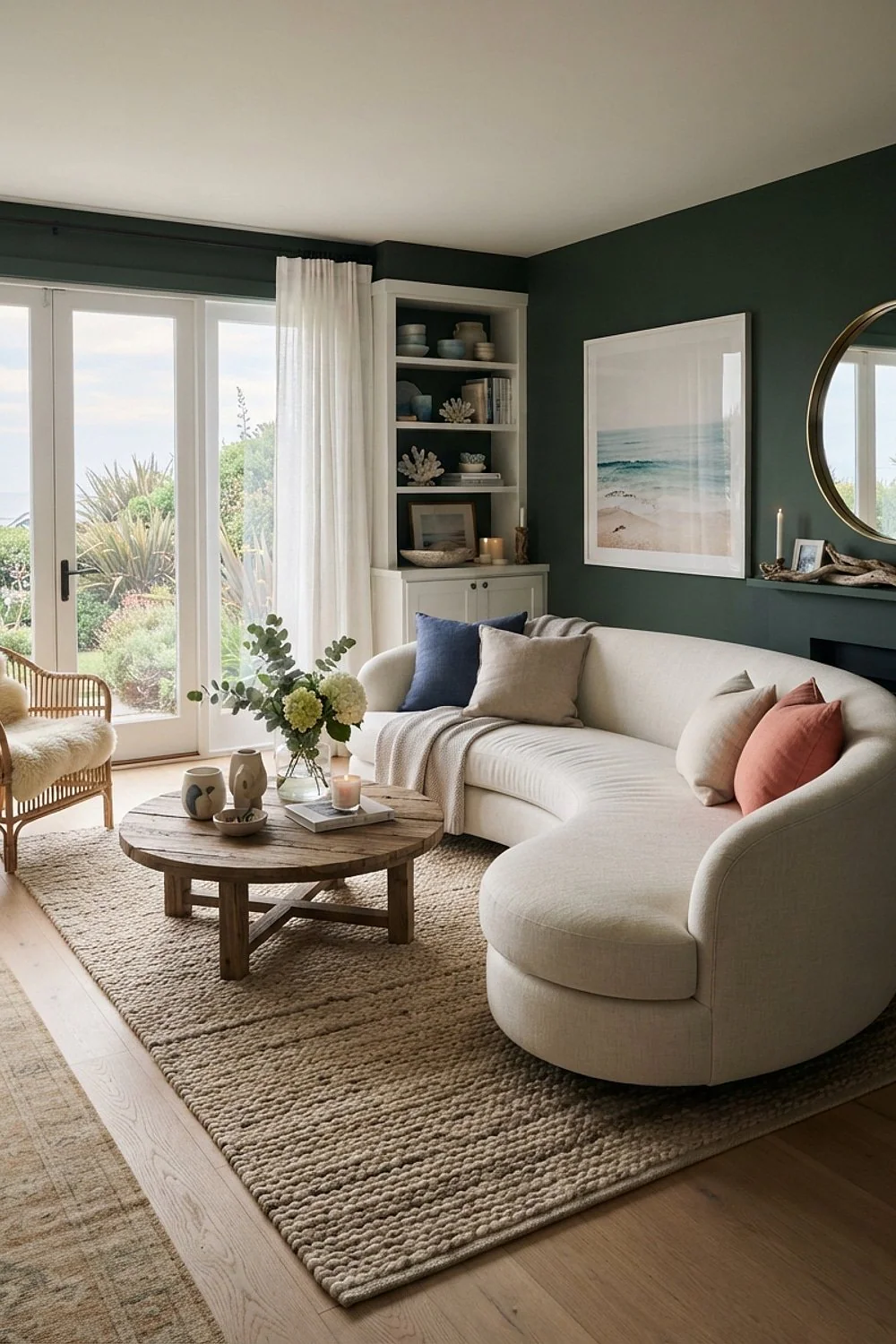
The most common mistake is pushing a curved sofa flat against the wall. That leaves dead wedges of floor behind the arc and wastes the shape’s best trick, which is turning everyone slightly toward each other.
Pull it 8 to 10 inches off the wall, or float it fully and tuck a narrow console behind it. It suits rooms of at least 12 x 14 feet, and a 84 to 96 inch sofa is the sweet spot for most households.
2. A cream boucle swivel chair by the window
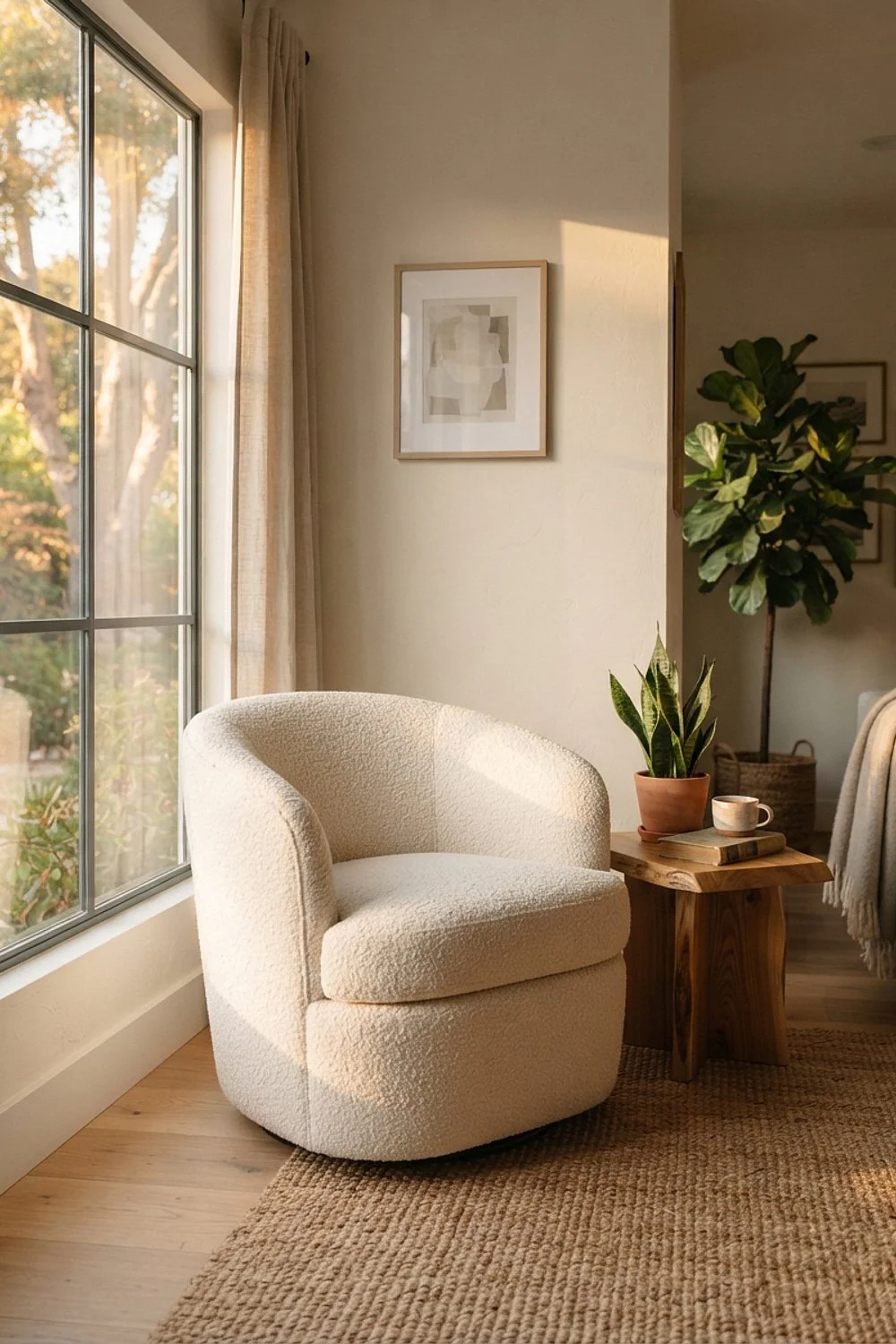
Boucle in oatmeal or cream looks best against plaster-toned walls, the kind of warm white or sandy beige you see in Spanish-style houses. Terracotta or olive pillows nearby keep the pale fabric from going flat.
A busy household with kids and dogs should pick a performance boucle with a stain-resistant finish, because plain wool loops snag and hold spills. Test a swatch with a damp cloth before committing.
3. A 36-inch round coffee table

A round coffee table in front of a 90-inch sofa should measure 34 to 38 inches across and sit 16 to 18 inches from the seat edge. Anything larger crowds the knees and blocks the walkway you just gained.
Solid oak or travertine-look versions run about $250 to $400 and hold up better than glass. Skip a dark glossy top in a sunny room, because every fingerprint shows at 4pm.
4. An arched floor mirror leaned in the corner

A 30 x 70 inch arched mirror leaning against the wall works like a second window. It bounces light across the room, and the arch repeats the curve of the sofa so the two pieces feel related.
Lean it at a slight angle and anchor the frame with a wall strap or a felt pad under the base. Hang it on the wall instead if toddlers or big dogs share the room.
5. A bow-front sideboard in the dining room
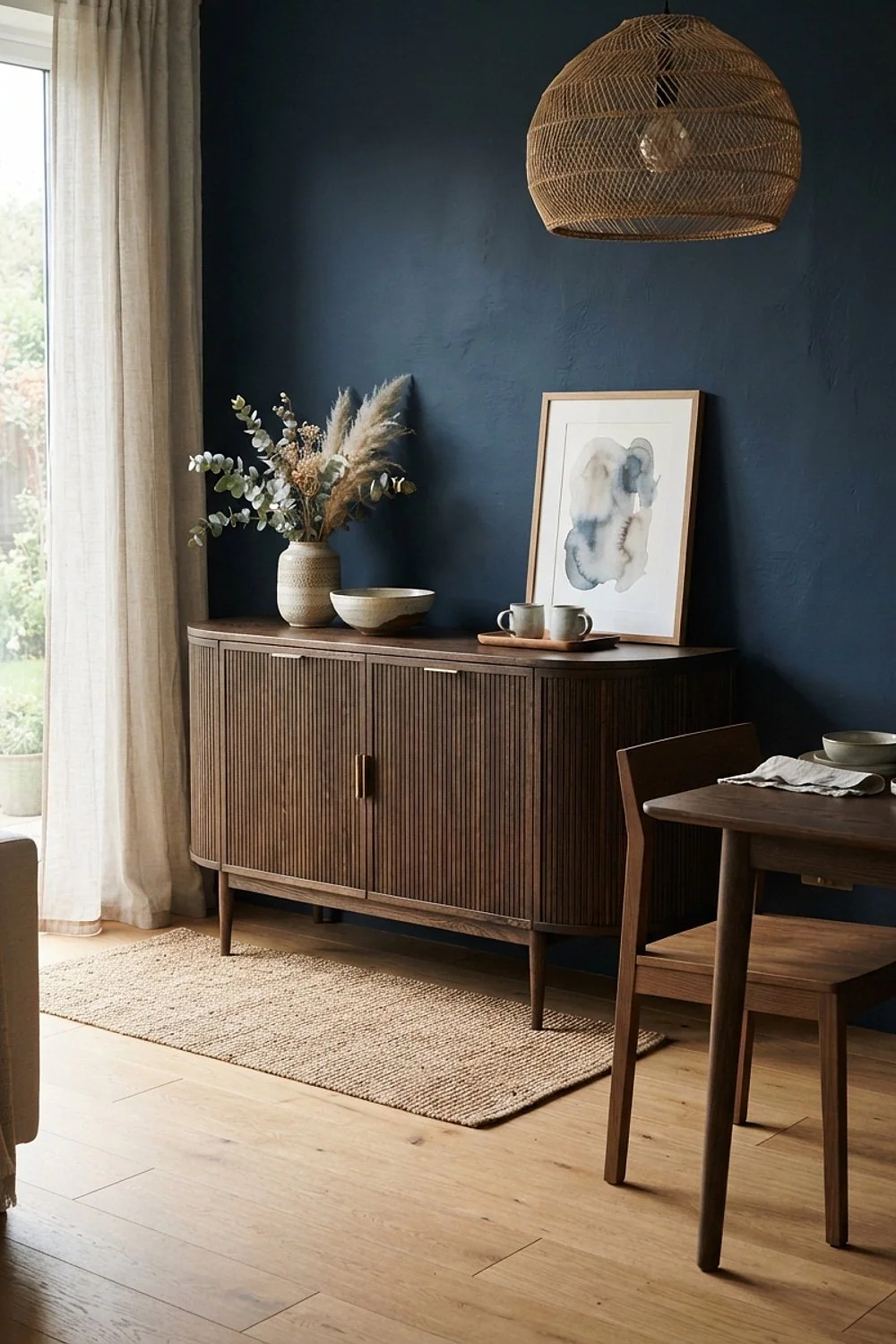
A sideboard about 60 inches wide and 16 to 18 inches deep, with a gently bowed front, holds platters and linens without jutting into the walkway. The curve softens the line of an otherwise straight wall.
Look for doors that close with soft hinges, since bowed fronts show gaps quickly when cheap hardware sags. It’s a smart pick for dining rooms under 11 feet wide, where every inch of clearance counts.
6. A pedestal round dining table
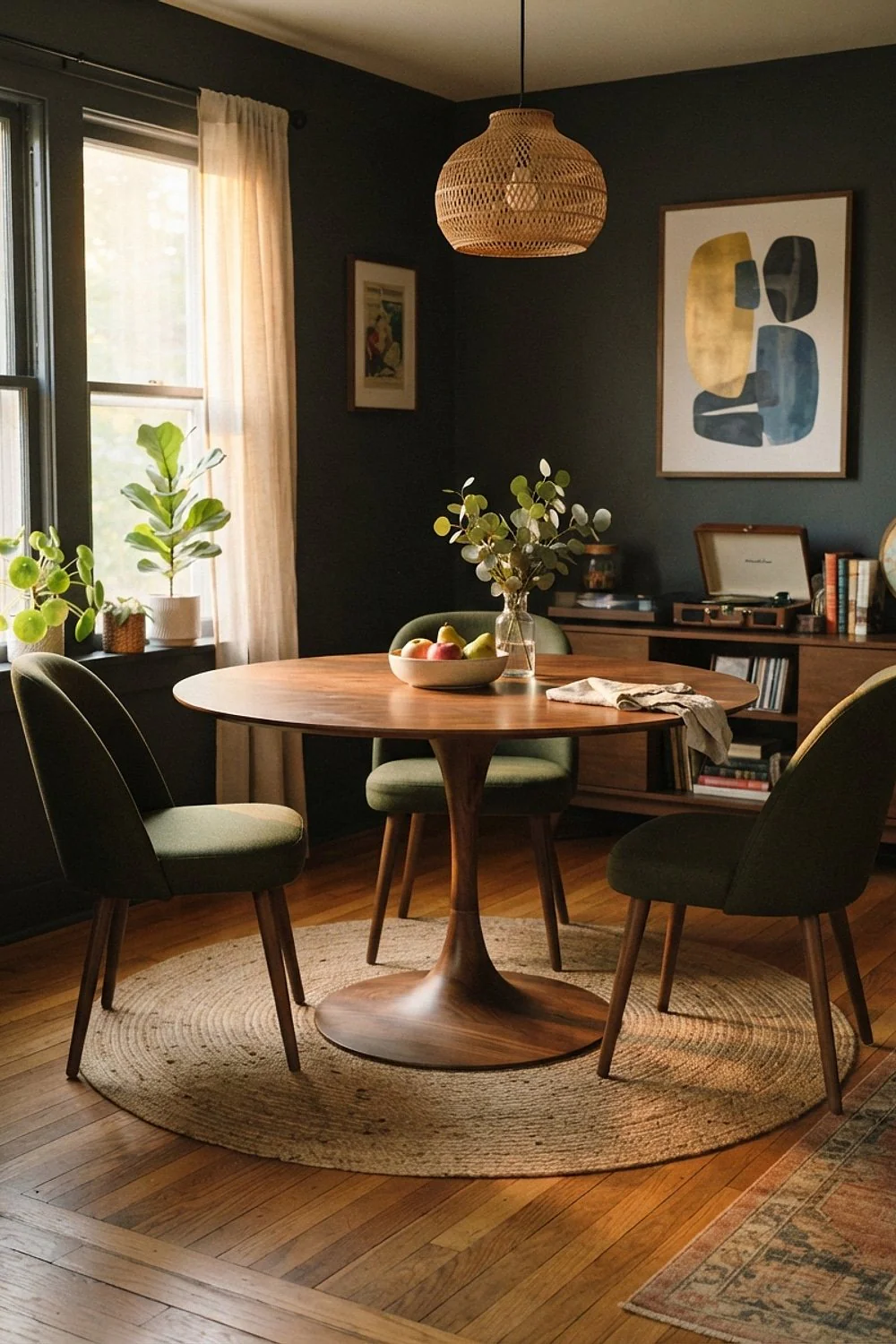
A 48-inch round table seats four comfortably and a 60-inch table seats six, and a single pedestal base means nobody fights a table leg for knee room. Leave 36 inches between the table edge and the nearest wall so chairs can slide out.
This works best for conversation-heavy dinners, because everyone faces everyone. The trade-off is that round tops don’t stretch for big gatherings, so keep a folding leaf option in mind.
7. Rounded-back counter stools in the kitchen
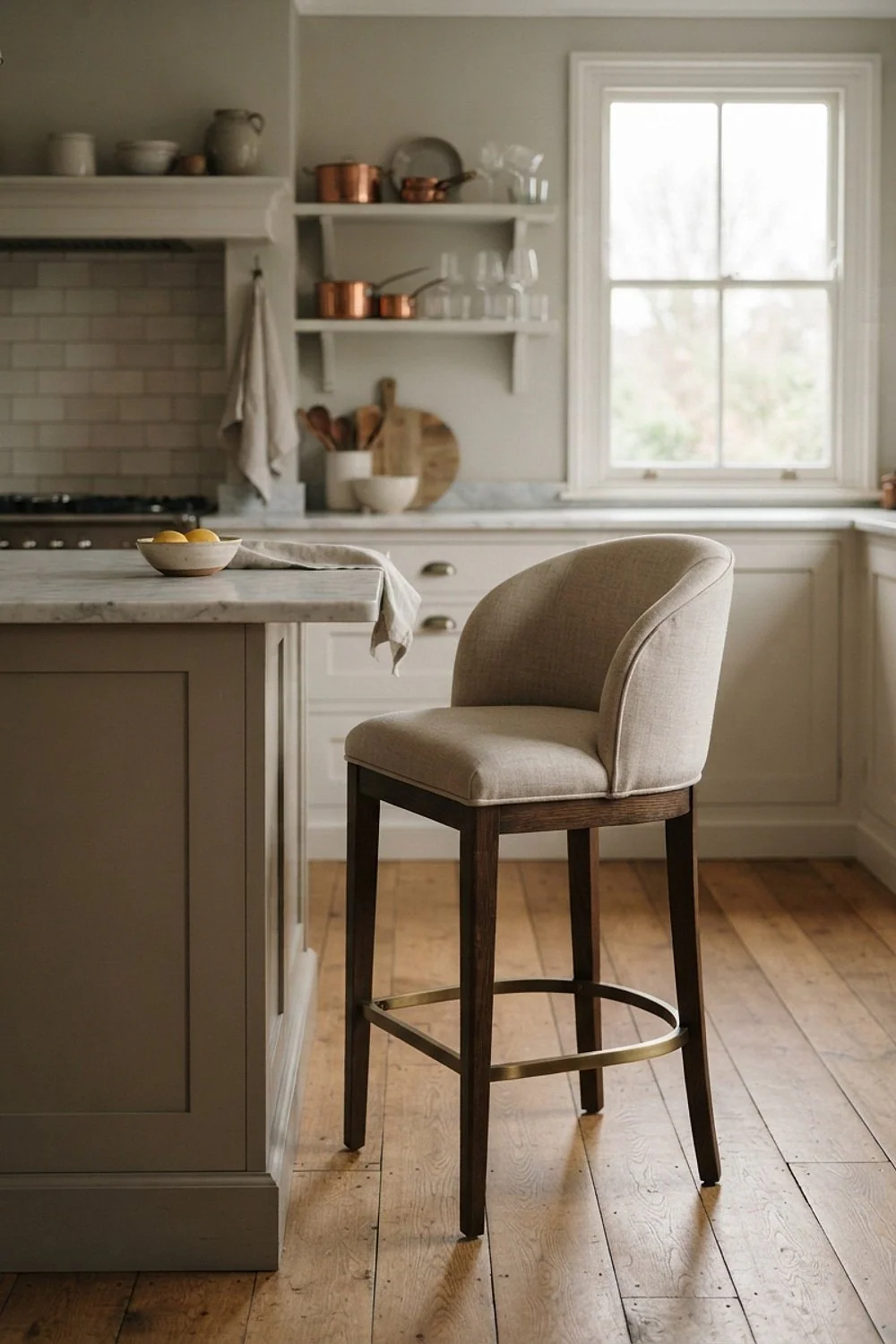
Counter stools with a curved back give support without the hard top rail of a straight chair. Choose 24 to 26 inches of seat height for a standard 36-inch counter.
Bentwood oak or ash holds up to daily scooting better than rattan, which can split at the weave when kids climb on and off. A set of three typically runs $300 to $450.
8. An arched headboard in the bedroom
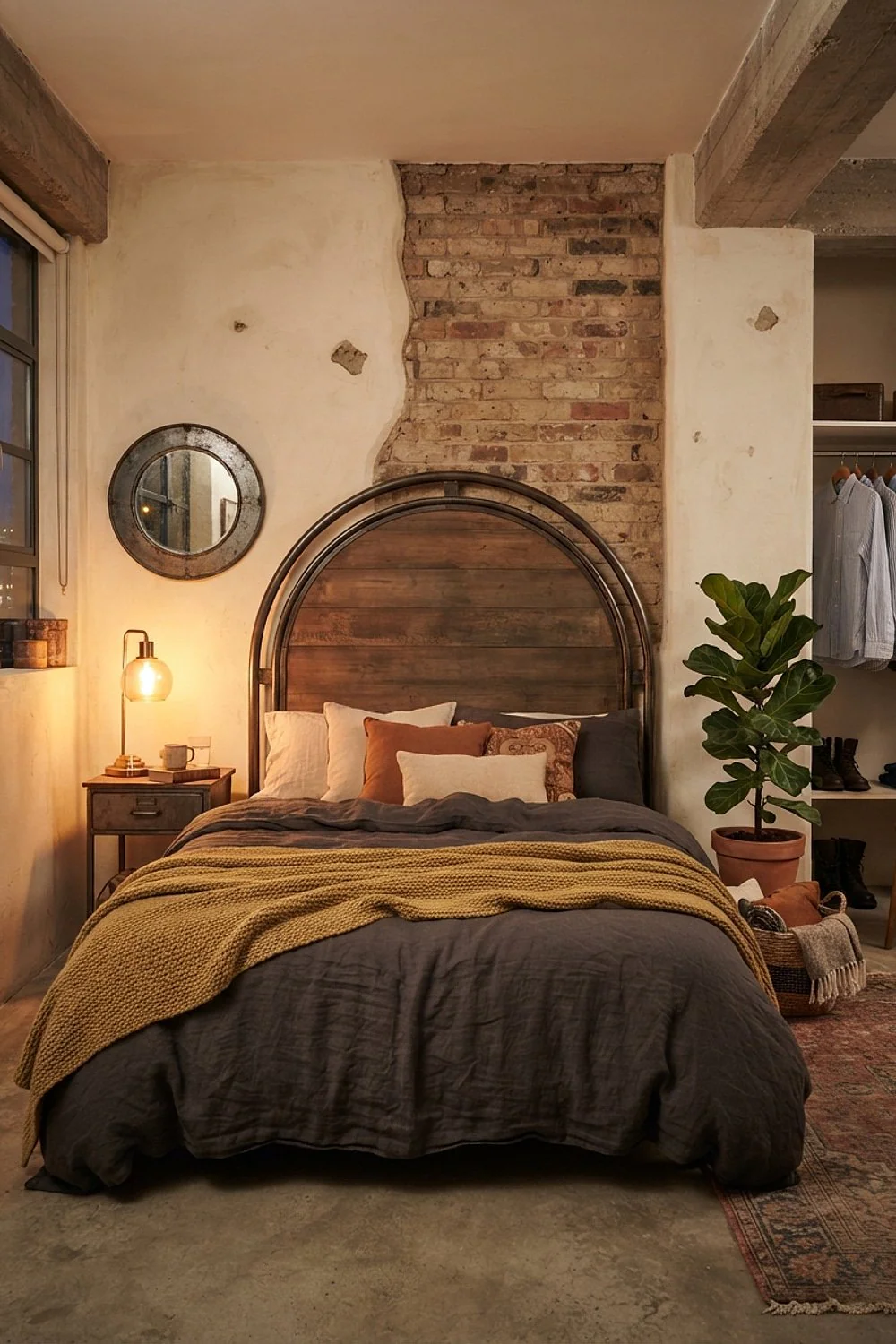
A queen-size arched headboard should be about 64 to 66 inches wide and reach 48 to 54 inches above the floor. That puts the peak of the curve at eye level when sitting up with a book.
Pair it with 20-inch round nightstands and leave about 24 inches of floor on each side of the bed. The curve reads best in a room with a flat ceiling, where the arch has nothing competing with it.
9. An arc floor lamp over the reading chair

An arc lamp with a 70 to 78 inch reach lets the shade hang right above the armchair without a table or an outlet nearby. Use a 2700K bulb at around 800 lumens, which gives a honeyed glow instead of a clinical glare.
Check the base before buying. A marble block of at least 12 pounds keeps the arm from tipping when someone brushes past, which matters in any tight corner.
10. A scooped teak stool in the bathroom
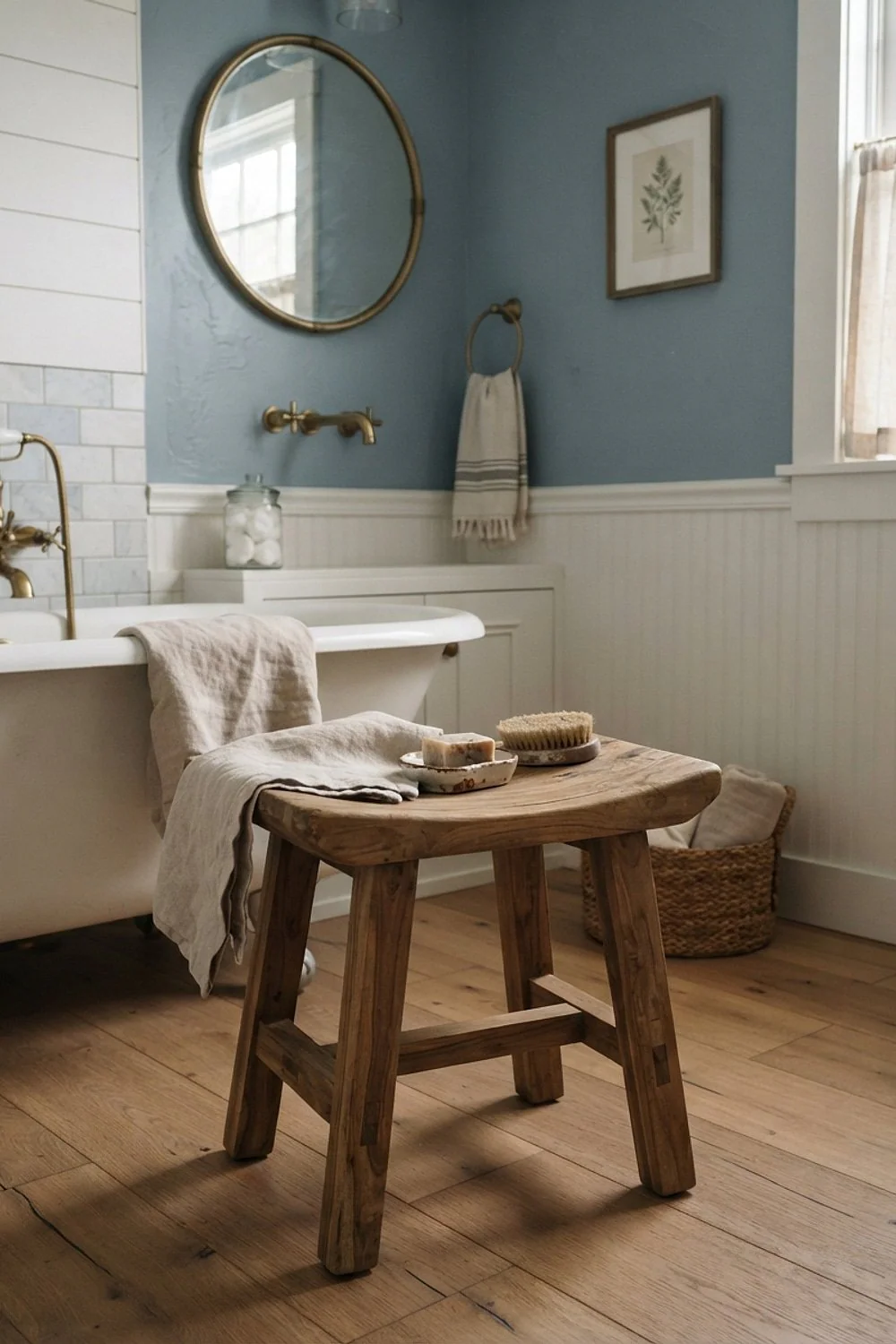
A curved-seat teak stool about 18 inches high gives a place to set a towel, sit while drying off, or rest a foot. The dished seat drains water instead of holding it.
Teak tolerates steam and splashes, but untreated teak turns silver within a year. Rub on teak oil twice a year if the golden tone matters, and stick to small bathrooms with at least 30 inches of floor beside the tub.
11. A half-moon desk in the home office

A half-moon desk about 48 inches wide pushes the rounded edge toward you, which leaves room for a chair to roll without clipping a corner. The mistake is jamming it into a tight nook, which defeats the curve.
Leave 36 inches behind the chair and use a slim 14-inch rolling cart for printer paper and chargers. Pick a laminate top for heavy daily use, since a veneer edge chips along curves faster than along straight lines.
12. A honey-toned rattan chair in the sunroom
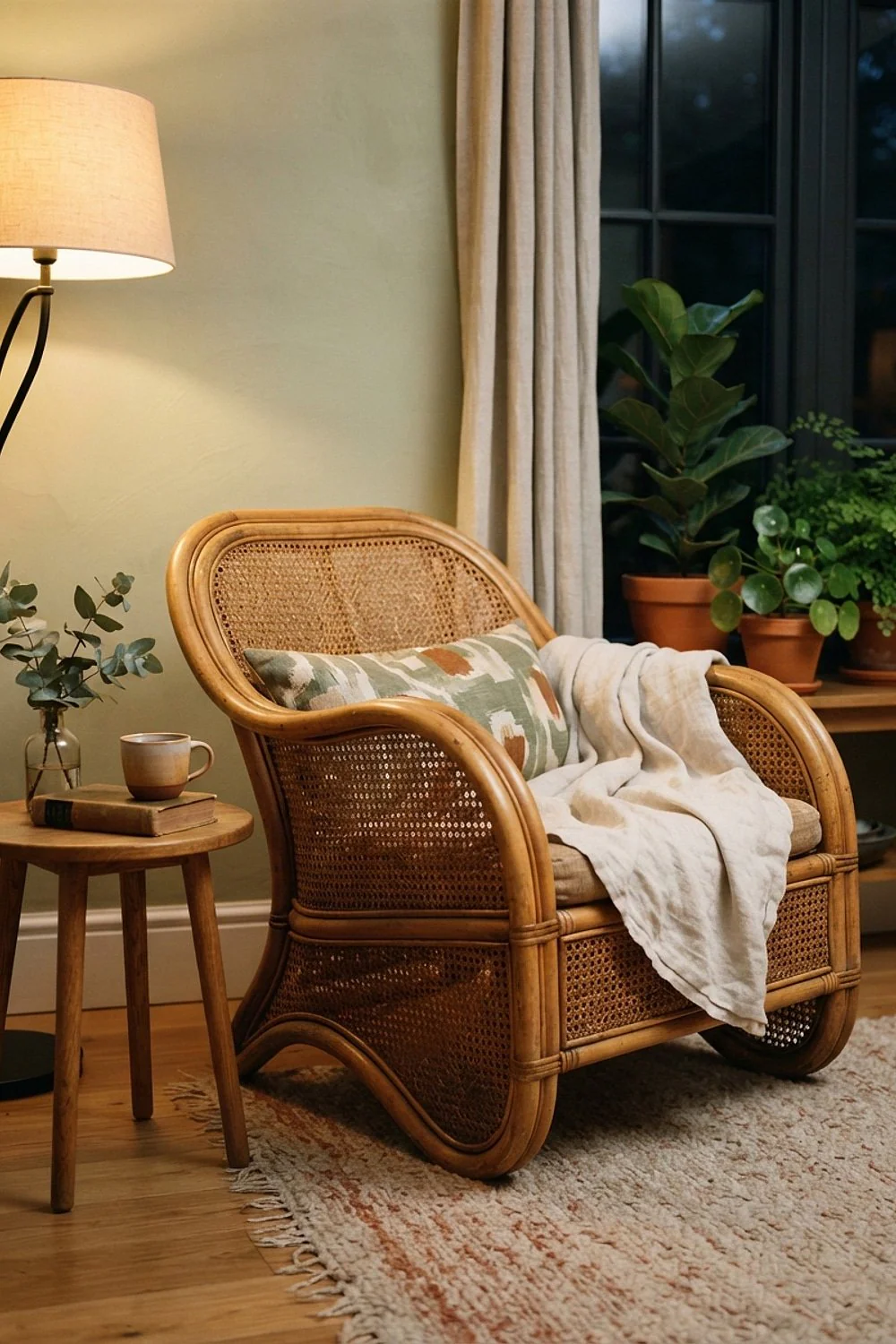
A rattan or cane chair in a warm honey finish glows when afternoon light hits it, and the open weave keeps a sunny room from feeling heavy. It pairs well with sage green or chalky white walls, and with the room colors already in the adjacent rooms.
A seat cushion in washable linen protects the weave and makes the chair comfortable for longer than 20 minutes. Keep it out of direct midday sun, which dries the cane and makes it brittle.
13. A 66-inch curved loveseat in a small apartment
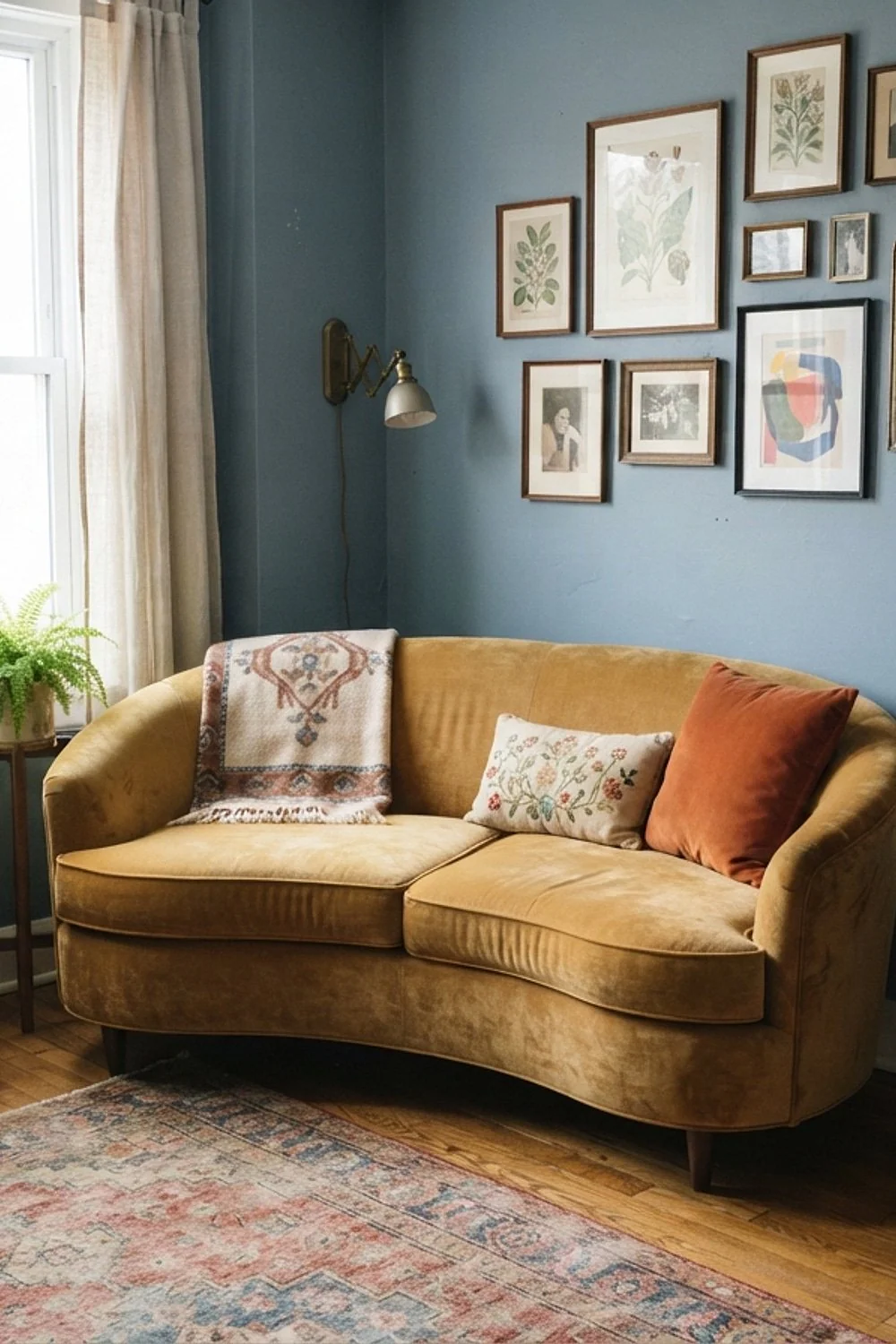
A loveseat around 66 inches wide with gently curved arms suits living rooms under 150 square feet. The rounded arms remove two sharp corners, so there’s less visual bulk than a track-arm sofa of the same size.
Measure the doorway and elevator before ordering, since curved frames can’t be tilted as freely as boxy ones. Mark the footprint on the floor with painter’s tape for a day to check the walkway.
14. Two scalloped side tables at different heights
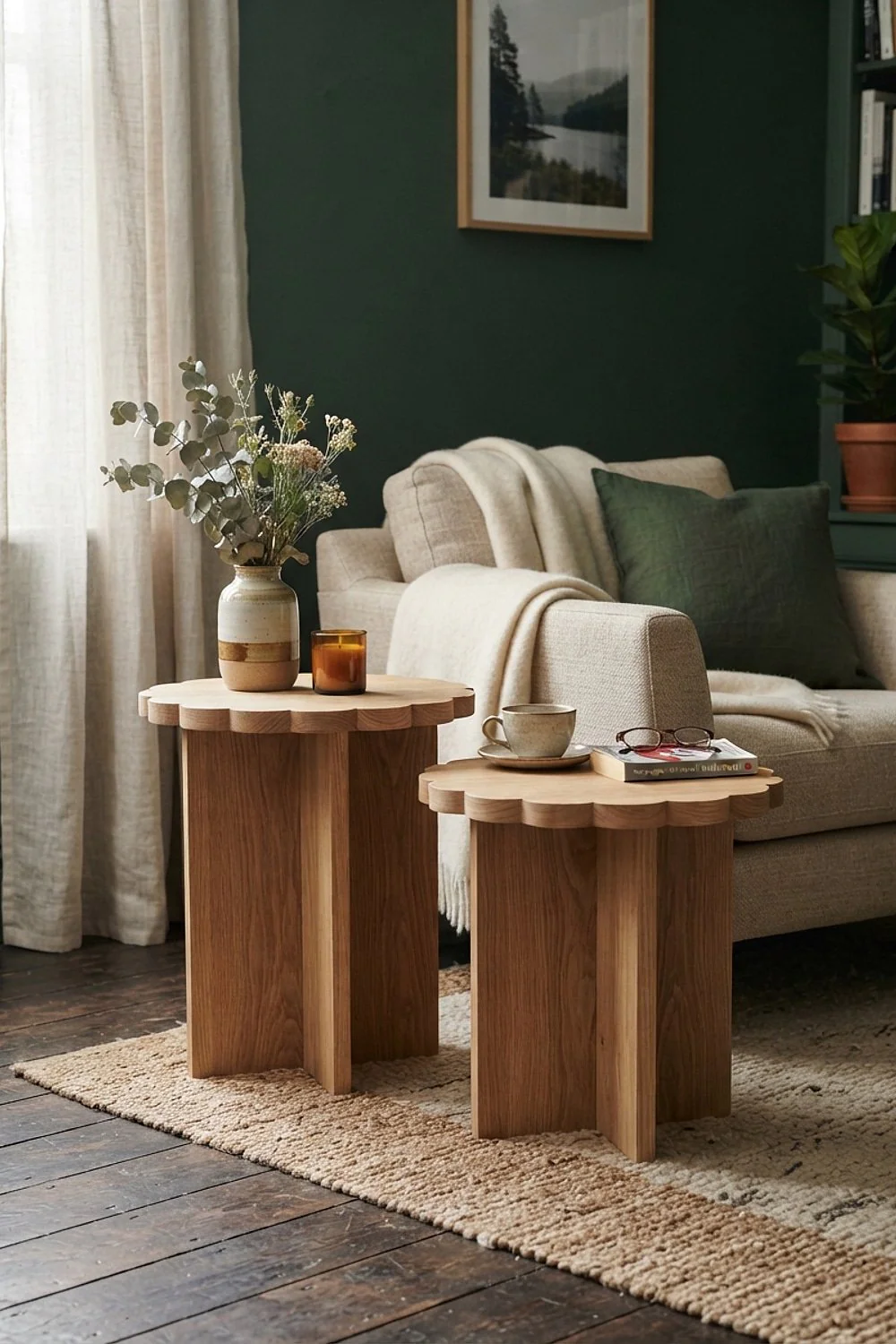
A scalloped table at 18 inches next to another at 22 inches breaks up the straight line beside the sofa. The uneven heights read as collected over time, not bought as a set.
Aluminum or powder-coated metal versions around $90 each handle a rental’s wear and tear without scratching. Keep the taller table beside the armrest so a lamp or plant sits at shoulder height.
15. A curved storage bench in the entry

A bench about 42 inches long with a gently curved front and cubbies underneath keeps shoes off the floor and gives a seat for lacing boots. The curve stops the front edge from catching coats and bags.
A depth of 14 to 16 inches suits most entries, and anything over 18 inches narrows the walkway too much. Add a washable cushion or woven baskets, since entry floors take the worst of rain and mud.
16. A curved banquette in the breakfast nook
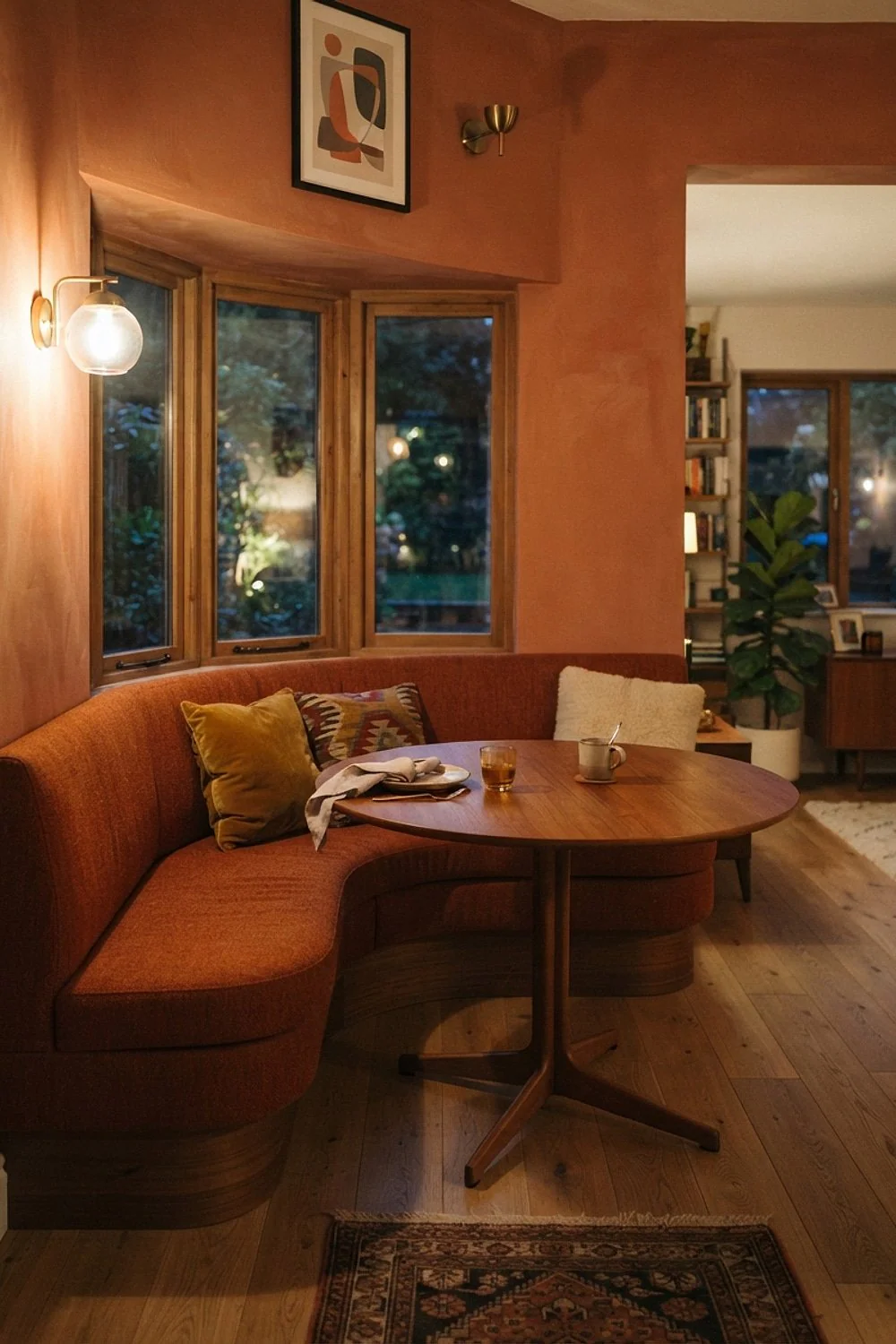
A curved banquette with a 17 to 18 inch seat height lets five people sit in the footprint that three straight chairs would claim. Everyone slides in from the open side, so nobody has to pull a chair out into the walkway.
Pair it with a 42 to 48 inch round table and a pedestal base. It’s the strongest fit for tight kitchens and for households that eat in shifts, because the seating never needs rearranging.
17. A round outdoor lounge set for backyard decoration

A circular outdoor sofa around a 36-inch fire table turns a patio into a conversation spot, and it’s a strong anchor for backyard decoration. Powder-coated aluminum frames with solution-dyed acrylic cushions resist fading and mildew.
Sets of this kind often cost $1,200 to $2,000, so measure a 10 x 10 foot pad first. Skip untreated wood in humid climates, where moisture works its way into joints.
18. A curved sectional dividing an open plan
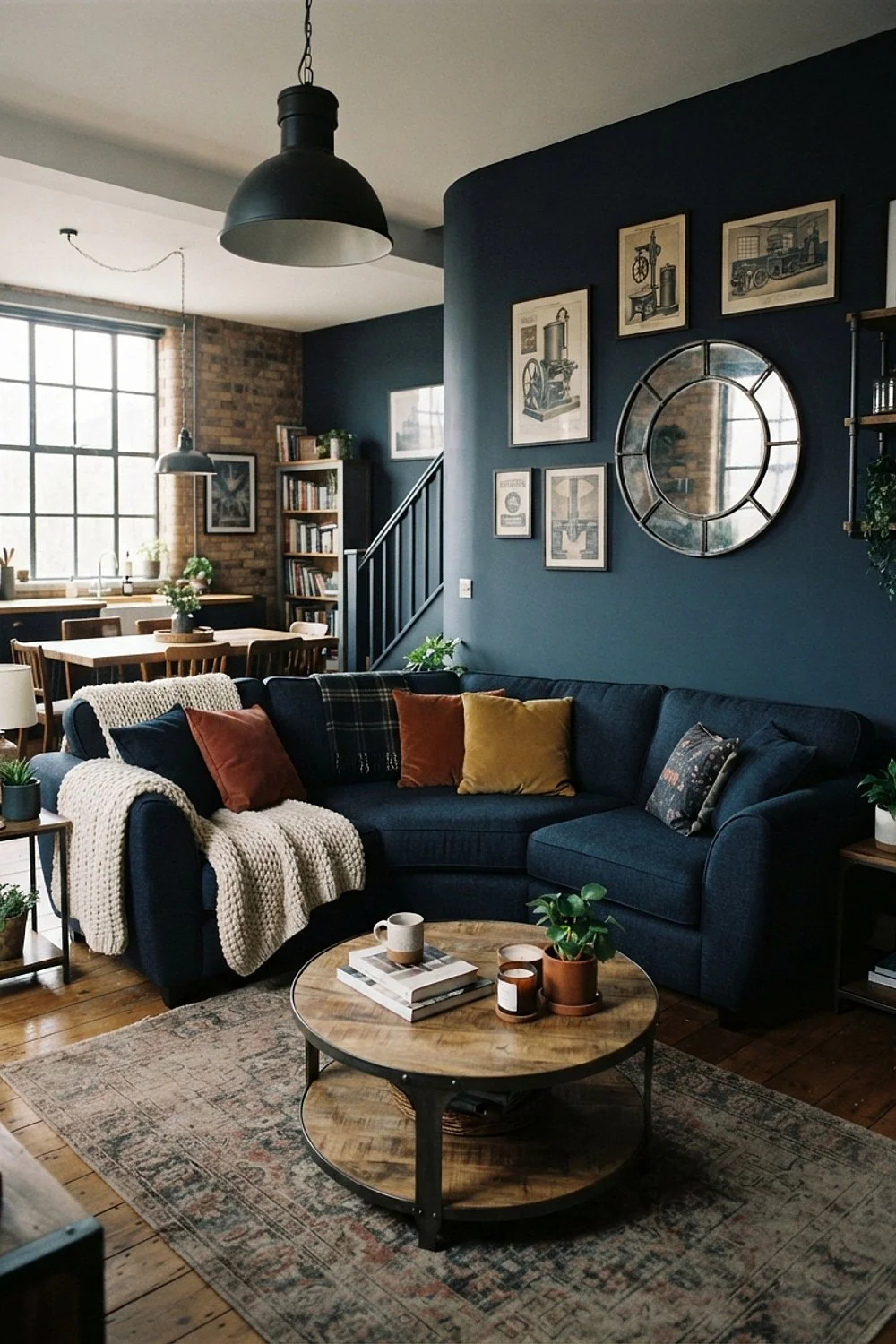
In an open living and dining area, a sectional with a gentle curve can mark the living zone without a wall. Place the back toward the dining table and leave 36 inches for the walkway behind it.
Sturdy low-pile fabric with a tight weave holds up in a high-traffic spot, and a console behind the back can double as a buffet. The layout works only if the room has at least 18 feet of length.
19. A curved window seat in a bay
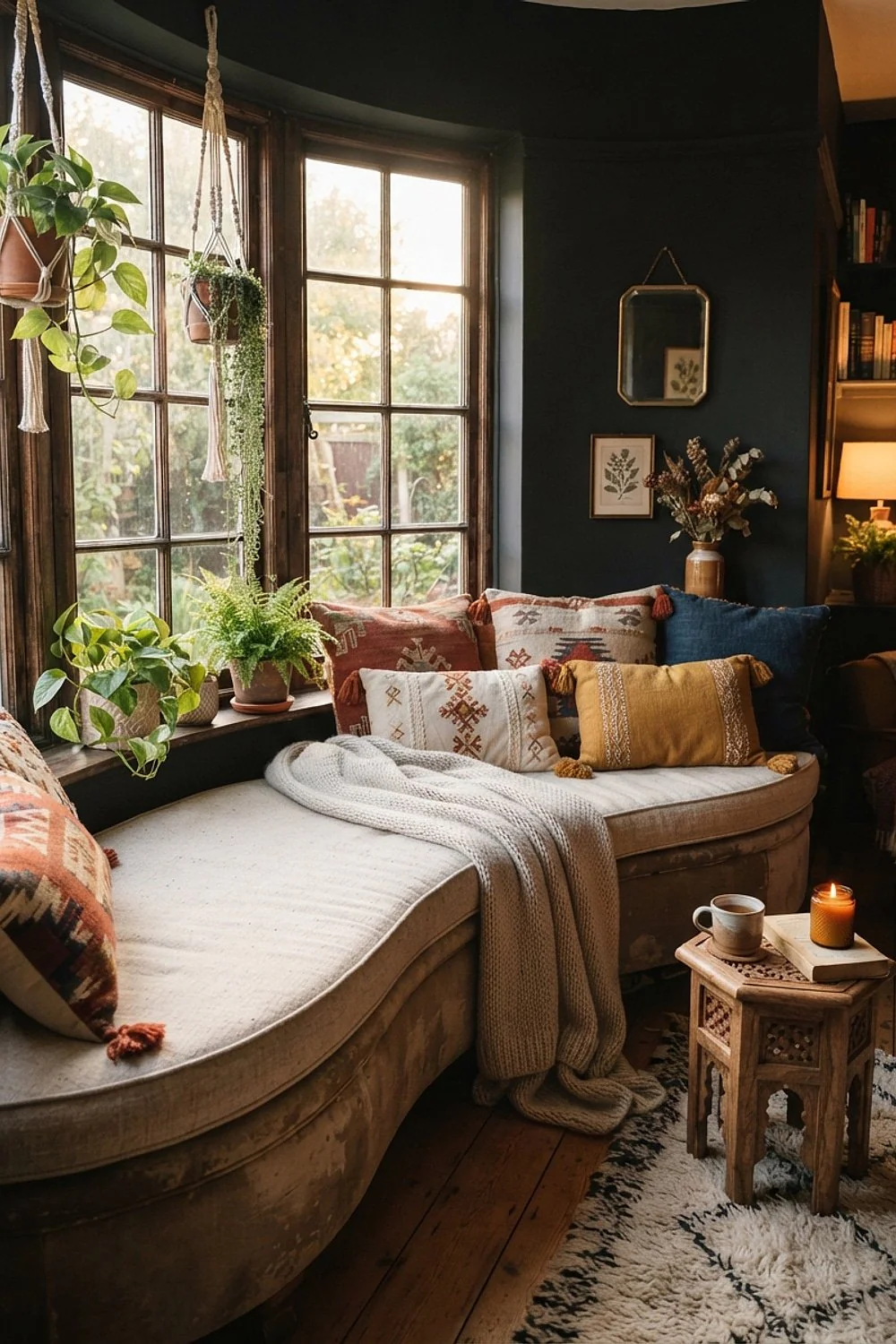
A bay window bench with a 16 to 18 inch seat depth and a 3-inch foam cushion becomes the room’s favorite perch on a gray February afternoon, when the low light slants across the floor. Built-in drawers underneath hold blankets and toys.
Cut the cushion on a template made from kraft paper, since bay angles are rarely exactly 135 degrees. A UV-protective liner stops the fabric from fading along the glass.
20. A curved-back chaise at the foot of the guest bed
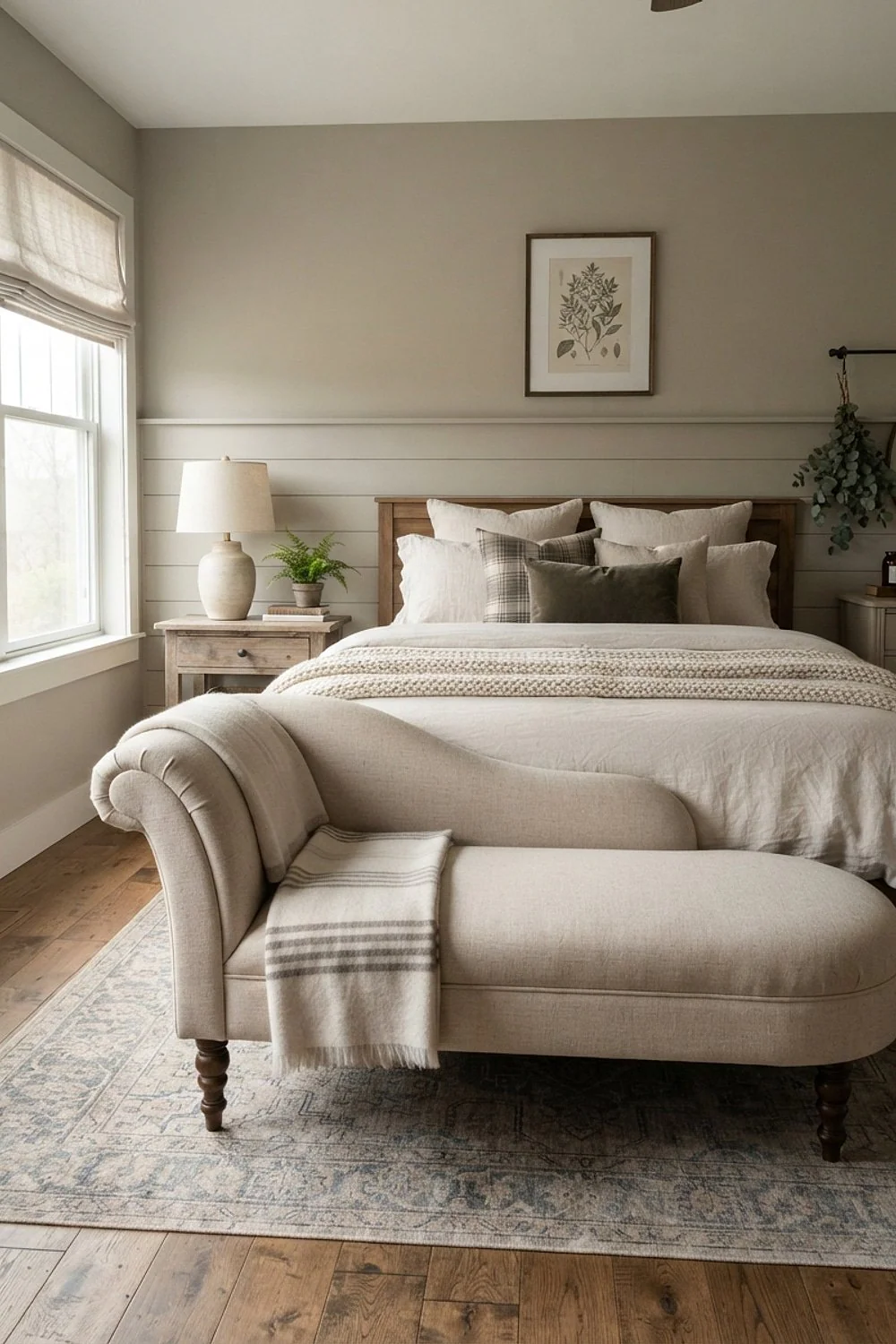
A chaise about 54 inches long with a curved back gives guests a place to sit and put on shoes, and the seat should sit at 17 to 19 inches high. Foam of 3 to 4 inches keeps it comfortable without sinking.
Keep it at least 24 inches from the bed’s edge so there’s room to walk past. A washable velvet or tight-weave cotton holds up to luggage and the occasional spilled coffee.
Things that elevate the room
A curved furniture living room needs more floor than a straight one, even though it looks lighter. That’s the counterintuitive part: a curve occupies a wider bounding box, but the missing corners make the room feel looser.
Look, the tape trick is worth the five minutes. Mark each piece’s footprint on the floor and walk the room.
- Sofa to coffee table: 16-18 inches
- Main walkway: 30-36 inches
- Round dining table to wall: 36 inches
- Bedside clearance: 24 inches each side
- Rug: front legs of all seating on it, usually 8 x 10 feet
Curved furniture can’t tuck into a corner the way a square piece does, so plan one open arc per room and let the rest of the furniture stay straight.
Making it flow between rooms
Does every room need curves to feel connected? Exactly not. One curved piece per room, repeated in a mirror, a lamp base or a table, is enough to carry the thread through a house.
Repeat one finish too. If the living room has oak and boucle, bring oak into the dining chairs and the same cream tone into a bedroom throw.
Check sight lines from the front door. The first curve you see, such as an arched mirror or round entry table, tells you the rest of the house follows the same logic.
Lessons learned
The biggest error is buying curves in the wrong scale. A 48-inch round table in a 10-foot dining room leaves too little chair clearance.
- Pushing a curved sofa against a wall
- Skipping a rug large enough to ground the shape
- Mixing four different curve radii in one room
- Choosing pale fabric without a stain-resistant finish
For upkeep, vacuum boucle weekly with a brush attachment and rotate cushions monthly. Curved wood edges show scuffs first, so a dab of matching wax pencil handles most chips.
Start with one curve
A curved furniture living room doesn’t need a full replacement. One round table, one arched mirror or one swivel chair is enough to see what changes.
Save or pin this list so it’s easy to find when you’re ready, and measure your walkway with painter’s tape before buying the first piece.
Frequently asked questions
Does a curved furniture living room work in a small apartment?
Yes, if the pieces are scaled down. A 66-inch loveseat, a 30 to 36 inch round table and one arched mirror open up the walkway without adding bulk.
How much space does a curved furniture living room really need?
A room of at least 12 x 14 feet handles a curved sofa and round table comfortably. Smaller rooms can still work with one curved piece and straight lines elsewhere.
Can curved furniture be mixed with straight-edged pieces?
It should be. A curved sofa with a rectangular rug and square side tables looks balanced, and the contrast makes the curve stand out.
What fabric holds up best on curved upholstery?
Tight-weave performance fabrics and washable linen blends resist stains and stretch. Avoid loose, looped weaves in homes with pets or young children.
6 Comments