

12 Autumn Japandi Bedroom Swaps That Take One Saturday
A $150 budget and one free Saturday are enough to turn a Japandi bedroom from summer-pale to autumn-ready. Nothing below needs a drill, a paint roller, or a delivery truck.
Every swap is reversible, so a bad call costs you ten minutes instead of a weekend. That matters in a style built on calm, because the fastest way to wreck it is to commit to a heavy change you regret by December.
Refreshing your Japandi bedroom this season
Japandi bedroom styling relies on a short list of materials: pale oak, linen, wool, paper, stoneware. Autumn doesn’t ask you to replace any of them. It asks you to deepen the tones and add weight to the soft layers.
Start with the bed, since it’s the largest surface in the room.
1. Oatmeal or mushroom linen on the bed
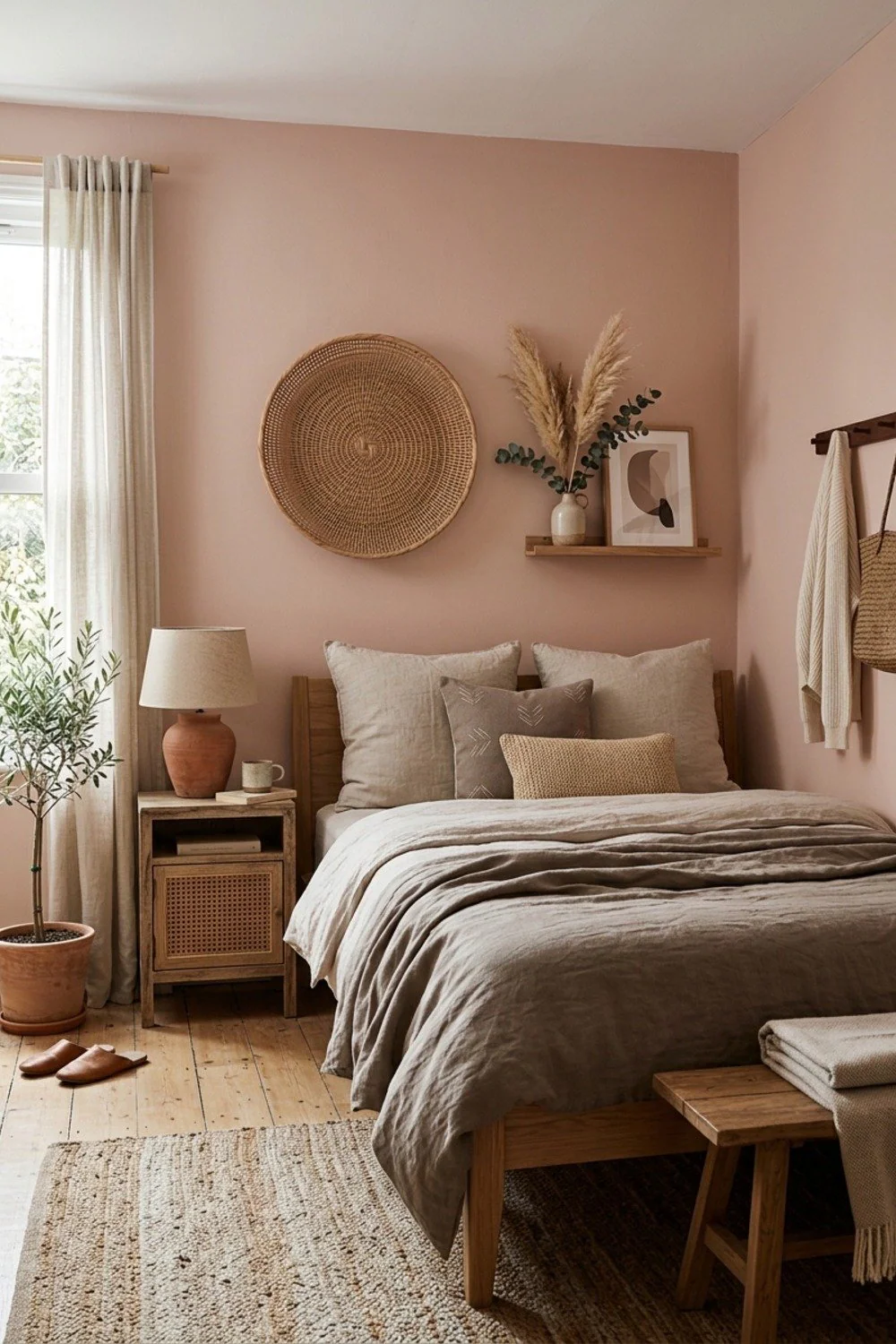
A stone-washed linen duvet cover in oatmeal or mushroom changes the room more than any new furniture. Summer white goes flat when the light turns amber around 4pm, while a muted taupe picks up that low gold and looks deeper without getting heavy.
Expect $90 to $180 for a queen set. Linen softens with every wash, so a mid-priced set isn’t a compromise. Avoid chocolate brown, which swallows the pale wood that holds the whole style together.
2. A 5 by 8 wool rug under the lower two-thirds of the bed
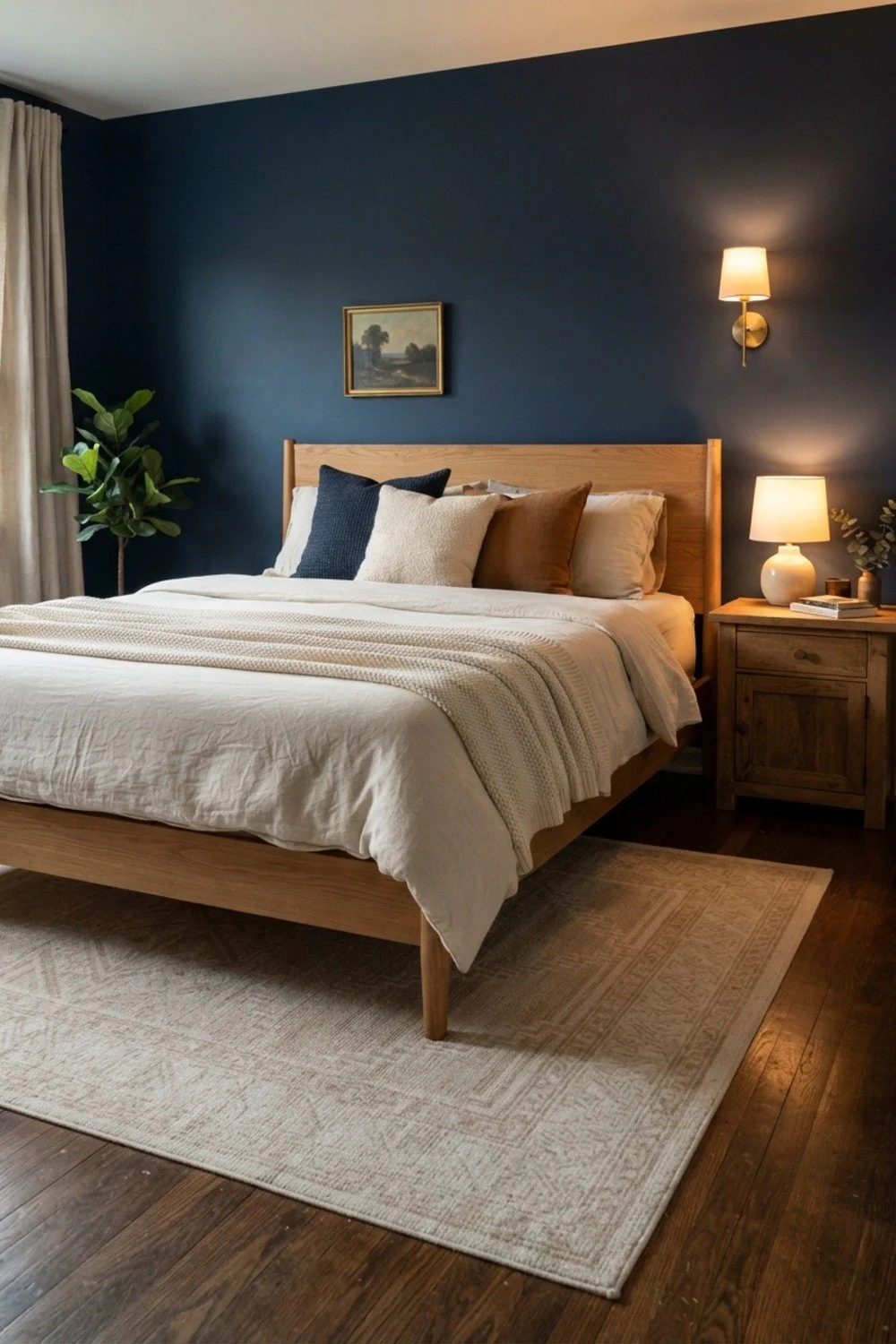
Slide a 5 by 8 foot wool rug under the foot and middle of the bed, leaving the head end bare. The first step out of bed in November is the cold floor, and thick wool pile fixes that. Choose undyed ecru or charcoal flecks.
This suits rooms under 12 by 12 feet, where a full 8 by 10 would crowd the baseboards. Skip anything with a latex backing that crackles when you roll it; a felt pad underneath does the gripping instead.
3. A wooden tray on the nightstand
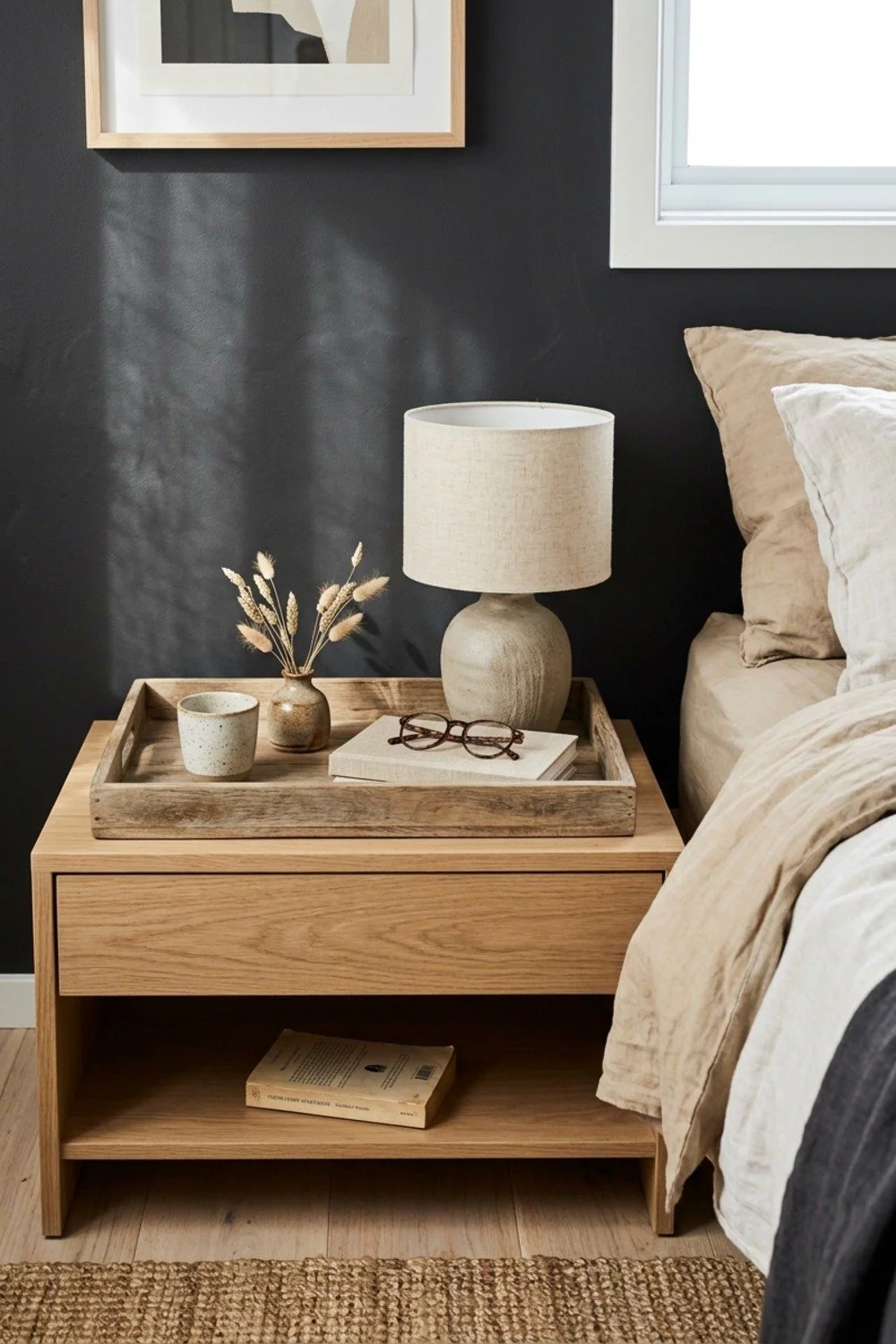
A shallow oak or ash tray, around 10 by 6 inches, gives the nightstand a boundary. Water glass, book, hand cream and reading glasses live inside it, and everything else gets removed. Dark mornings make clutter harder to ignore.
It works best for people who stack things on the nightstand without noticing. The tray costs $20 to $35 and lifts out in one move on days when you want the surface bare.
4. A paper lantern shade and a 2200K bulb
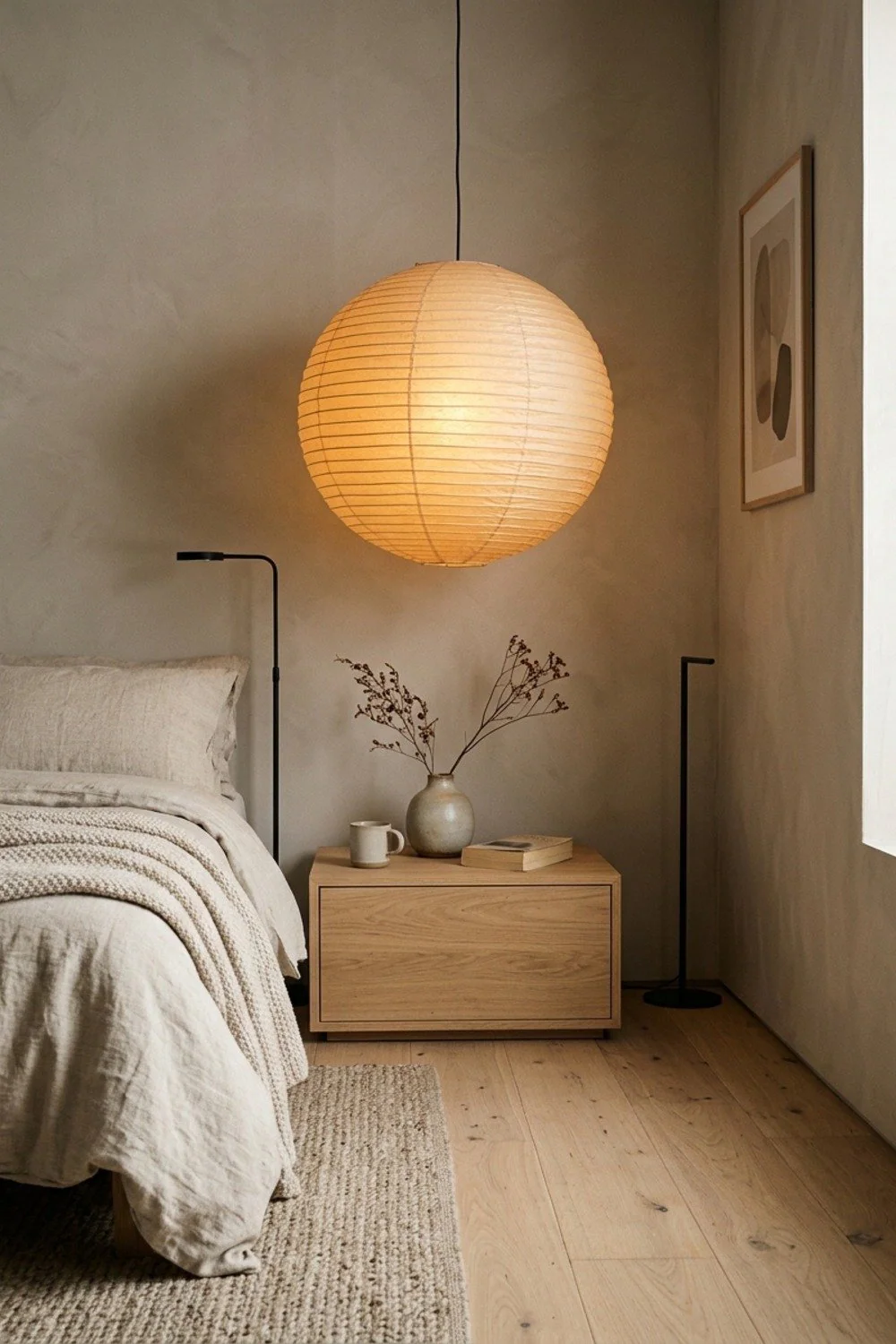
A rice-paper lantern shade with a 2200K to 2700K bulb turns a harsh bedside glow into something that looks like candlelight on a wall. Paper diffuses light into a soft, even oval. Basic shades run about $15 to $40.
Check the bulb’s box, because “warm white” can mean anything from 2700K to 3000K. Anything cooler than 3000K reads clinical against oatmeal linen. Never let paper touch the bulb; use LEDs.
Texture and light swaps for a Japandi bedroom in colder months
Japandi bedroom rooms depend on texture because the palette stays quiet. When color is limited to ecru, charcoal and oak, your hands and eyes do the work that a bright cushion would do elsewhere.
5. Bare branches in a stoneware vase
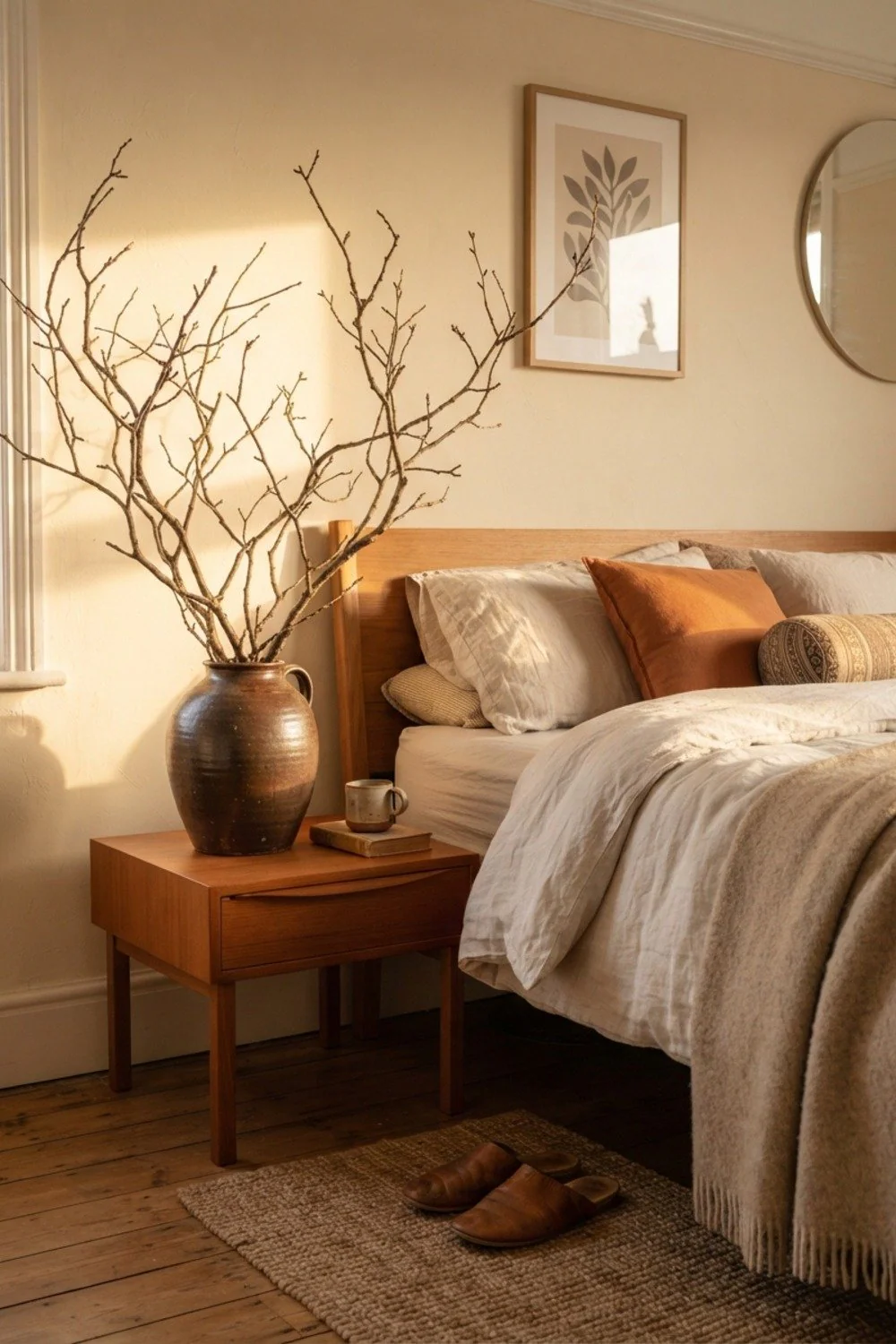
Three branches clipped from a backyard maple, birch or beech cost nothing and last for weeks. Put them in a tall, narrow stoneware vase on the dresser. The brittle rustle when you adjust them is part of the appeal.
This is the budget answer to seasonal decoration, and it can be tossed in the compost on the first of December without regret. Stick to odd numbers and keep stems at least 18 inches long, or the arrangement looks like a leftover.
6. A lidded seagrass basket at the foot of the bed
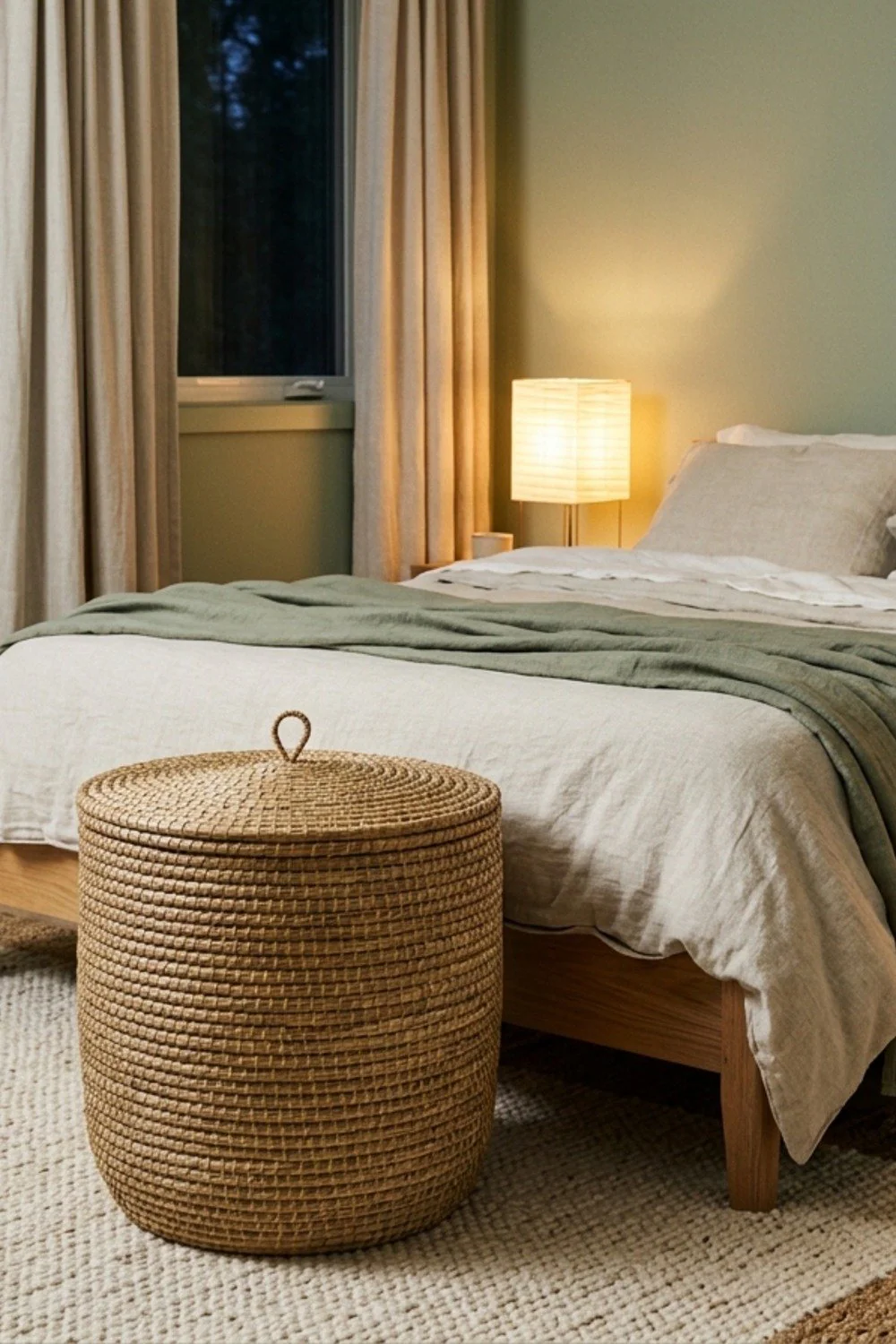
A lidded basket about 18 inches wide and 14 inches tall swallows the heavier throw, the spare pillow and the extra blanket you only need from November on. Everything stays out of sight, but within reach.
It suits anyone without built-in storage. Pick seagrass or water hyacinth with a woven lid, and look for $40 to $70 pieces without fiber shedding on the inside. A basket this size can hold an entire winter’s worth of bedding.
7. Fewer pillows, not more
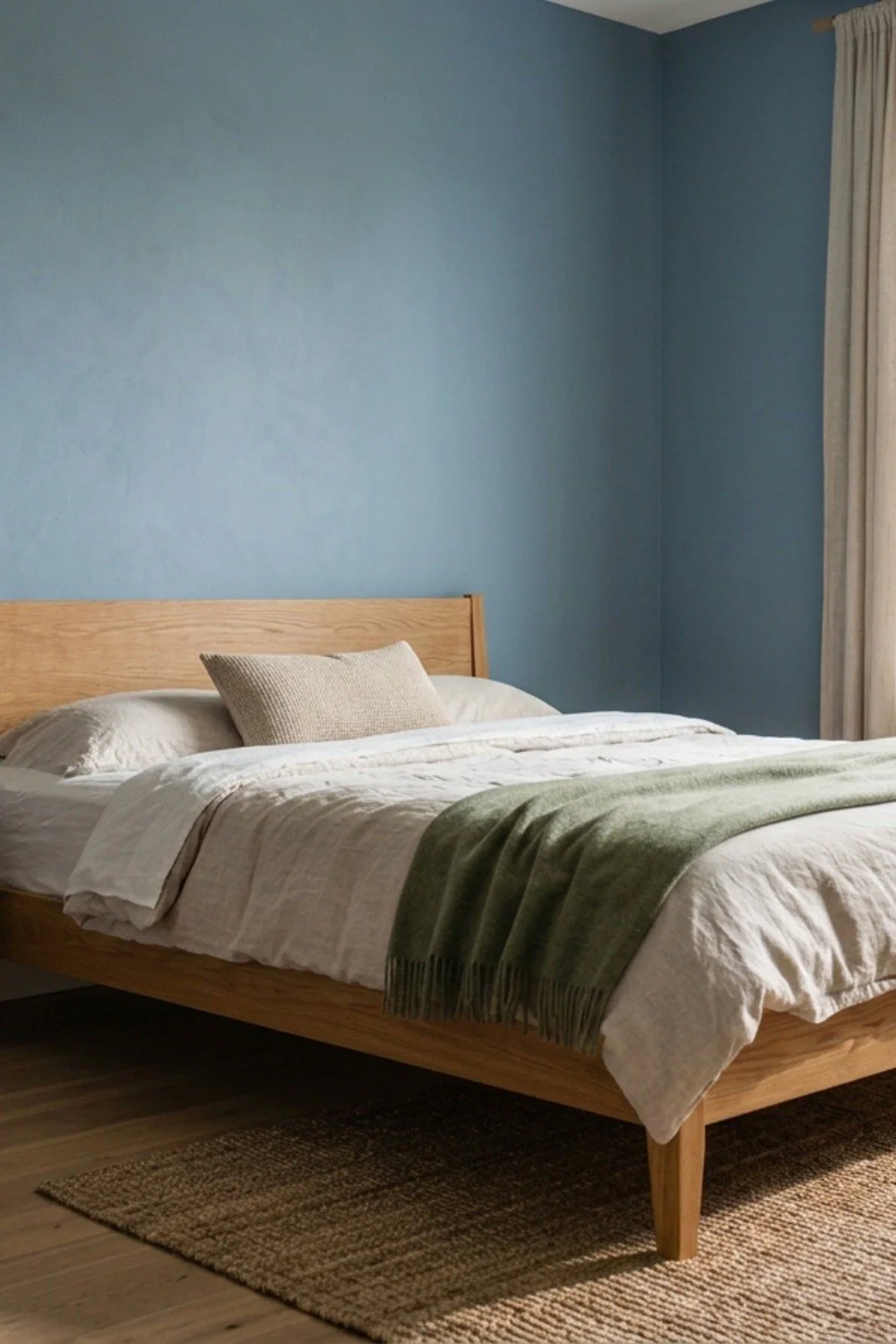
Five throw pillows on a platform bed is the quickest way to bury a Japandi bedroom. The temptation in autumn is to pile on texture, but this style works through empty space. Two sleeping pillows and one lumbar cushion are enough.
Make the lumbar a rust or deep clay linen, around 12 by 20 inches, for a single dose of seasonal color. If the bed looks crowded, remove one item before adding another.
8. The reading chair moved off the window wall
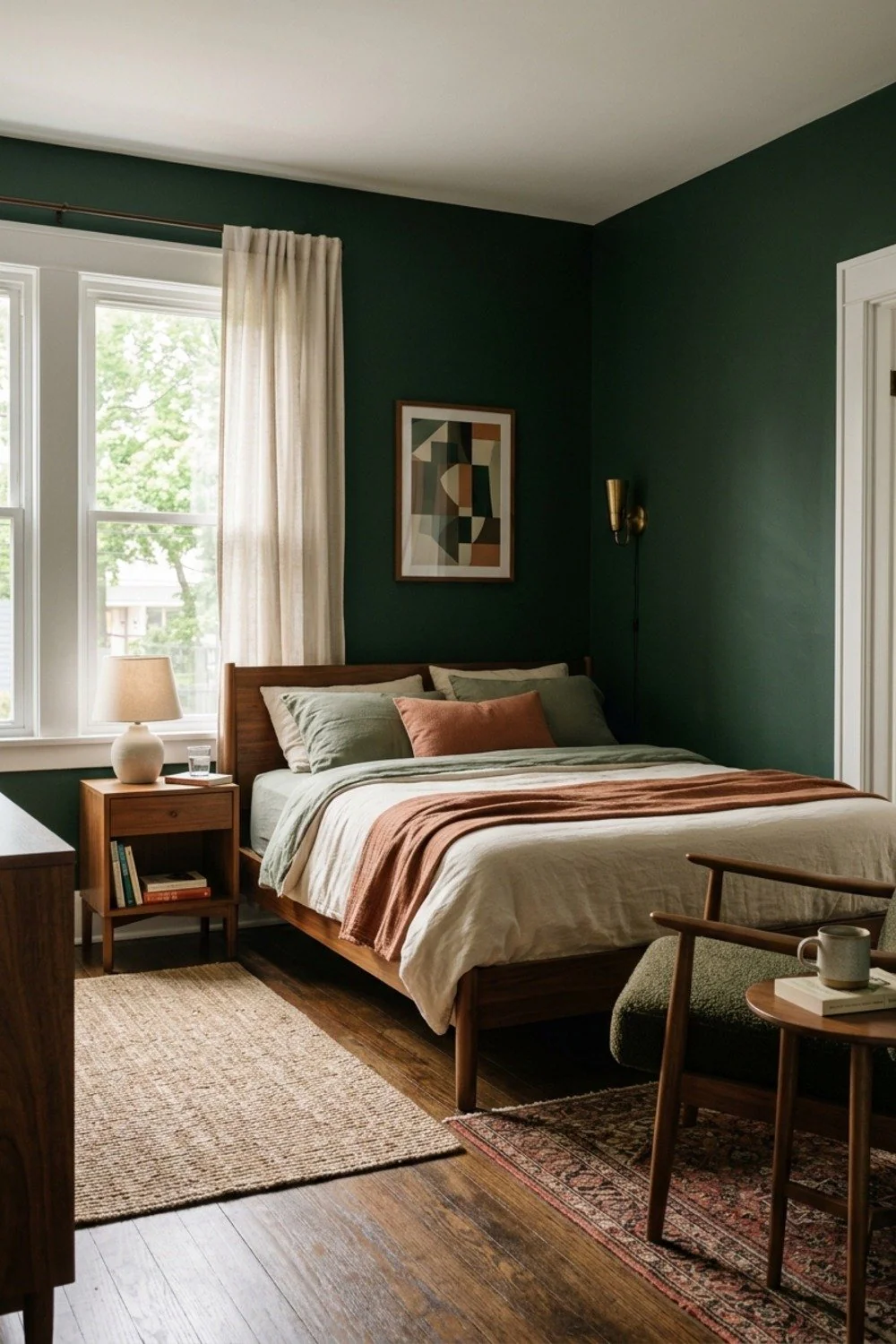
Moving a reading chair from the window to the corner beside the radiator, or just away from a draft, adds winter comfort for free. Single-glazed windows can feel five degrees colder within a foot of the glass, and that gap is noticeable at 7pm.
Leave 24 inches of clear walking space around the bed. If the shift blocks a door swing, shift it back; furniture moves like this can be undone in a minute.
Things that elevate the room
Japandi bedroom details do the finishing work, and they should be few. Each one needs a spot to itself, with room around it so it can be read as a single object.
9. One ceramic bowl with nothing in it
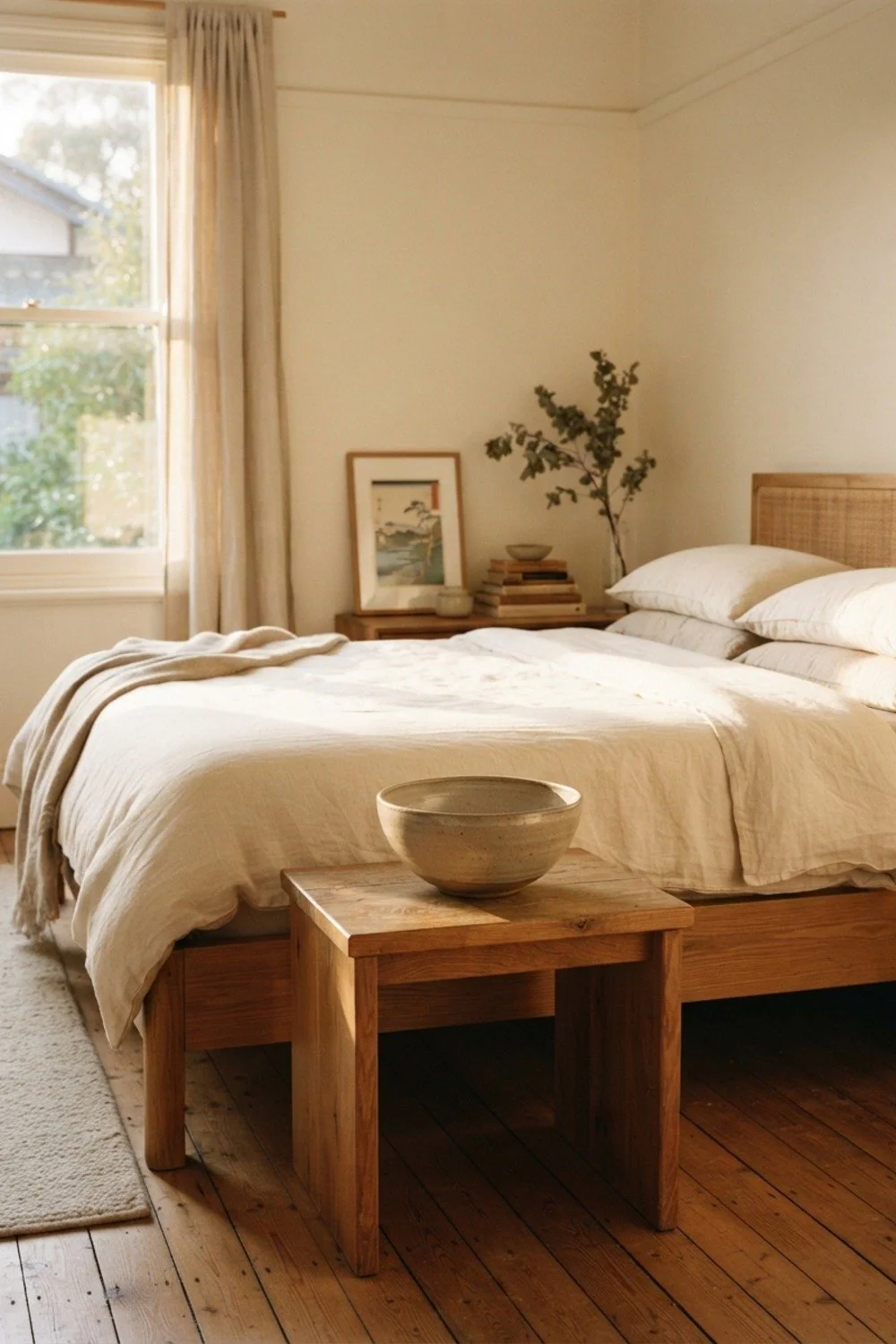
A matte stoneware bowl, around 8 inches across, in iron-brown or charcoal glaze, makes a dresser look finished. Leave it empty or set a single pine cone inside. Empty space is the point.
Handmade pieces from a local potter run $35 to $80, and secondhand shops often have unglazed-base bowls for under $15. Avoid glossy glazes; they reflect lamp light in a way that feels busy.
10. A flat-weave wool throw folded over the footboard
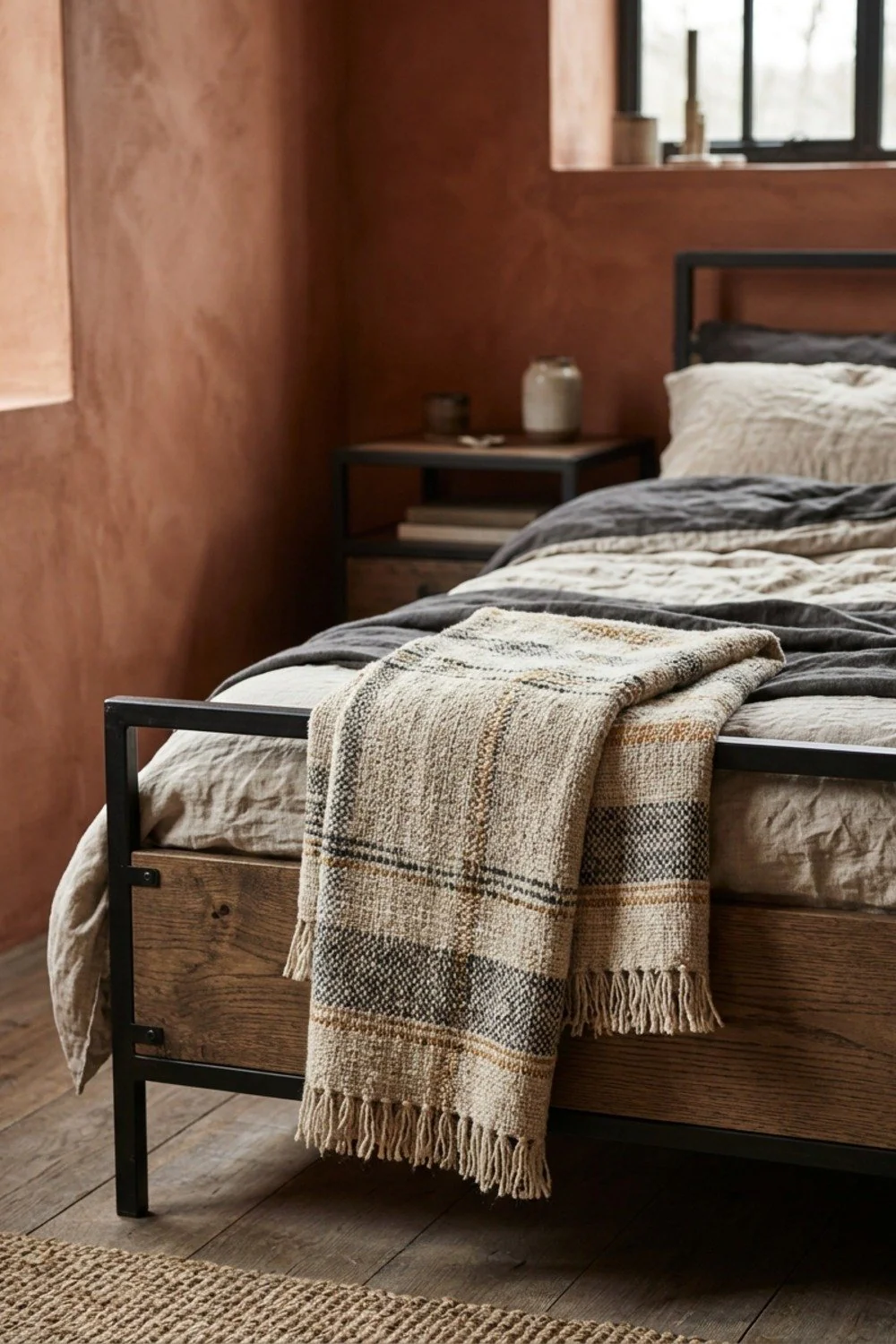
A tightly woven wool throw gives steady warmth and holds its shape. Folded in thirds it takes up about the space of a shoebox, and the rough, dry hand of the wool contrasts with smooth linen.
Choose undyed ecru or oatmeal for a quiet palette, and expect to spend $80 to $160. Skip acrylic blends, which look similar for a month and then pill and spark with static in dry winter air.
11. A charcoal ink print in an unglazed oak frame
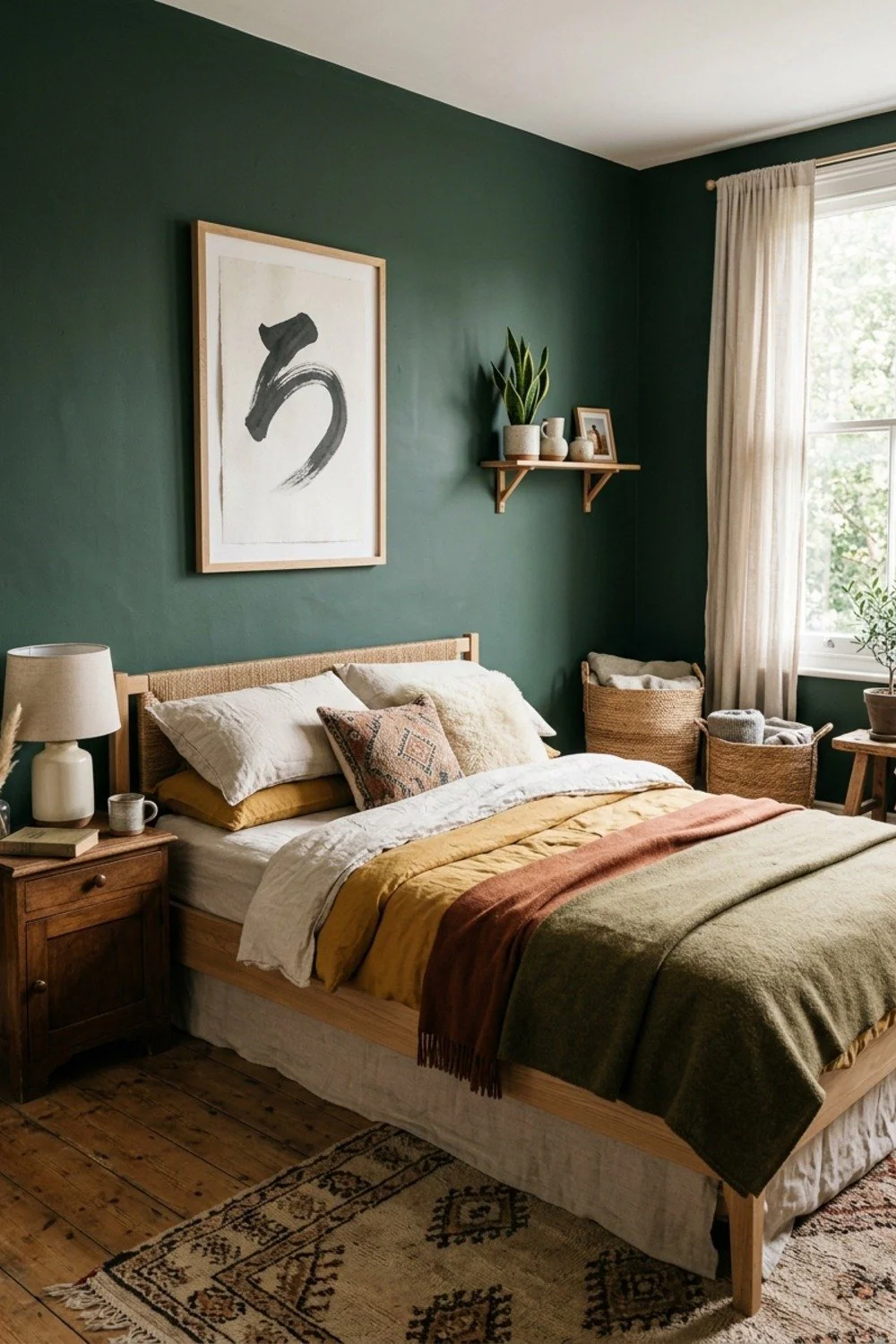
One large print, about 24 by 36 inches, in charcoal and burnt umber, balances the lighter oatmeal bedding. Use a sumi-style brush study or a simple horizon line. It does the same job as heavy autumn curtains, without the bulk.
Hang it with removable strips if the walls are rented, and test the weight rating first. Anything over 5 pounds needs a proper hook, or it will drop at 3am.
12. A 40-inch bench at the foot of the bed
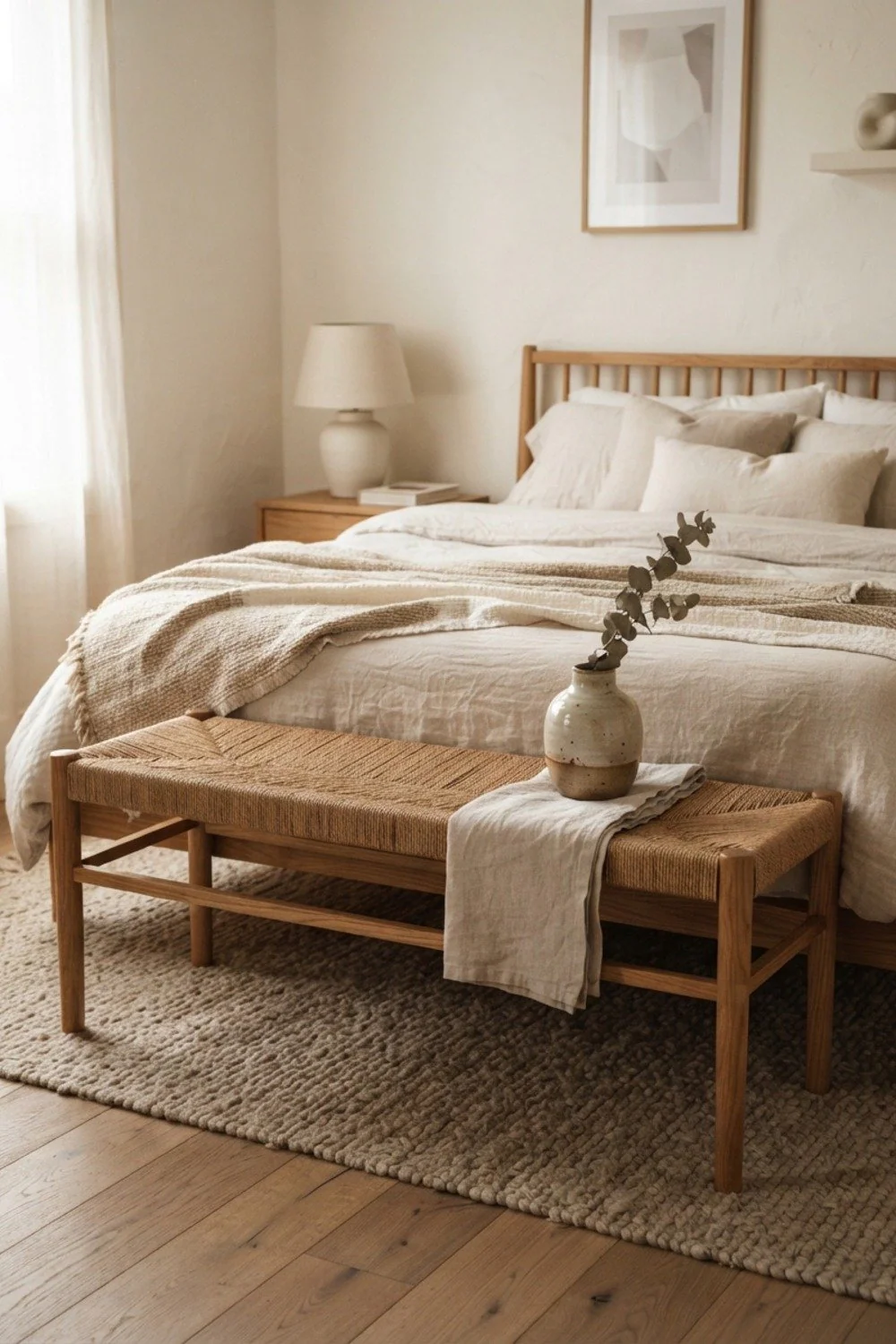
A wooden bench around 40 inches wide, about two-thirds the width of a 60-inch queen mattress, anchors the foot of the bed. Anything narrower looks lost; anything full width looks like a second bed.
A 16 to 18 inch seat height works for pulling on socks and for stacking the folded throw. Choose pale ash or oak with slim legs, and keep it free of cushions so the grain stays visible.
Storing the off-season pieces
Storing summer pieces properly means next June takes fifteen minutes instead of an afternoon. Treat it as the second half of the ritual, since a clean fold now prevents musty creases later.
- Wash the white linen once more and dry it completely, because damp fabric in a closed bag turns sour within weeks.
- Use breathable cotton bags or a pillowcase, not sealed plastic, which traps moisture and yellows pale fabric.
- Drop a cedar block or a small sachet of dried lavender into each bag, replacing them yearly.
- Label with painter’s tape so nothing gets mixed up and nothing leaves a sticky residue.
- Lay sheer curtains flat on a shelf, not in a tight bundle.
A shoebox-sized bin handles small objects like summer vases and candle holders. Wrap them in a clean tea towel, not newspaper, which transfers ink onto glazed ceramics.
Year-round foundations worth keeping
The pieces below should stay put in every season. They carry the Japandi bedroom through the changeover, so the room never looks unfinished during a swap.
- A low platform bed in oak or ash, with a headboard no taller than about 36 inches above the floor.
- Walls in a pale, slightly greige room color, such as a soft putty white.
- One black or charcoal accent, such as a lamp base or picture frame, for contrast.
- A clear floor, with nothing stored under the bed.
Here’s the counterintuitive part: wool is not just a winter fiber. It absorbs up to about 30% of its weight in moisture before it feels damp, so a thin wool throw can actually keep a bed more comfortable in July than a synthetic one.
That is why the foundation layer stays and only the accents rotate. Changing too much at once is the common mistake, because the room never gets to settle.
Keeping the Japandi bedroom calm all season
A Japandi bedroom rewards restraint, so change a few things and let the room breathe. Start with the bedding and the bulb, since those two swaps cost the least and make the biggest difference by late afternoon.
Save or pin this list so it’s ready next time the light shifts. Before buying anything, measure the space at the foot of your bed and the width of your nightstand, then pick one swap and try it this weekend.
Frequently Asked Questions
How much does it cost to refresh a Japandi bedroom for autumn?
Most refreshes land between $100 and $300. Linen bedding, a paper lantern shade and a wool throw cover the biggest changes, and yard branches fill the rest for free.
Can a Japandi bedroom work in a rental?
Yes, because nearly every swap here sits on a surface or floor. Use removable strips for art, a rug for warmth, and lamps instead of overhead lighting, and nothing touches the walls or the lease.
What colors suit a Japandi bedroom in autumn?
Oatmeal, mushroom, clay, rust and charcoal sit best against pale wood. Keep to two or three, with one deeper accent, and avoid saturated oranges that compete with the quiet palette.
How many pieces should change at once?
Three to five is plenty. Change the bedding, the bulb and one accent first, then live with the room for a few days before adding more.

4 Comments