
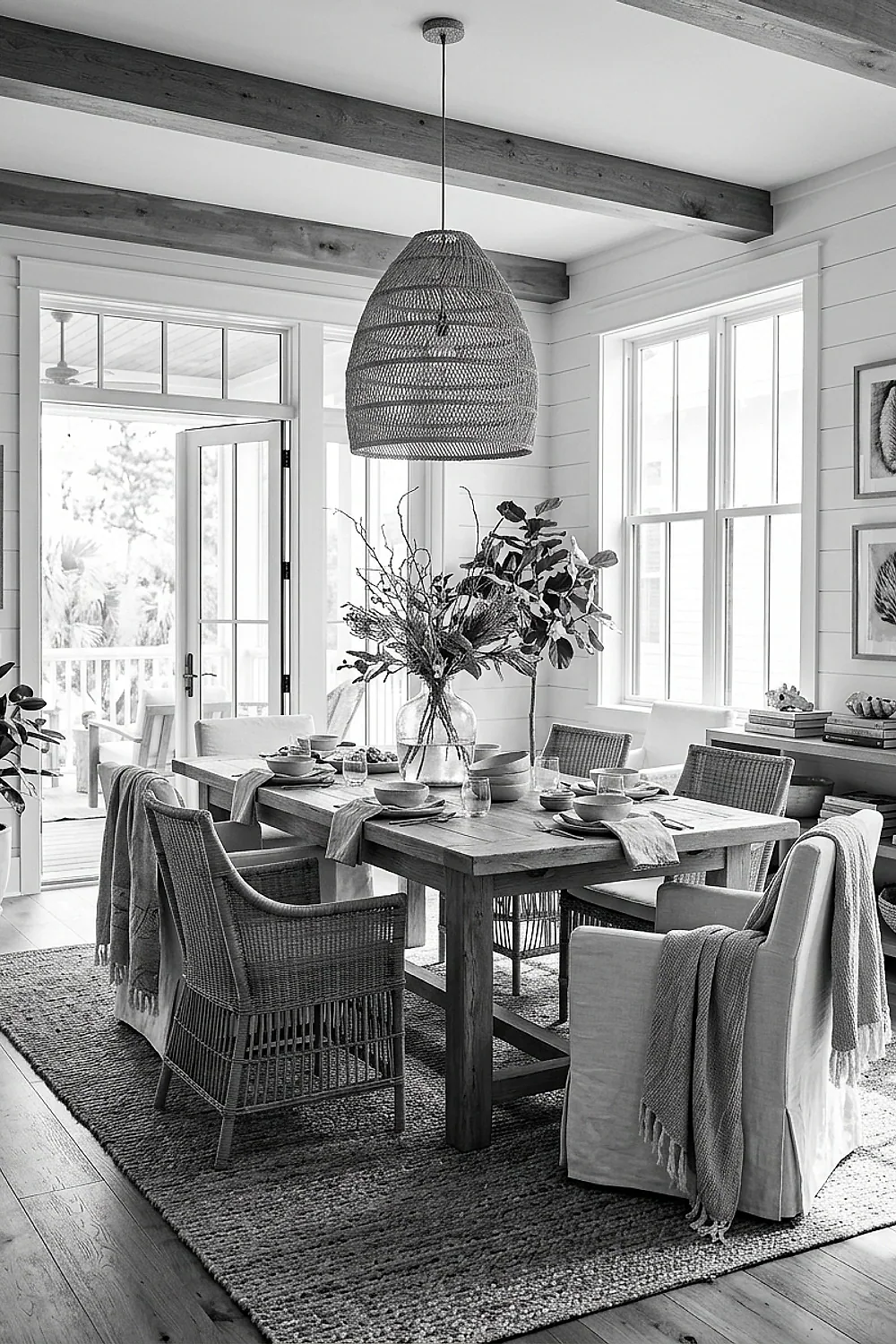
12 Coastal Dining Room Ideas for Relaxed Meals
By the end of this list, a pared-back coastal dining room will be a short, doable plan: twelve decisions, each one about taking something out or choosing one good thing instead of five okay ones. The coastal dining room look doesn’t need a shell collection or a rope-wrapped anything.
It needs a good table, soft light, and about three materials. Everything below can be done in a weekend, and none of it needs a half-finished stage where the room looks worse before it looks better.
Less but Better: Coastal Dining Room the Minimalist Way
1. One table, sized to the room

A 72 by 36 inch table seats six and still leaves about 36 inches of clearance behind each chair in a 12 by 14 foot room. That clearance is what lets people slide in and out without scraping the wall. It’s the single measurement that decides whether the room feels calm or cramped.
Skip the extension leaf unless hosting happens monthly. A table that’s permanently too big eats the floor and makes every other piece look like it’s crowding in.
2. Matching chairs in a single, forgiving fabric
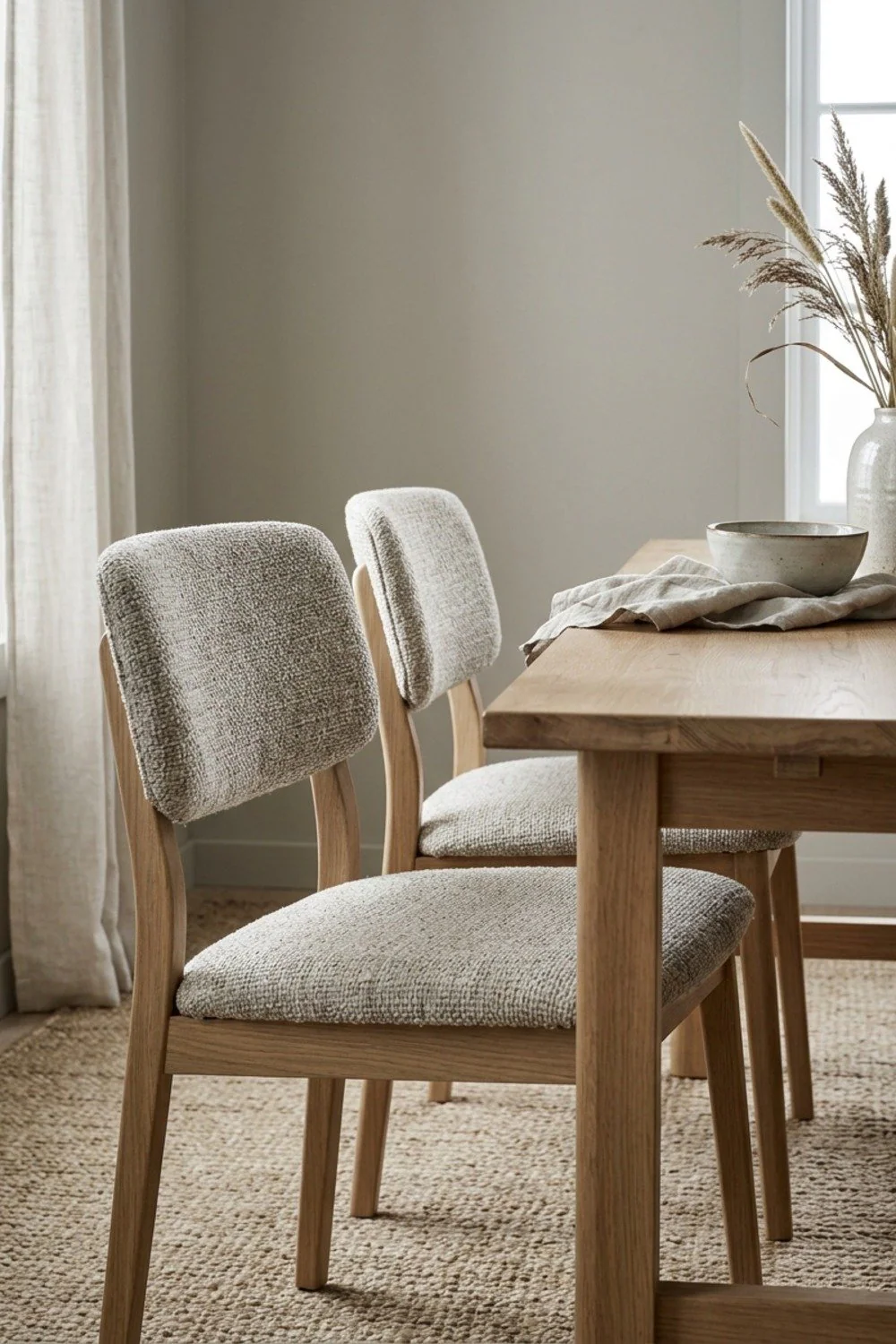
Six identical chairs with washable slipcovers beat a mixed set for a minimalist room, because repetition reads as order and the eye stops hunting for differences. Natural cotton or linen-blend slipcovers run about $60-$90 each and can go through the washer after a red wine incident, ideal for families with kids.
Mismatched chairs work in a big, busy room. In a small one, they act like visual static. Avoid slipcovers in a stiff weave or a shade that fights the table; wash cool and reinstall slightly damp so the fit stays smooth.
3. A three-shade palette, painted in one afternoon
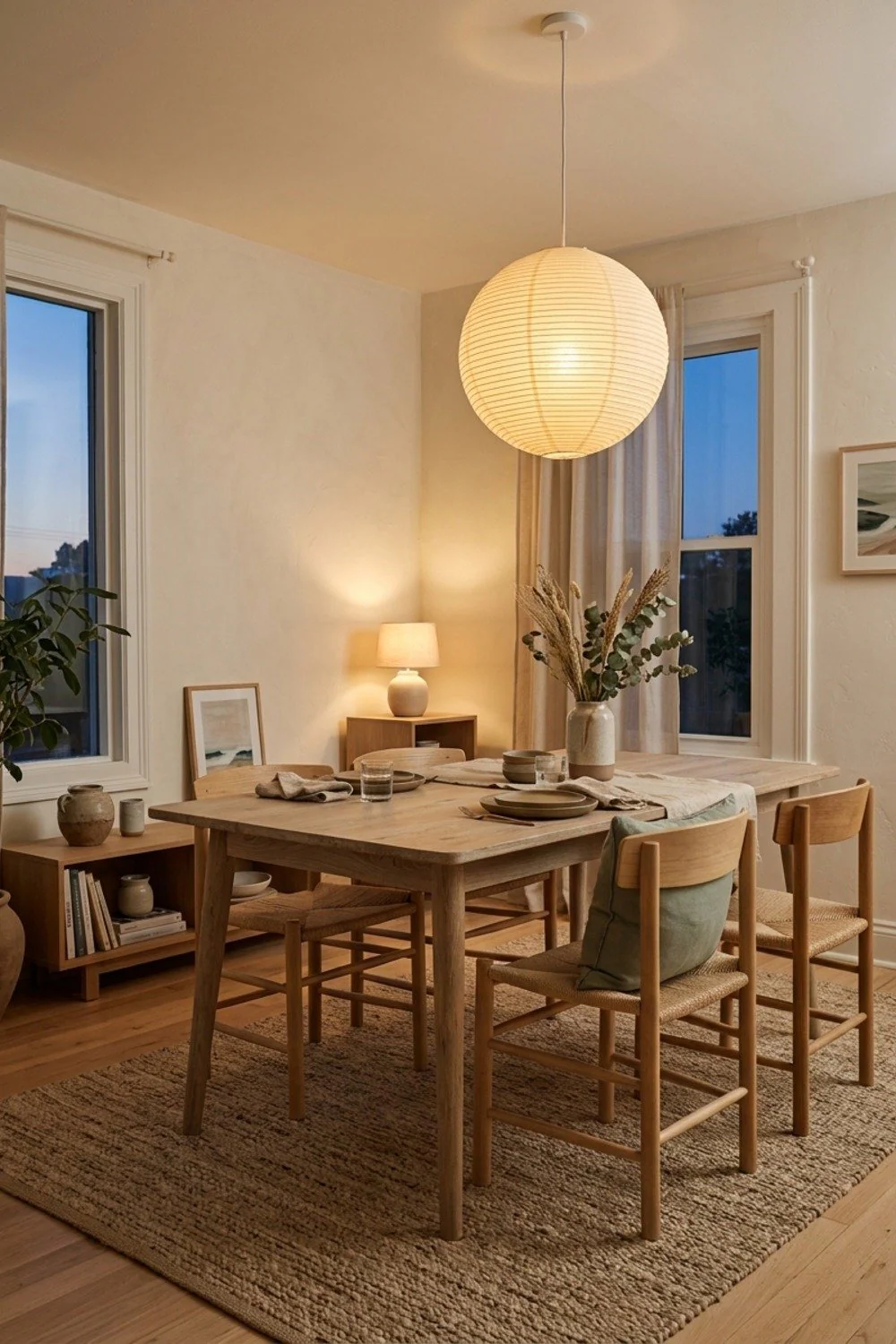
Room colors for a coastal dining room come down to a soft white such as Benjamin Moore Simply White, a sandy greige, and one deep blue used sparingly. Here’s the counterintuitive part: a pure bright white often looks flat and chilly by late afternoon, while a white with a hint of yellow stays glowing.
Limit the blue to a single chair, a vase, or the lower half of one wall. Paint the whole room in one weekend, since a half-taped wall sitting for three weeks is the kind of compromise that never gets finished.
4. A secondhand wood table instead of a new one
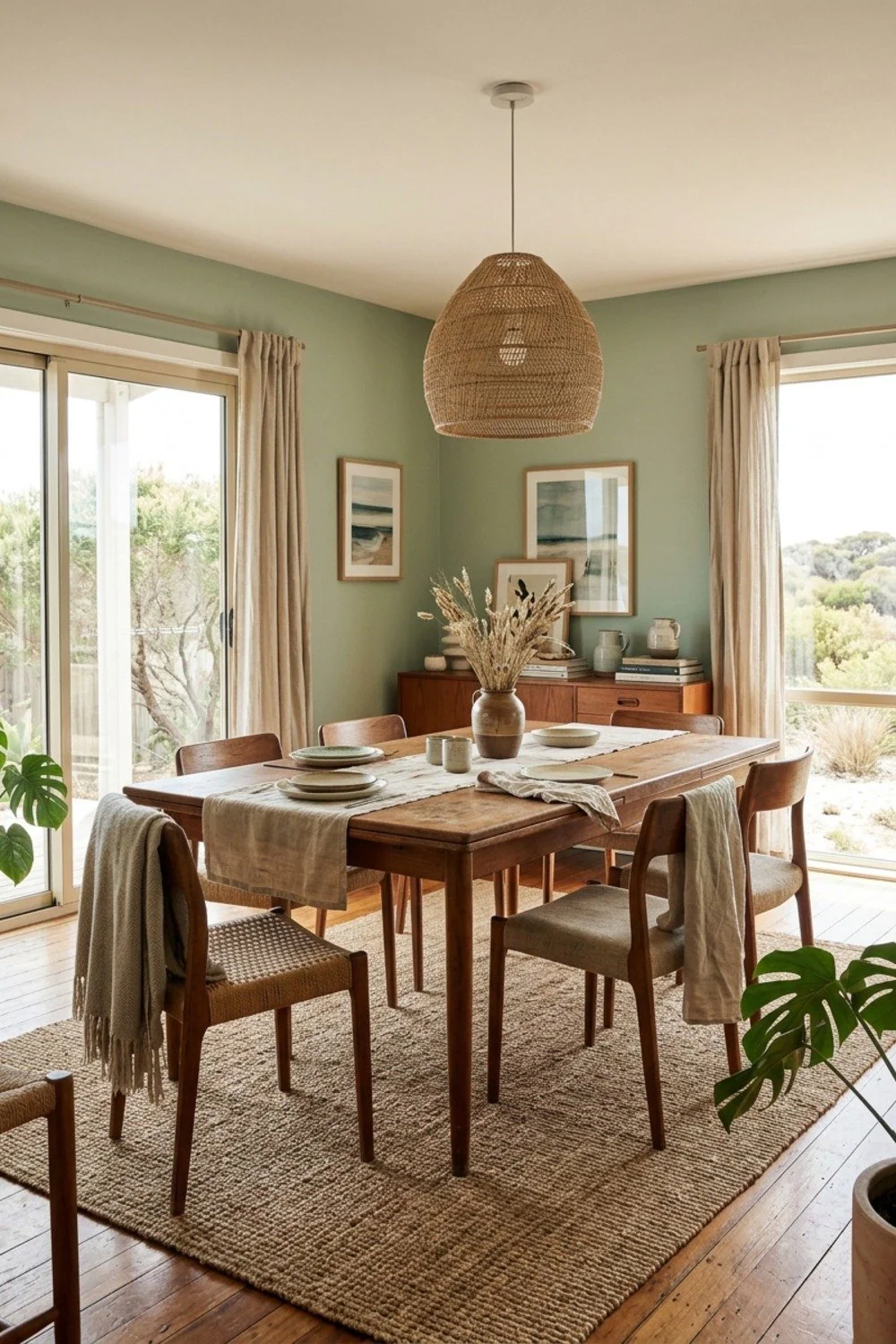
A solid oak or pine farmhouse table from a thrift store or online marketplace usually costs $150-$300, while a new one of the same wood runs $900 or more. A light sanding and a matte hardwax oil finish takes about four hours and leaves a pale, driftwood-like surface.
Check the legs for wobble before paying. Cosmetic scratches sand out, but a cracked leg joint is a repair bill.
5. A single sideboard that hides everything

A 16 to 18 inch deep sideboard with closed doors holds linens, candles, and spare tableware without a single item left visible. Open shelving looks lovely for about a week, until the first stack of mismatched bowls shows up.
Choose white oak or a whitewashed finish so it blends with the walls. This suits rooms where the dining area also catches the mail and the school bags.
6. No anchors, no oars, no “Gather” signs
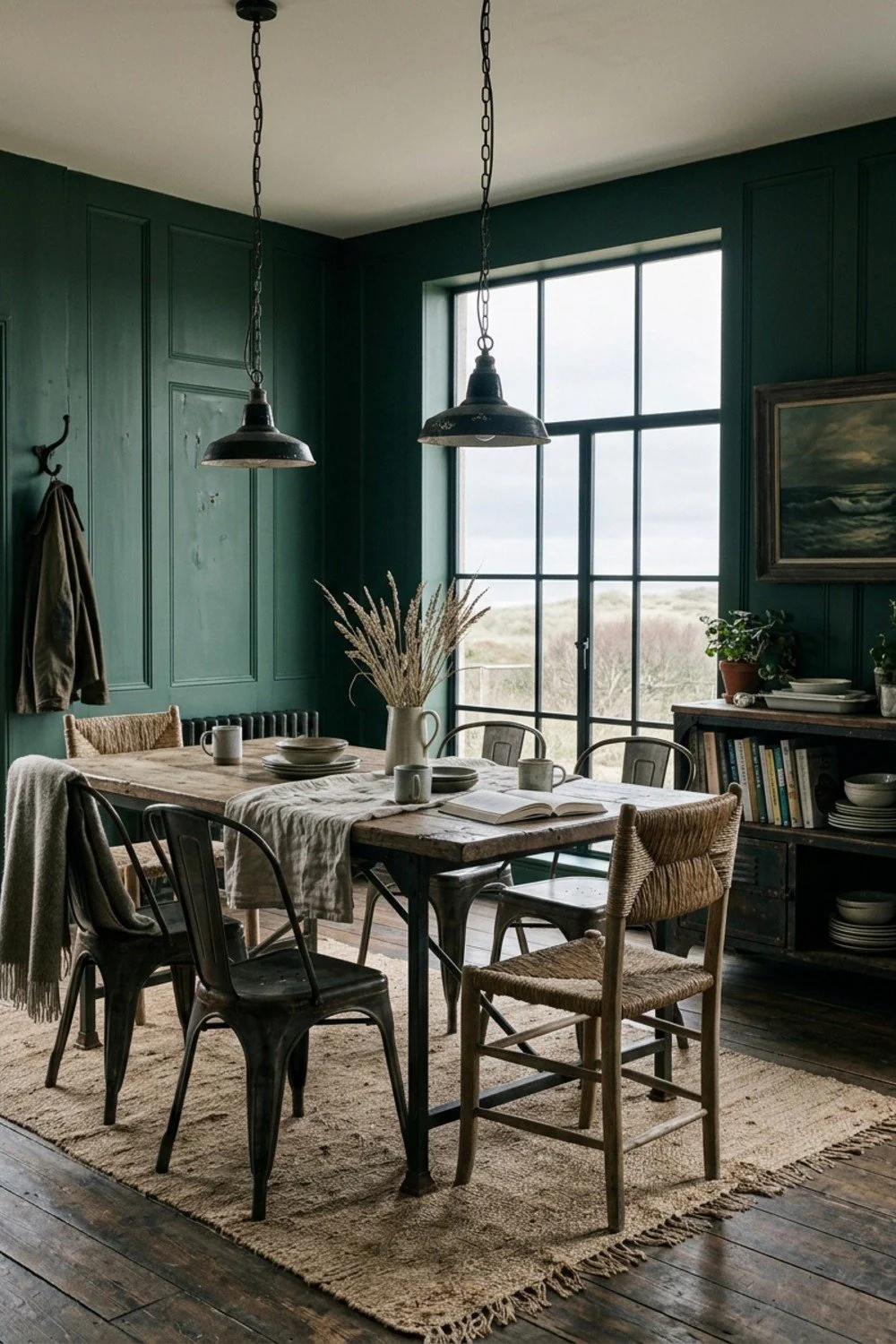
The most common coastal mistake is a theme: anchors, ship wheels, and a wooden sign shouting a verb. These read as a beach gift shop, and they collect dust on every curve.
The sea can be suggested through color and texture alone. A bleached wood bowl says more than a plastic starfish, and it costs one purchase instead of ten.
7. A single low centerpiece
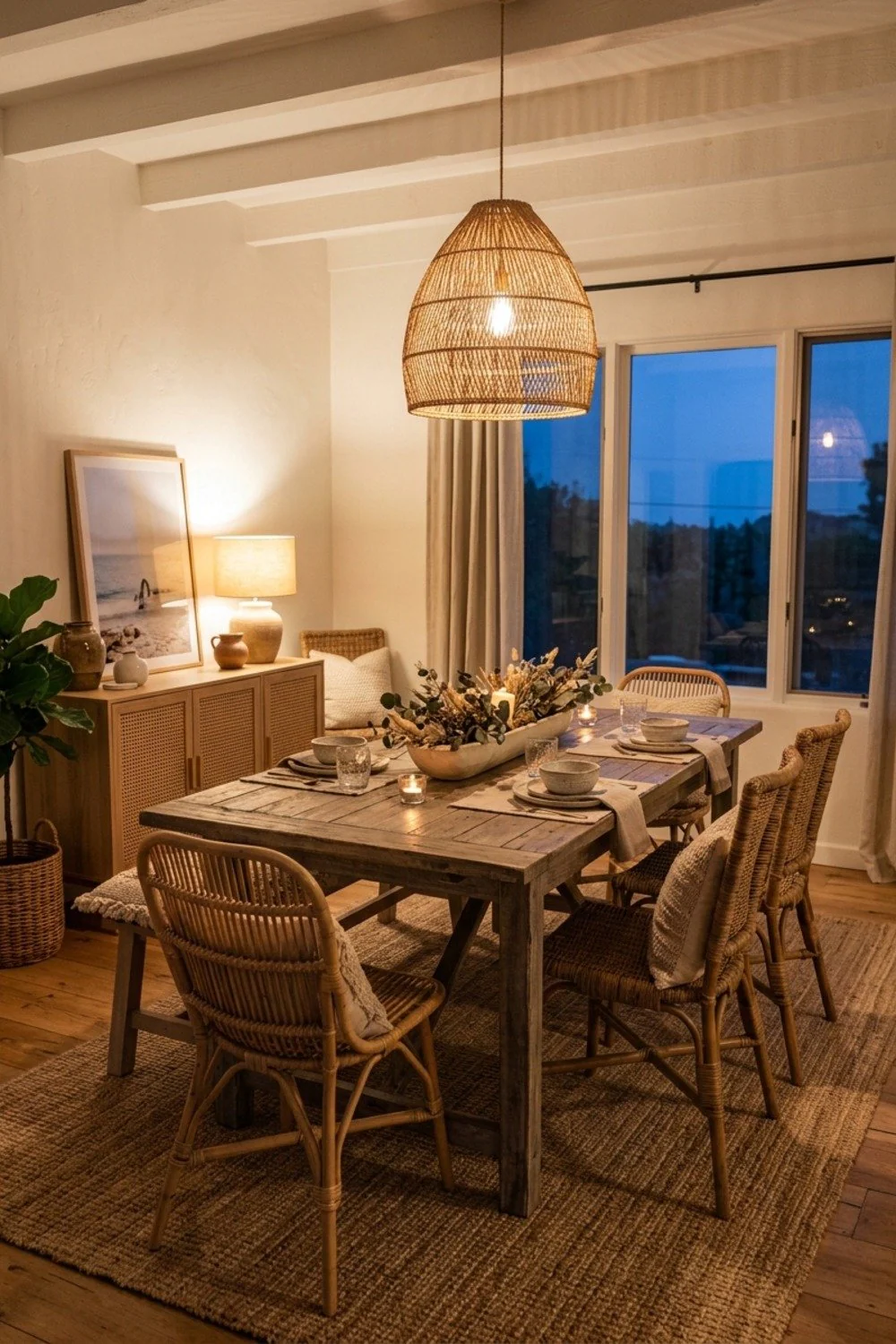
One wide, shallow ceramic or wood bowl, about 12 inches across and 3 inches tall, holds a few stems of dried grasses or three pears. It stays under eye level, so conversation across the table isn’t blocked by a bouquet.
Change the contents with the season. Keep everything else on the table empty, because an empty table surface is the loudest design choice in the room.
8. A single woven pendant on a dimmer

A rattan or paper-cord pendant about 24 inches wide, hung 30-36 inches above the tabletop, replaces a chandelier and three table lamps. On a gray Sunday in March, it throws a soft, patterned glow that makes the room feel sunlit even when it isn’t.
Always fit a dimmer switch, around $25. Dinner light and homework light are two different jobs, and one bulb can’t do both without a dimmer.
9. An 8 by 10 flatweave rug, nothing thicker
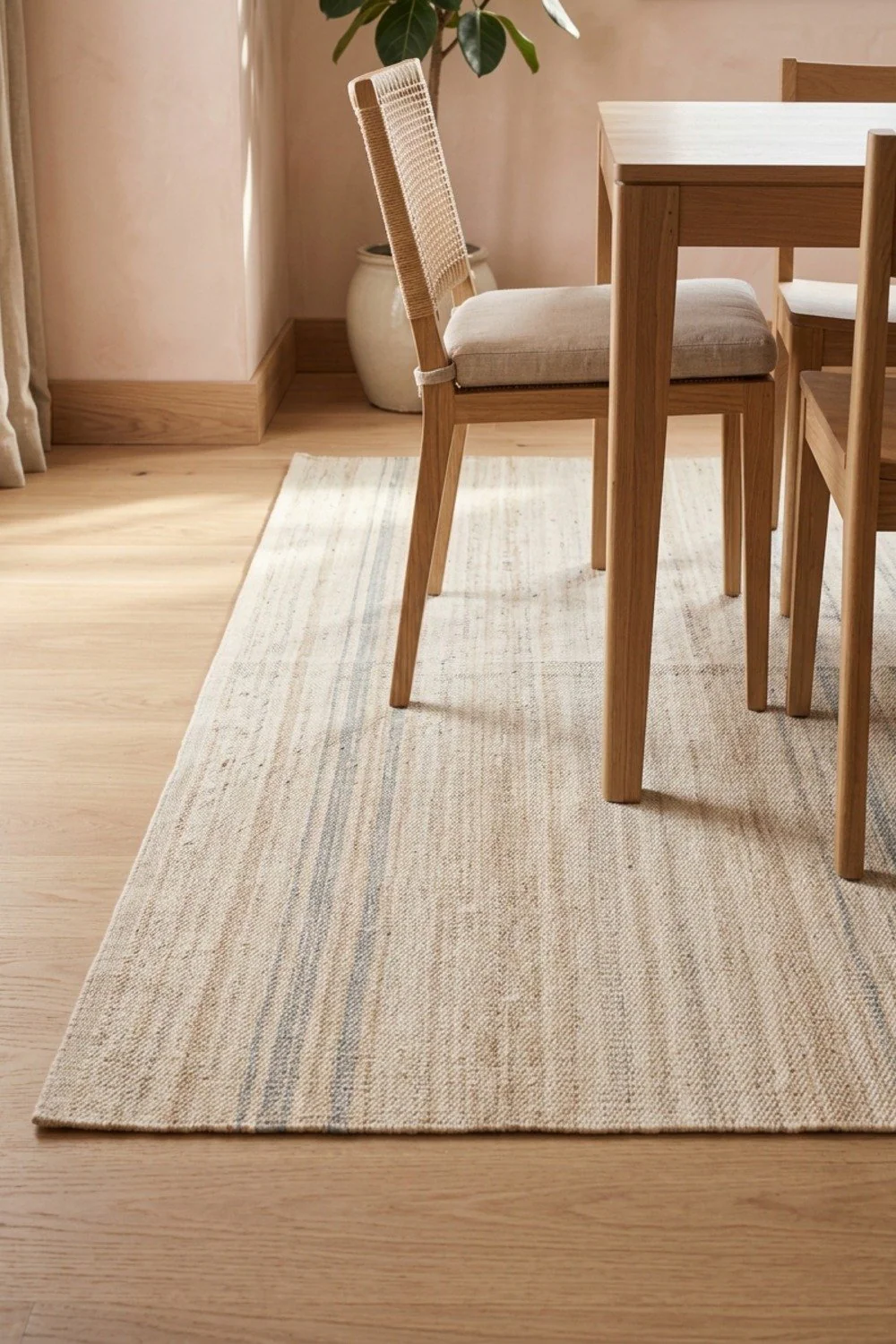
A jute or wool flatweave rug at 8 by 10 feet lets chairs pull out 24 inches without a back leg dropping off the edge. A thick shag catches chair legs and traps crumbs like a toaster tray.
Pick a low pile in sand or oatmeal. Anything with a bold pattern will compete with the table and defeat the whole point of editing.
10. Three materials, repeated everywhere
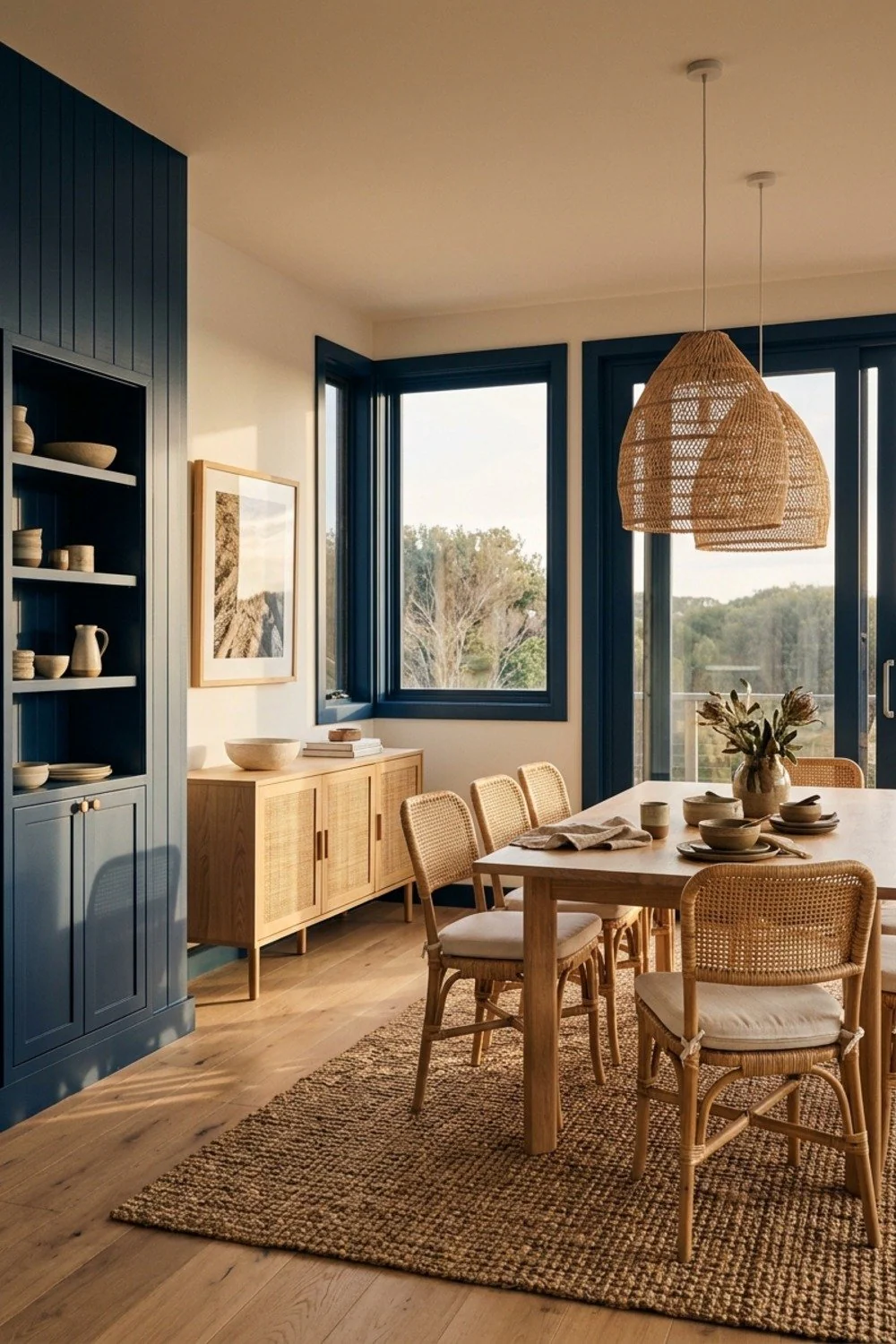
Pale oak, white cotton, and woven natural fiber are enough to hold a coastal dining room together. When every object comes from this short list, a pitcher and a placemat look like they belong together without matching.
Be strict about glass and metal. One brushed brass or black iron accent is plenty, and it prevents the room from looking staged.
11. Floor-to-ceiling linen panels on a high rod
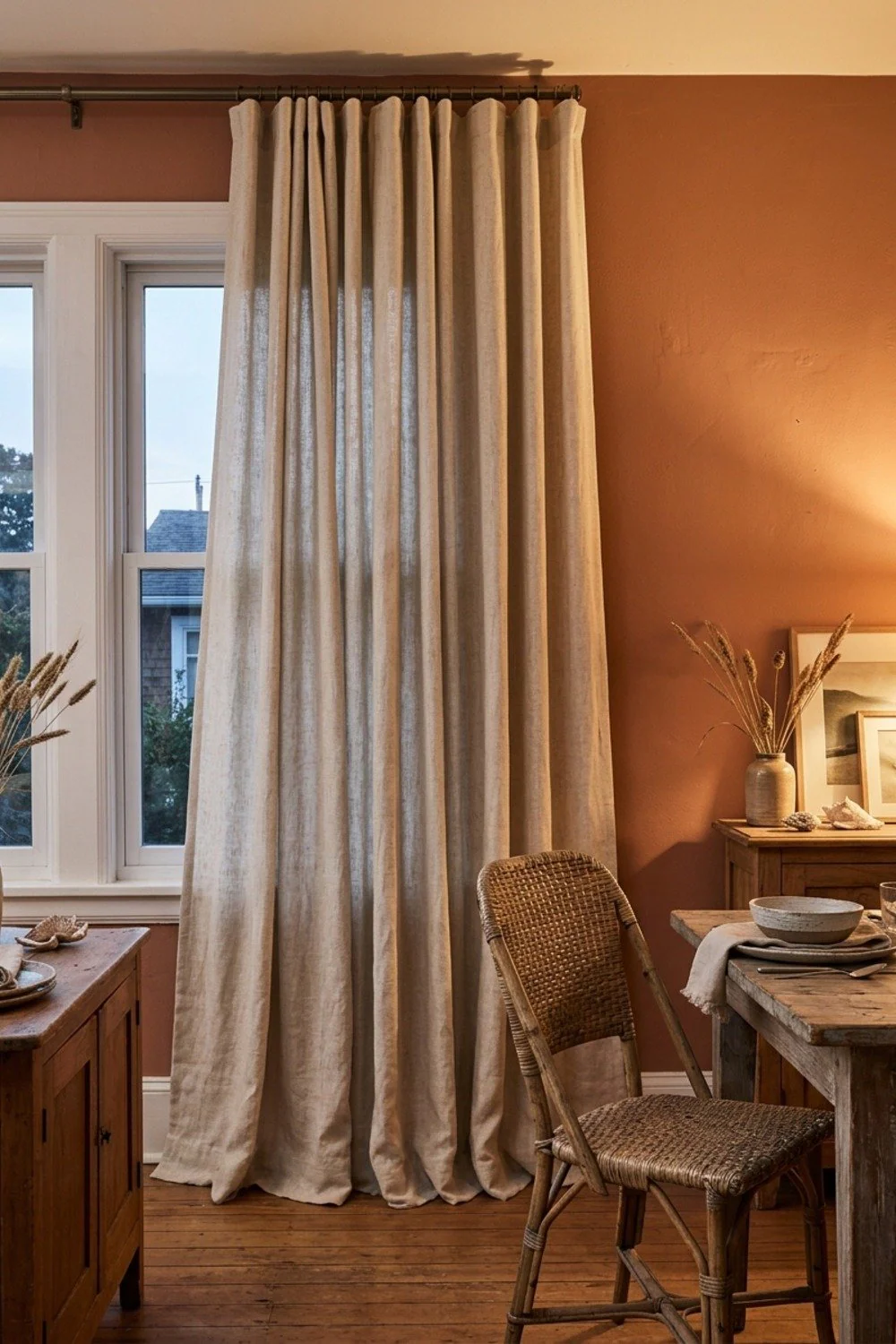
Linen panels hung 4-6 inches below the ceiling, in a width of one and a half times the window, make a room look taller and let in a diffused light around 4pm. The extra width creates soft folds instead of a stretched, flat look. Unlined linen in white costs roughly $40-$70 per panel, making it a fit for low ceilings and modest budgets.
Avoid valances, tiebacks, and layered sheers. One panel per side, left to hang straight, is the full recipe. Measure the drop carefully, since short panels spoil the height effect.
12. One set of white stoneware for everything
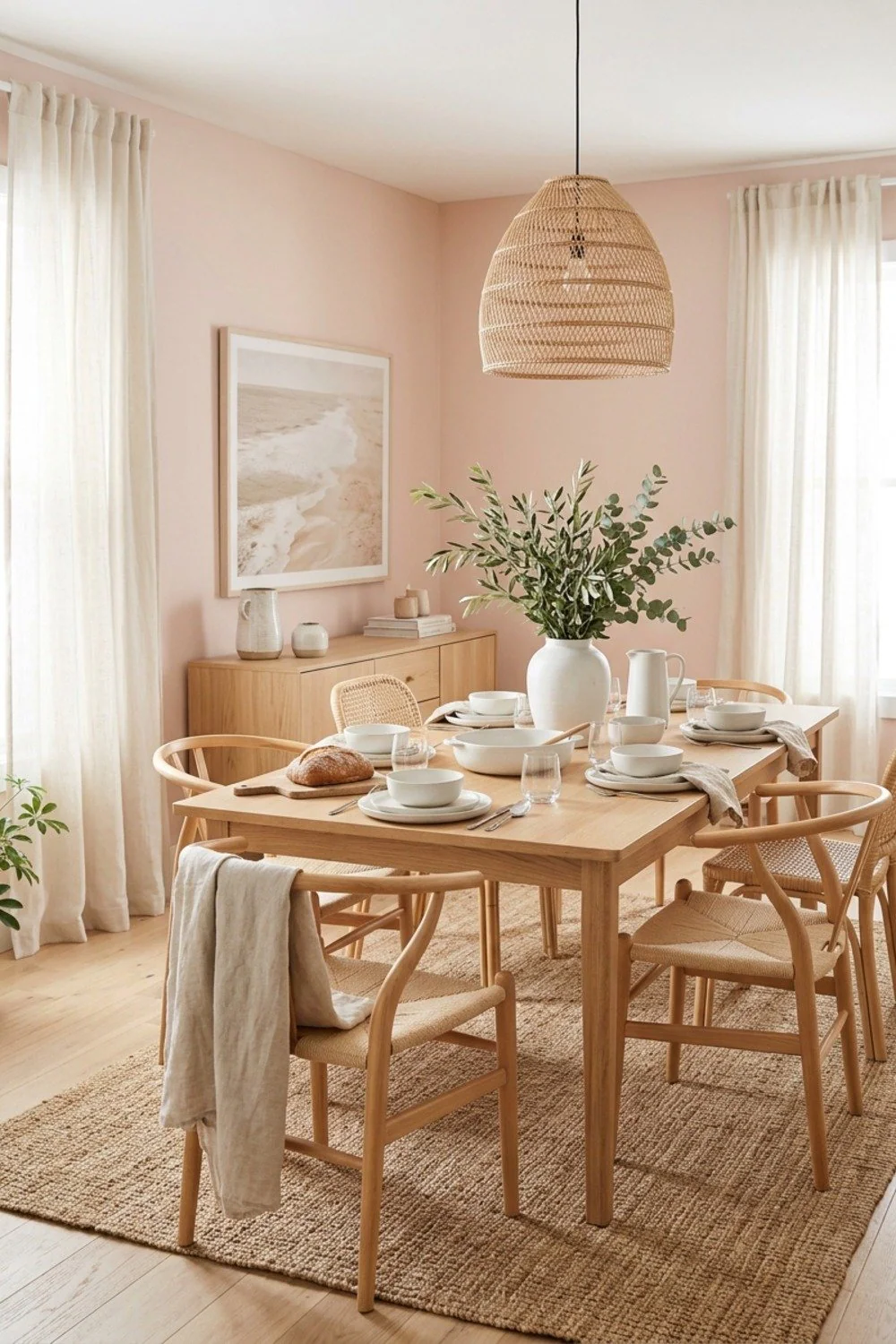
Eight white or oatmeal stoneware plates and bowls cover daily dinners and guests, and they stack neatly into a single cupboard shelf. A set from a basic range costs about $80-$120, and replacing one chipped plate is simple.
Resist the second “good” set. Having a backup set sounds sensible, but it just means more cupboards filled with things that rarely come out.
What to Remove First
Editing a coastal dining room starts with subtraction, and the order matters. Work through this list from top to bottom:
- Anything with text printed on it: signs, canvases, mugs on display.
- Faux shells, plastic coral, and rope-wrapped bottles.
- Extra chairs that aren’t pulled up to the table.
- Small rugs layered under the big one.
- Any accent color beyond the single blue.
Half-measures are tempting. Moving the shell collection to a different shelf feels like progress, but it’s still a shelf of shells.
Put everything you remove in a single box and leave it in the garage for two weeks. Anything you don’t reach for gets donated.
Does a room need a lot of objects to feel finished? Exactly. It needs fewer, and each one should be able to hold its own.
Keeping the Coastal Dining Room From Feeling Cold
A coastal dining room with white walls and bare surfaces can drift toward clinical fast. The fix isn’t more things, it’s more texture.
Fabric and wood temperature carry the warmth. Try these:
- Linen napkins in oatmeal, which feel soft under your hand and wrinkle in a pleasant way.
- A wood bowl or cutting board left out on the sideboard.
- Bulbs rated 2700K, never the blue-white 4000K kind.
- One sheepskin or cotton throw over a single chair.
A dining room with eight accent colors is a toaster with eight settings: everyone ends up using one. Stick to the one blue, and let the texture do the rest.
The Short Version
A pared-back coastal dining room comes from decisions made once and made properly: a right-sized table, soft light, three materials, and nothing hung just to fill a wall. The same restraint carries outside too, so backyard decoration can follow the same palette and stay equally calm.
Save or pin this list so it’s ready when you start. Begin by measuring the room and the table, since that single number decides most of what follows.
Frequently asked questions
How much does a minimalist coastal dining room cost?
A basic version runs about $600-$1,200 if the table and chairs are secondhand. Paint, a pendant with a dimmer, linen panels, and a flatweave rug make up most of the spend.
Can a coastal dining room work without blue?
Yes. Sand, oatmeal, and warm white with pale wood read as coastal on their own. A single blue object just sharpens the contrast.
What size rug suits a six-seat table?
An 8 by 10 foot rug is the safe choice for a 72 inch table. It extends at least 24 inches past the table edges so chairs stay on the rug when pulled out.
How do I keep a coastal dining room from looking empty?
Add texture instead of objects: linen napkins, a wood bowl, and a woven pendant. If the room still feels bare after a week, add one large piece of art rather than several small ones.
3 Comments