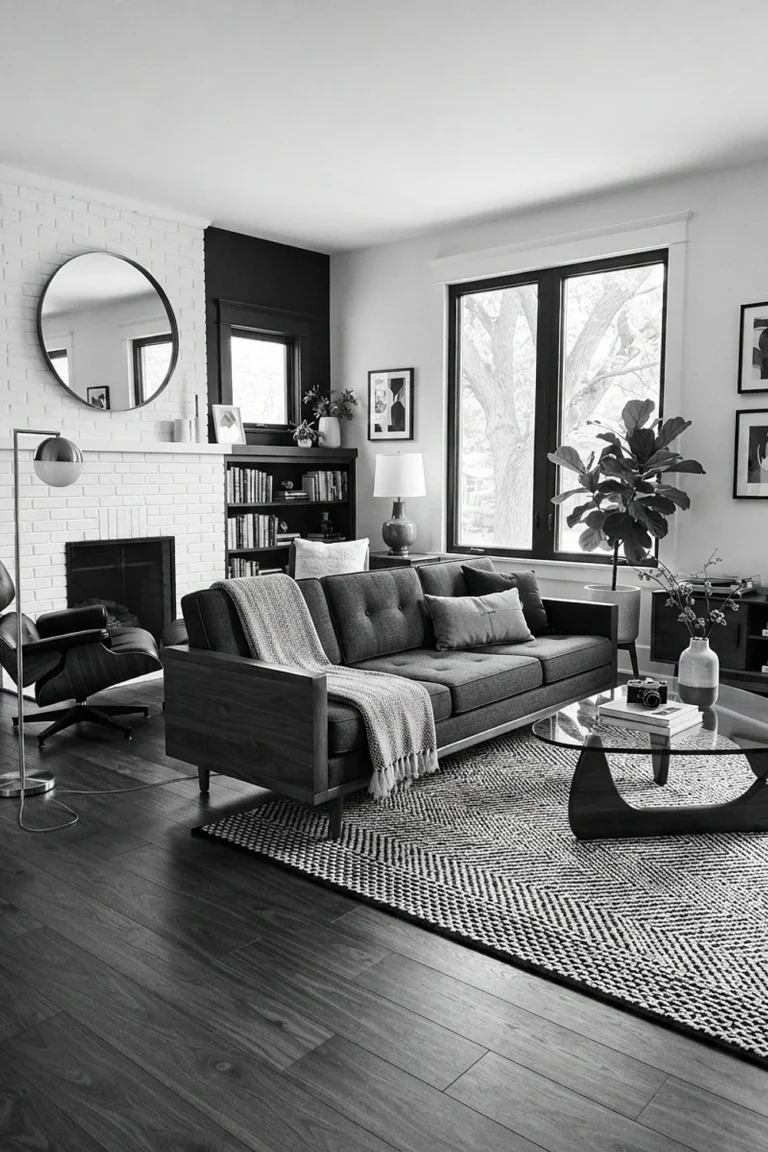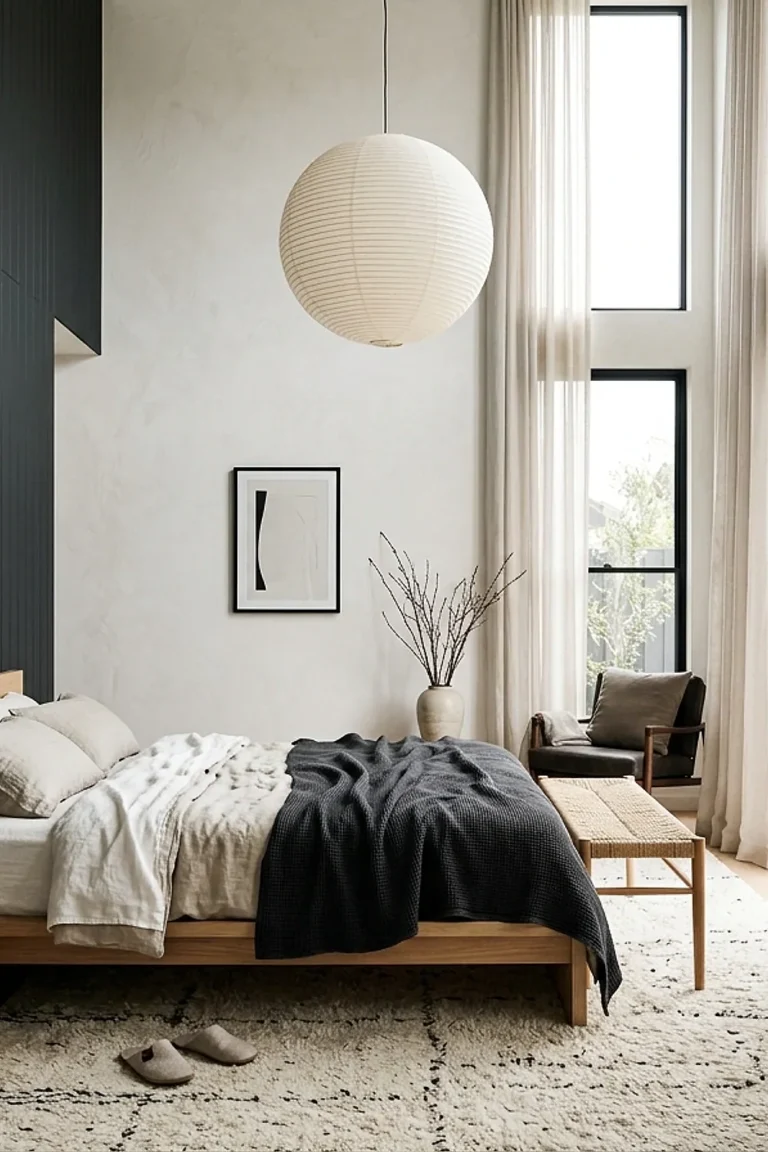
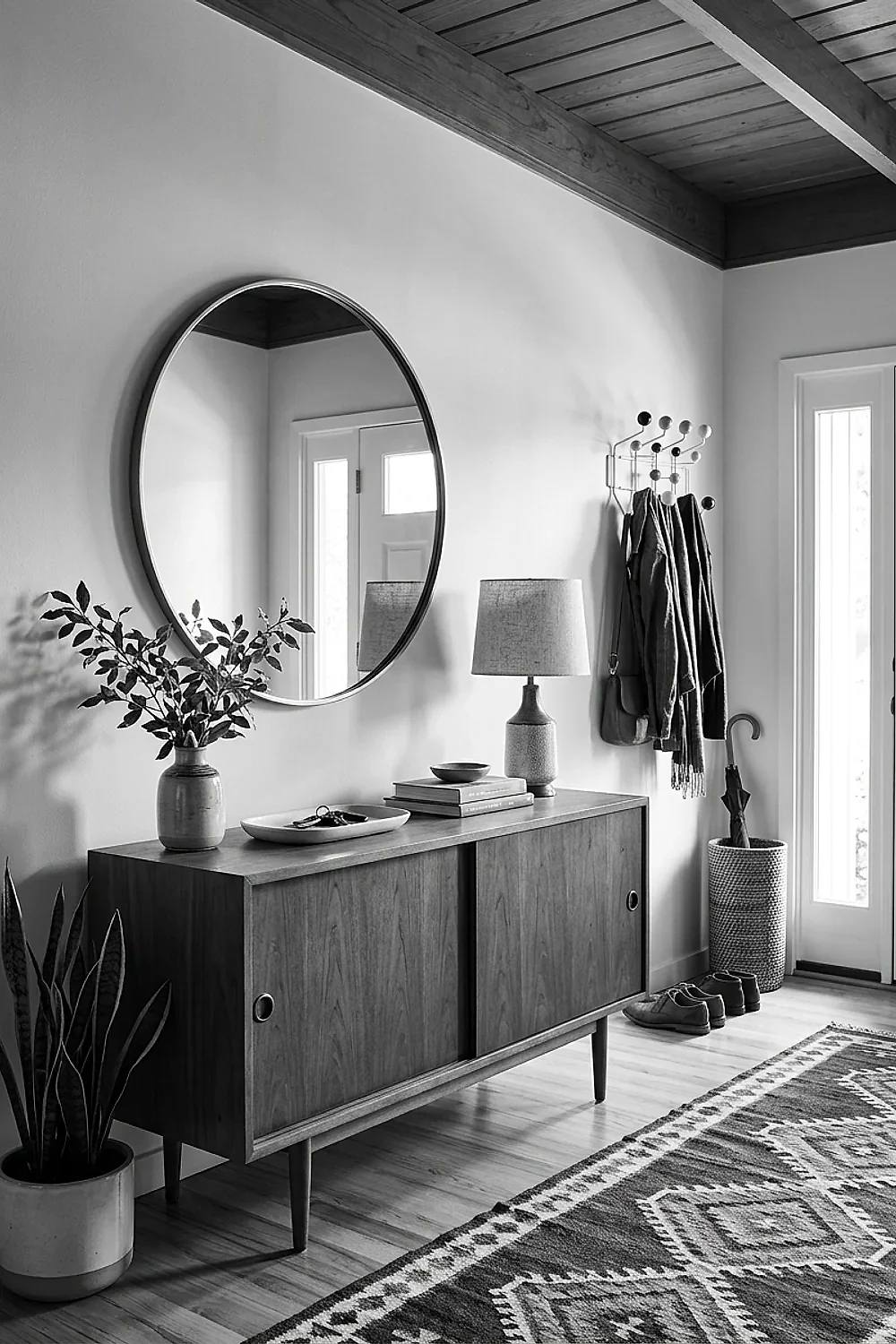
6 Mid Century Modern Entryway Projects for the Weekend
Skip the hunt for one giant vintage credenza. A mid century modern entryway comes together faster, and cheaper, with six small builds that each take an afternoon or less.
Everything below is sized for a real front hall, the kind that’s 36 to 48 inches wide and always has a delivery box in it. Each project lists a difficulty level, a time estimate, and the tools involved, so you can pick what suits your skill and your Saturday.
What you can build this weekend for a mid century modern entryway
A mid century modern entryway is built from a short list of traits: low, horizontal furniture, tapered legs that splay slightly, warm wood tones, round or sunburst shapes, and one saturated color. Hit four of those and the room reads right.
- Furniture raised on legs so you can see floor underneath
- Walnut, teak, oak, or ash tones, never orange-stained pine
- Round forms: globes, sunbursts, circles
- A single bold color against quiet walls
The common early mistake is buying everything from one “mid century style” collection. A matched set of particle board with hairpin legs looks like a showroom, and it dates the moment the trend moves on. Mixed, individually built pieces age far better.
1. A plug-in globe pendant for warm evening light
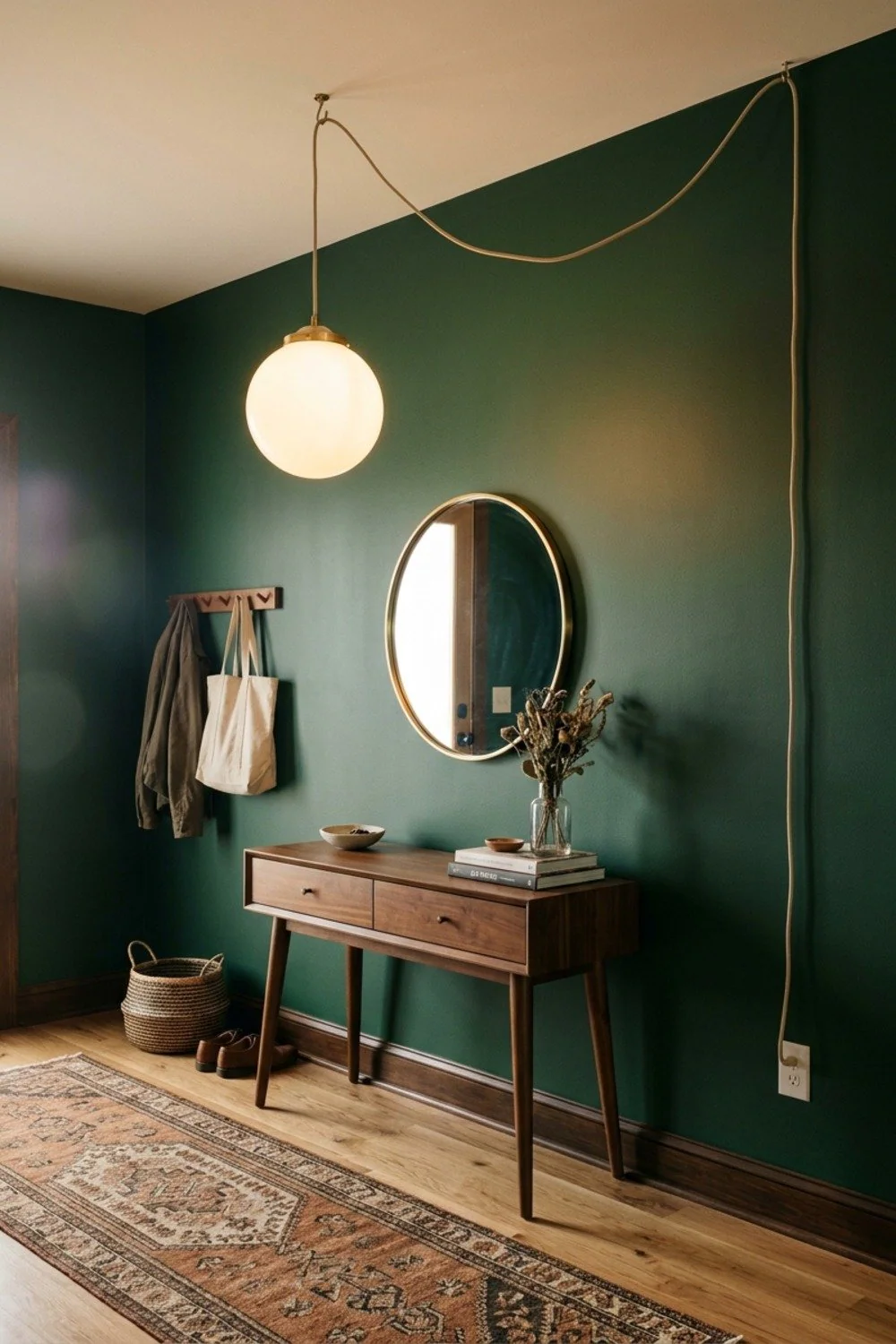
A white opal globe on a swag cord, hung from a ceiling hook, gives an entry the soft glow that overhead boxes never do. Around 4pm in winter, when the window light turns thin and gray, a 2700K bulb makes the wall behind it look like butter.
Difficulty is beginner, time is about 30 minutes, and you need a drill, a screwdriver, a pencil, and a plug-in pendant cord kit. Nothing gets wired, which makes this ideal for renters.
Avoid a bulb brighter than about 800 lumens. In a 3-foot-wide hall, anything hotter than that glares off the globe and flattens the wood tones below it.
2. A 36-inch oak peg rail that holds real coats
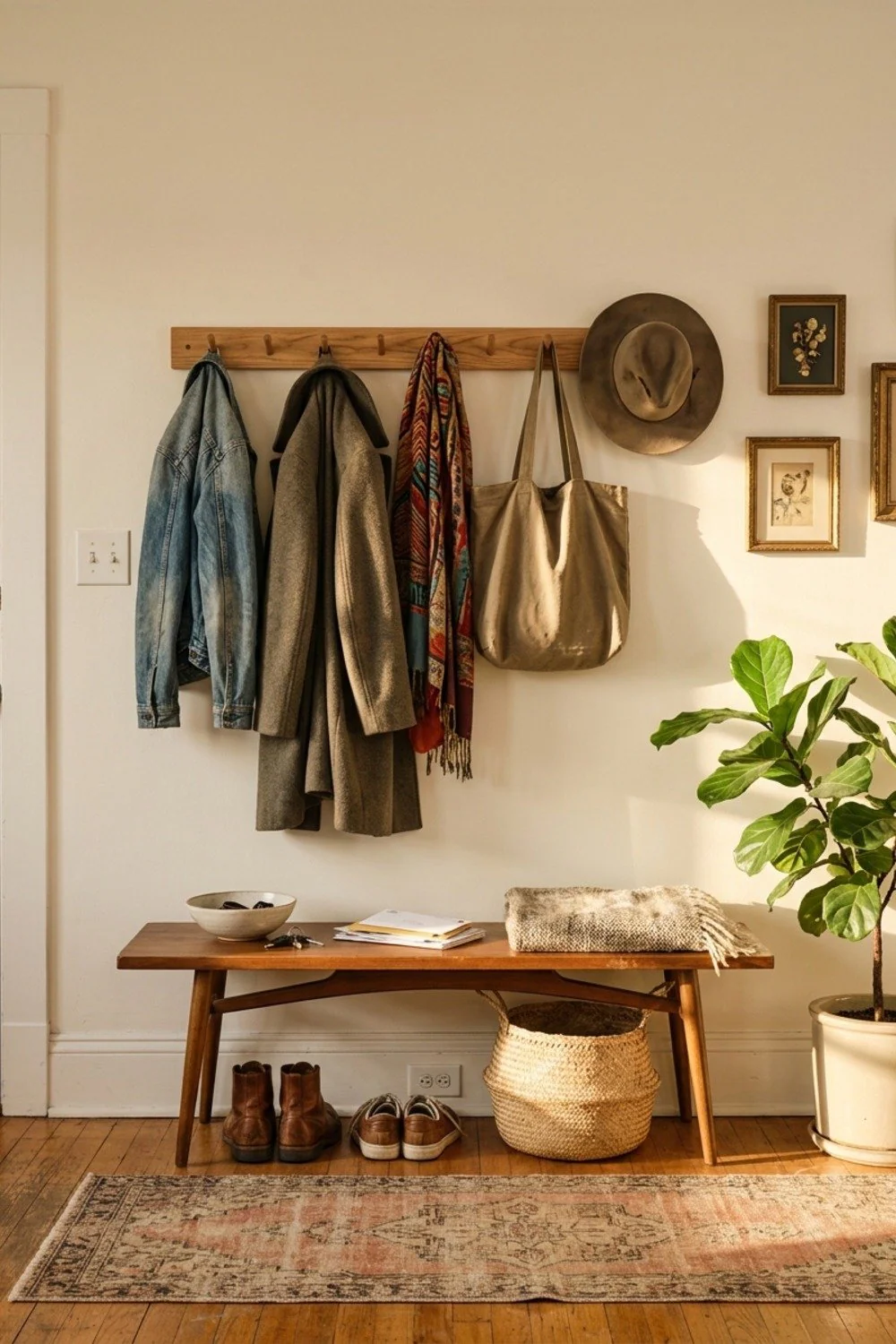
A 1×3 board of oak, 36 inches long, with four tapered Shaker pegs replaces the chaotic hook cluster by the door. Hang it so the pegs sit about 62 inches off the floor, and a long wool coat clears the baseboard.
Screwing the rail into bare drywall is the fastest way to a hole in the wall. A wet winter coat weighs 5 to 8 pounds, and four of them will pull plastic anchors right out. Find the studs with a stud finder, or use toggle bolts rated for 50 pounds each.
Difficulty is beginner, time is roughly 45 minutes, and the tools are a drill, a 3/8-inch bit for the peg holes, a level, and 180-grit sandpaper.
3. A deep teal front door, painted on the inside
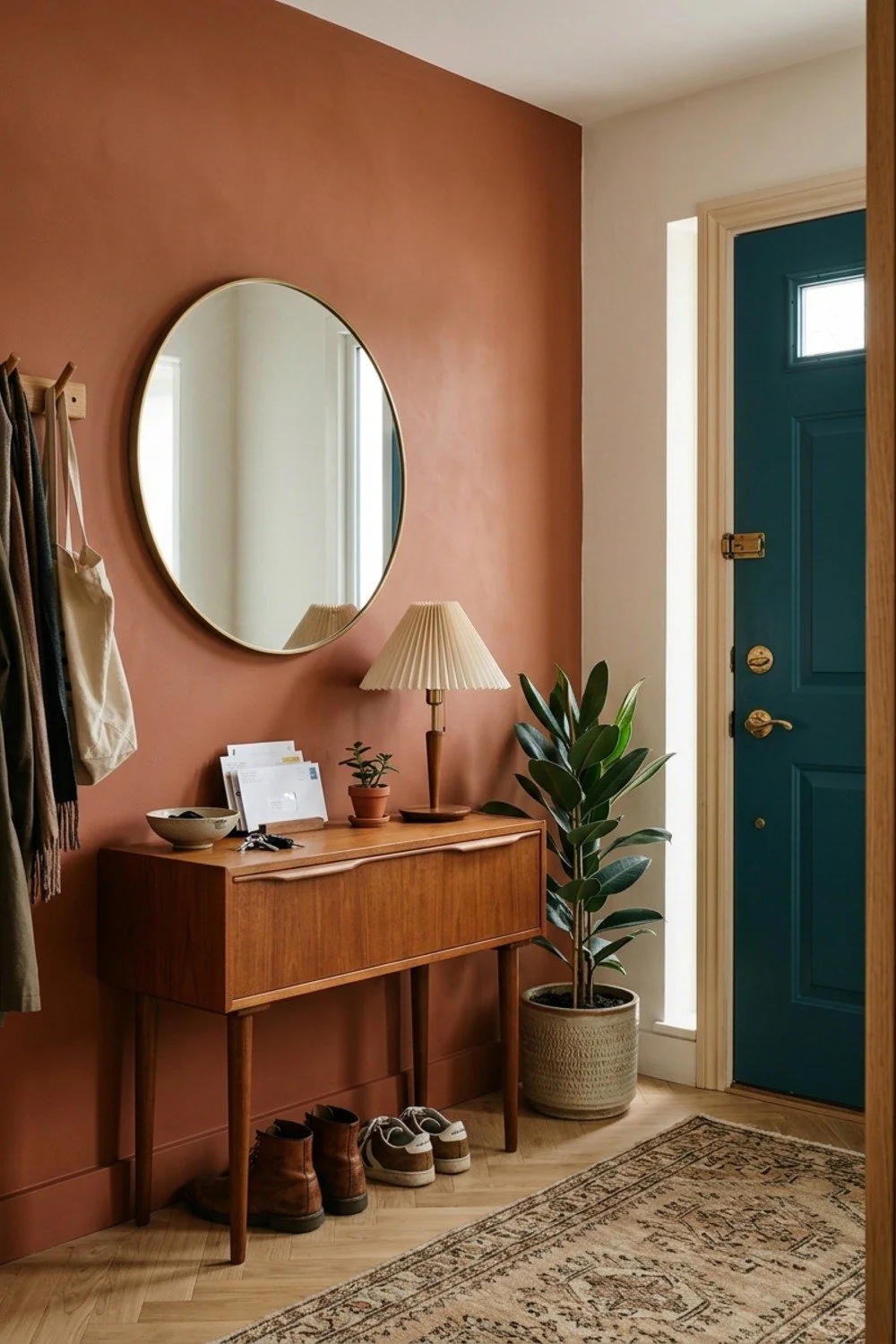
The back of a front door is the most overlooked color surface in the house. A satin finish in deep teal or burnt orange gives the entry a saturated focal point without touching a single wall.
Keep every other surface quiet. One loud room color per entry ages well because it’s a door and can be repainted in a day. Painting all three walls mustard is the version that looks dated in five years.
Difficulty is beginner, time is about 3 hours including dry time, and a quart runs around $25. Grab a 2-inch angled brush, a mini foam roller, painter’s tape, and a screwdriver to pull the hardware.
4. A floating console that doesn’t crowd the hall
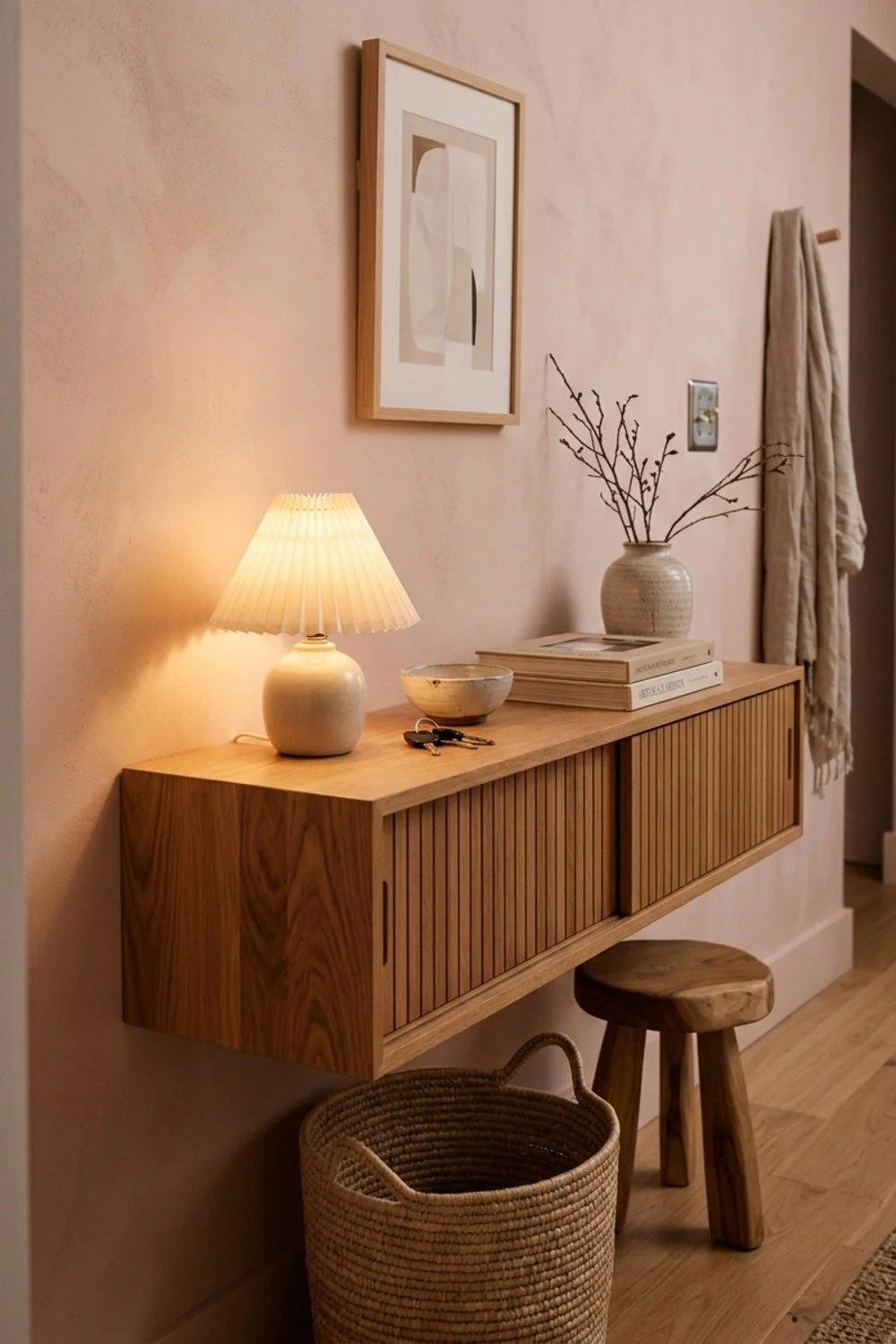
A shelf 36 inches long and 10 inches deep, mounted at 34 inches high, gives you a landing spot for keys and mail. Anything deeper than 10 inches in a narrow hall is a toaster on a bookshelf: handy until someone walks by with a grocery bag and knocks it off.
Use a 1×10 board in oak or ash, and hang it on a French cleat, which is a 45-degree strip of plywood split in two. Have the lumberyard make the long cuts if you don’t own a circular saw.
Difficulty is intermediate-beginner, time is about 2 hours, and tools include a drill, a level, and a stud finder. Leave at least 30 inches of clear walking width beneath the shelf’s edge.
5. A tapered-leg bench finished in hardwax oil
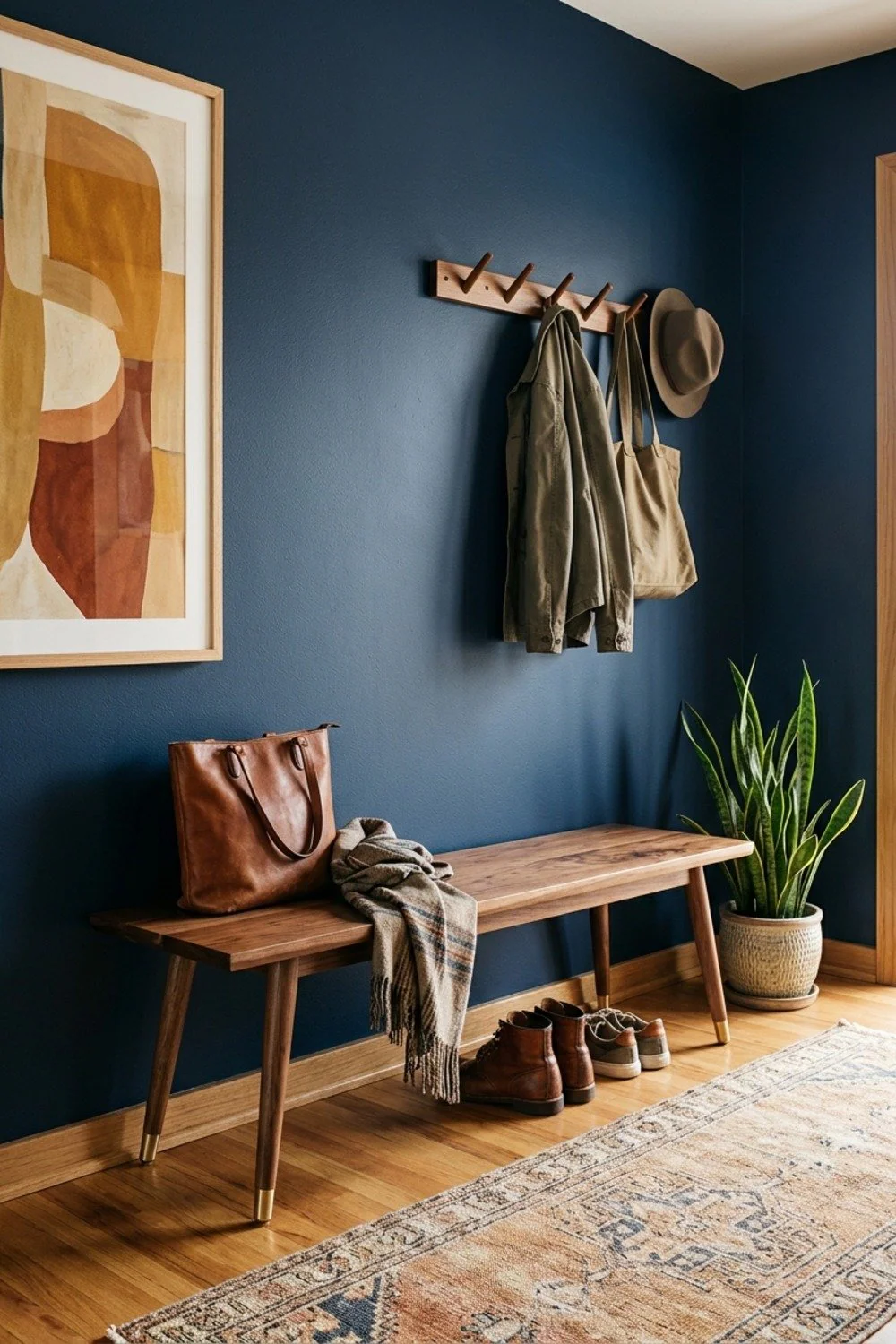
A 40 x 14 inch pre-glued oak panel, four screw-in tapered legs on angled mounting plates, and a seat height of 18 inches make the most recognizable piece in the whole entry. A set of legs costs about $30 to $45, and the panel is the bigger spend.
Here’s where conventional advice gets broken: skip the polyurethane. Oil-based poly ambers over time and turns pale ash or maple yellow, and scratches show as white lines. Hardwax oil such as Osmo Polyx-Oil soaks in, feels like bare wood under your palm, and can be spot-repaired with a rag.
Difficulty is beginner, time is 2 to 3 hours with drying, and you need a drill, a sanding block, a lint-free rag, and a tape measure.
6. A sunburst mirror from cedar shims
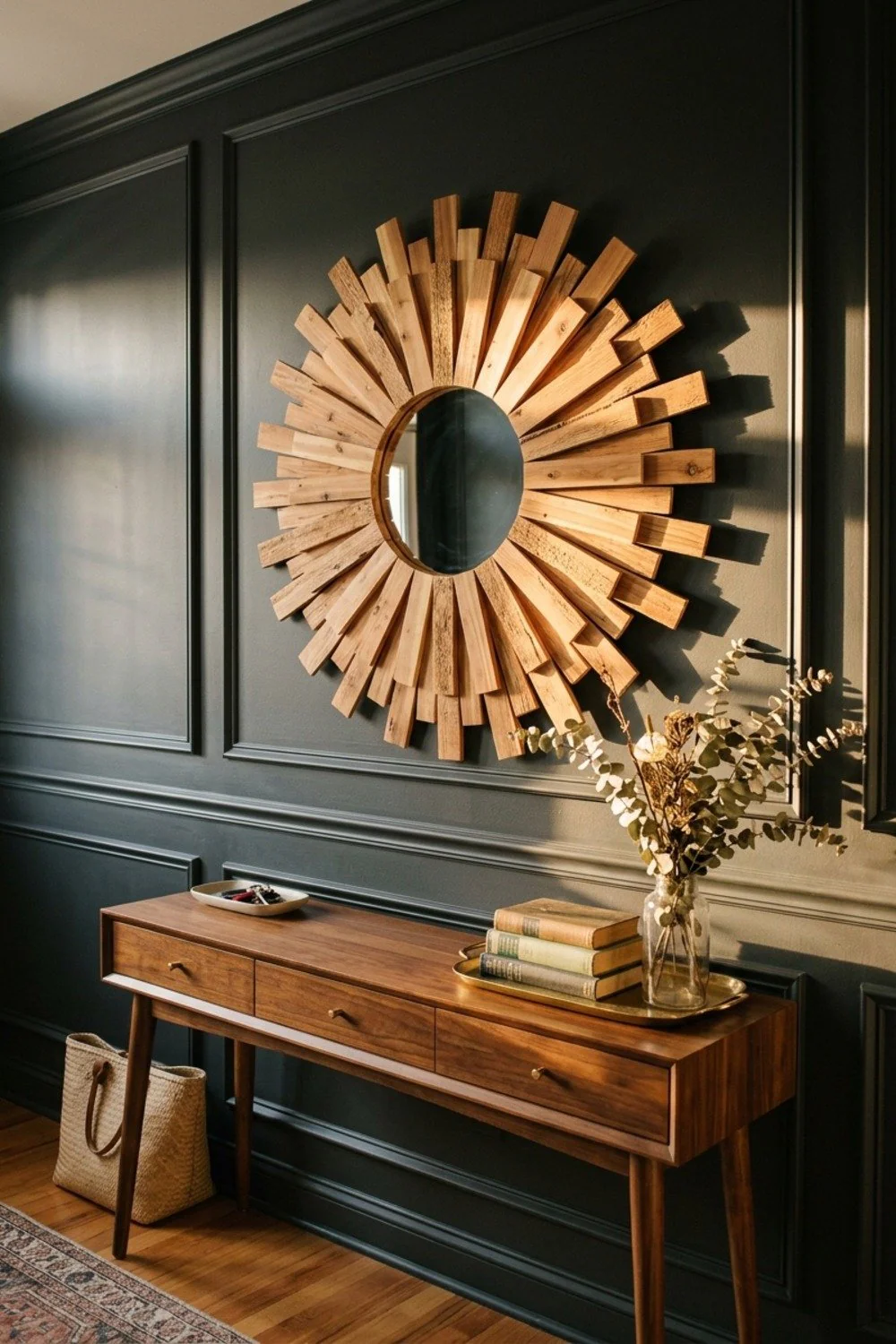
Roughly 24 cedar shims fanned around a 12-inch round mirror make the classic sunburst for the price of a sandwich. Leftover cedar from a backyard decoration project works just as well, so long as the pieces are straight and dry.
Hang it where it faces the doorway, centered about 60 inches from the floor. The mirror does a job: it bounces daylight from the nearest window deeper into the hall and gives a last-second check before you leave.
Difficulty is intermediate, time is about 2 hours, and you need wood glue, a 20-inch plywood circle for backing, painter’s tape, and a pencil. Work outward in two staggered rings of shims, and the gaps will close up evenly.
The pieces that earn their place
Most of these projects share tools, so buying once saves money. Everything here fits in a single hardware store run, and the total for all six lands near $150 if you skip pricier hardwoods.
- Cordless drill with a bit set
- 4-foot level and stud finder
- Sandpaper: 120, 180, and 220 grit
- Wood glue and painter’s tape
- Hardwax oil and lint-free rags
- 2-inch angled brush and a mini roller
- Toggle bolts and wood screws in 1.5 and 2.5 inches
Buy wood in person if you can. Sight down each board for twist, because a bowed 1×10 will never sit flat against a wall, no matter how many screws go in.
And pick one hardwood tone and repeat it. Oak on the shelf, bench, and peg rail looks planned; three different stains look like a yard sale.
When DIY isn’t worth it
A mid century modern entryway doesn’t need every piece built by hand. Some things cost less to buy than to attempt, and a few should never be tried at home.
- A genuine vintage Danish sideboard in good condition runs $1,200 and up, and the veneer and joinery can’t be faked at home
- Upholstered seating needs foam, webbing, and a staple gun skill set that takes months to learn
- Hardwired lighting belongs to a licensed electrician
Look at secondhand shops first for solid wood pieces. Check drawers for dovetail joints and look underneath for plywood backs, since solid wood construction is what survives another 60 years.
A trendy finish on weak construction is the most expensive mistake in this category. Durable bones with a swappable color on top will outlast any single season’s palette.
Making your mid century modern entryway last
A mid century modern entryway holds up when the builds are plain, the wood is real, and the color is easy to change. Start small and let the room tell you what’s missing.
Save or pin this list so it’s handy when you’re ready to start. Try the peg rail first, since it needs one drill and 45 minutes, and measure your hall width before you buy any board for the console.
Frequently Asked Questions
How much does a DIY mid century modern entryway cost?
Plan on about $150 for all six projects using oak or ash, or less if you build only two or three. Wood is the biggest expense, so choose one hardwood and buy it in a single trip.
Can I do this in a rental?
Yes, with limits. The pendant, bench, and mirror need no permanent changes, and the peg rail and shelf leave only small screw holes that fill with spackle at move-out.
Which wood works best for a mid century modern entryway?
Oak is the safest all-rounder because it’s affordable, takes oil evenly, and has a grain that reads as period-correct. Walnut looks richer but costs roughly double.
What if my hall is under 36 inches wide?
Choose a shelf 8 inches deep and skip the bench. A peg rail, mirror, and pendant still give a mid century modern entryway its look without blocking the walkway.