7 Minimalist Home Office Essentials That Look Expensive
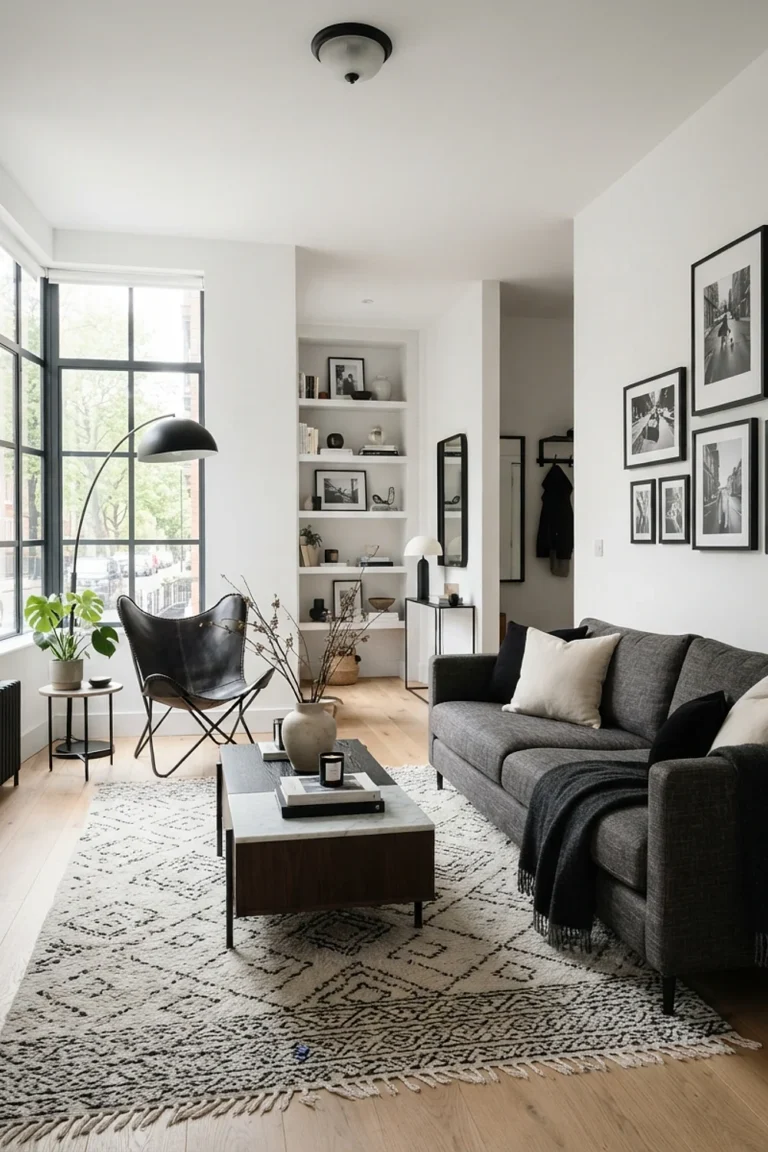
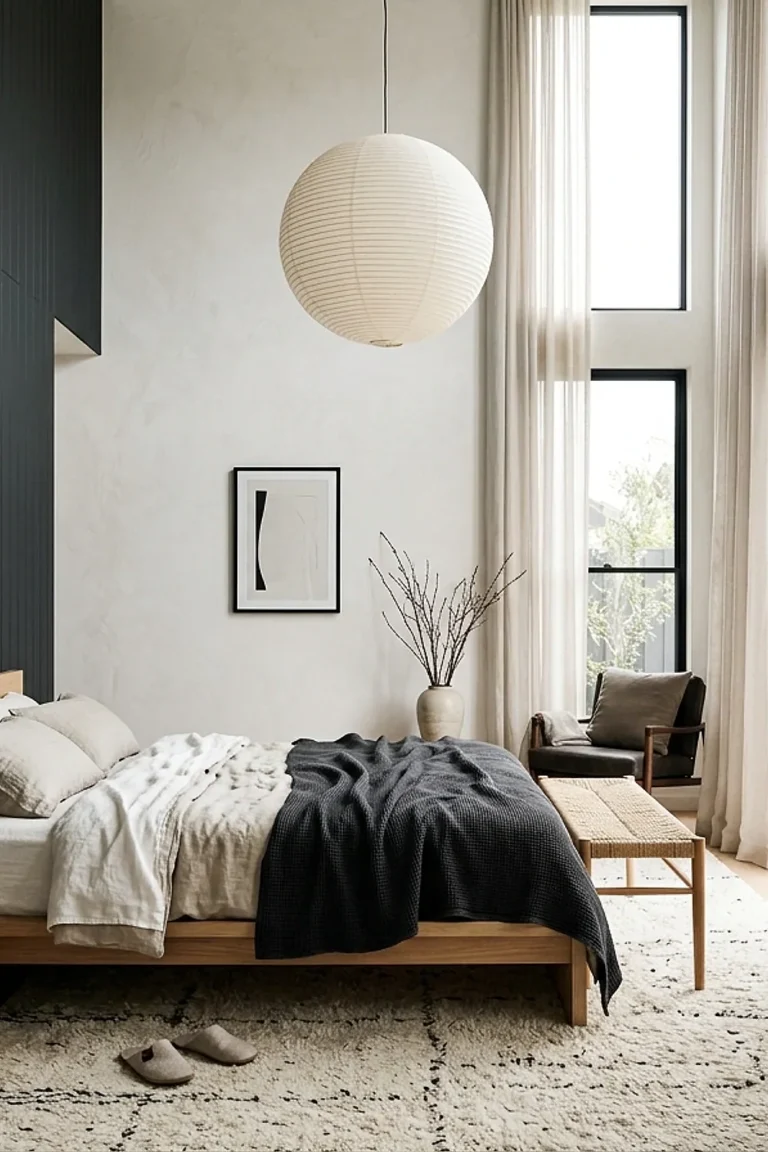
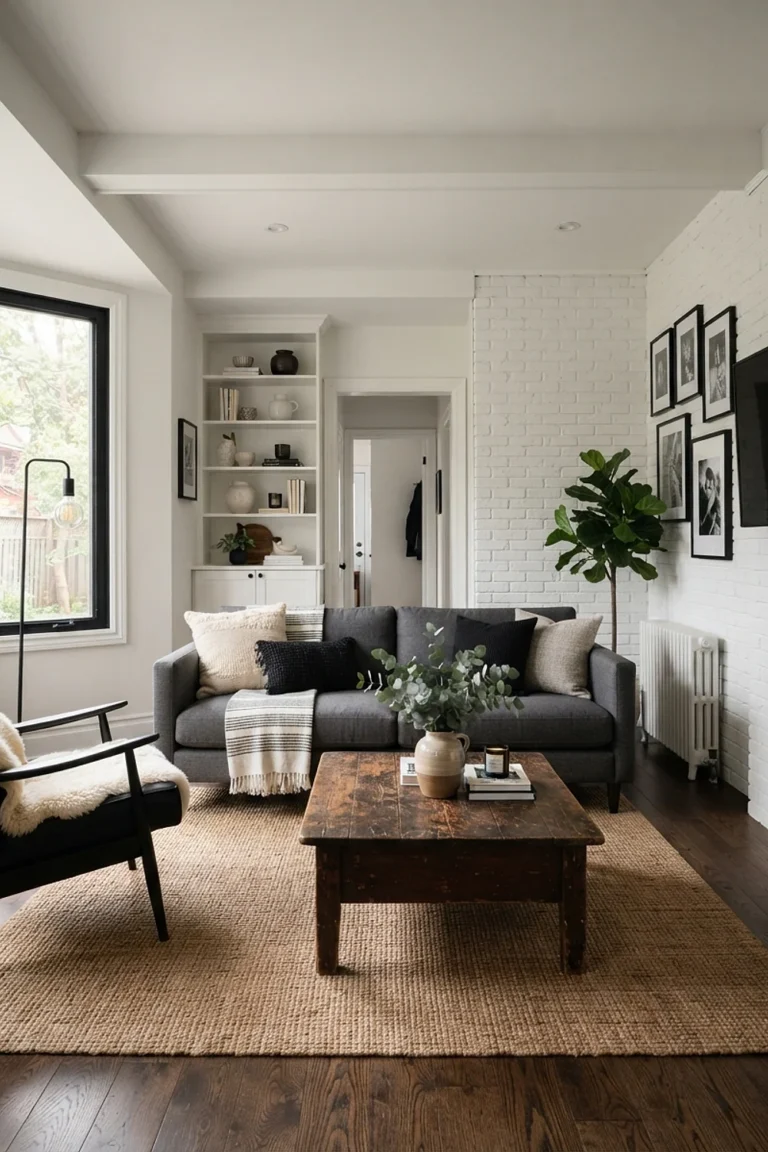
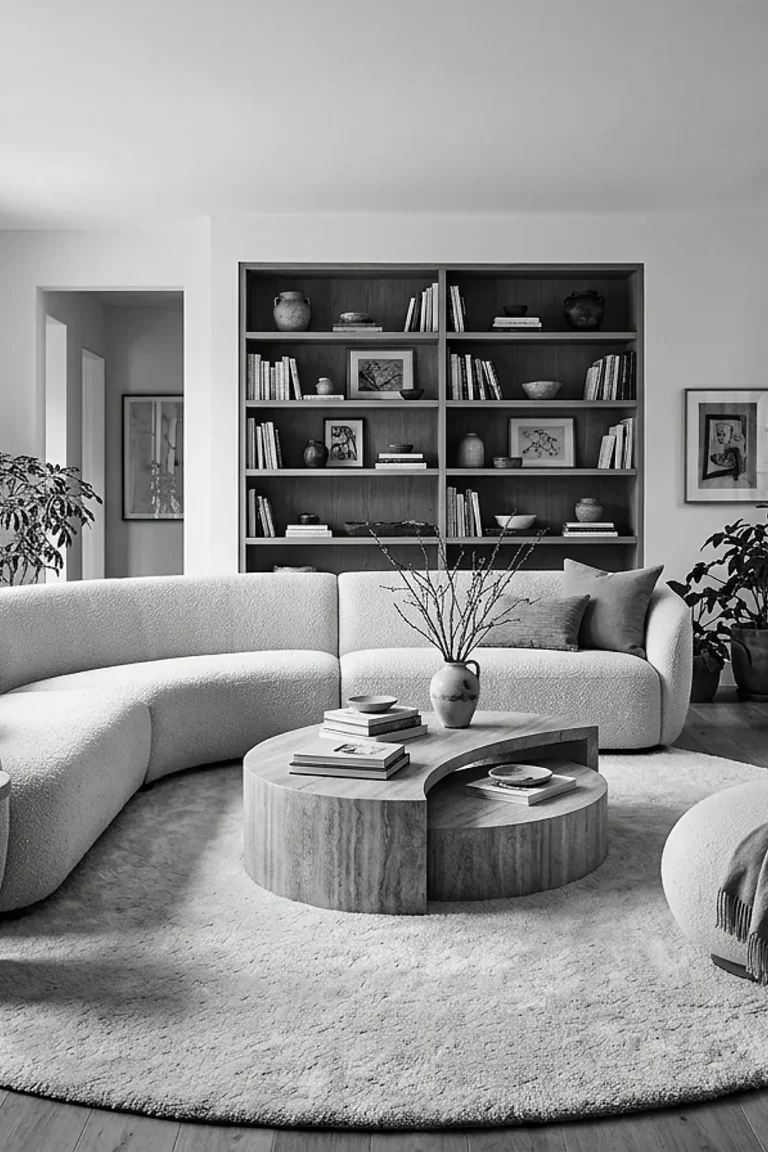
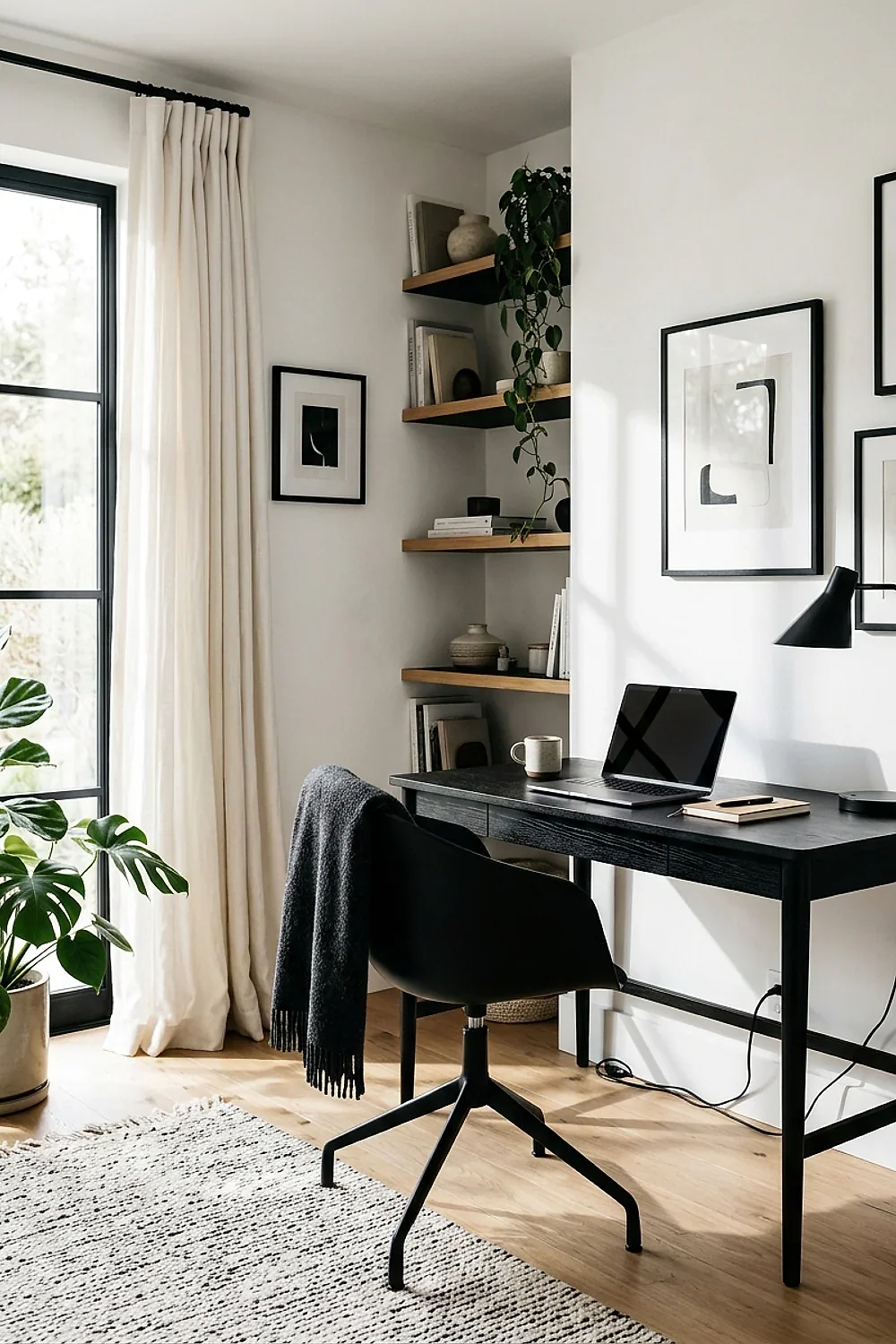
Buying a pile of white furniture and calling it minimal is the fastest way to end up with a desk area that feels like a dentist’s waiting room. A minimalist home office reads as expensive because of restrained materials, a calm palette, and exactly one source of drama, not because everything is blank.
Below are seven designer originals and the lower-cost versions that get you 90 percent of the way there. Some dupes beat the original outright, and the reasons come with numbers.
The High-End Minimalist Home Office Look, Decoded
Walk into any pricey showroom and the formula repeats. Two or three materials, one quiet color family, hidden cables, and a lot of clear surface. That’s the whole trick, and none of it needs a designer’s invoice.
1. A 48-inch wall desk instead of a $1,500 walnut writing table
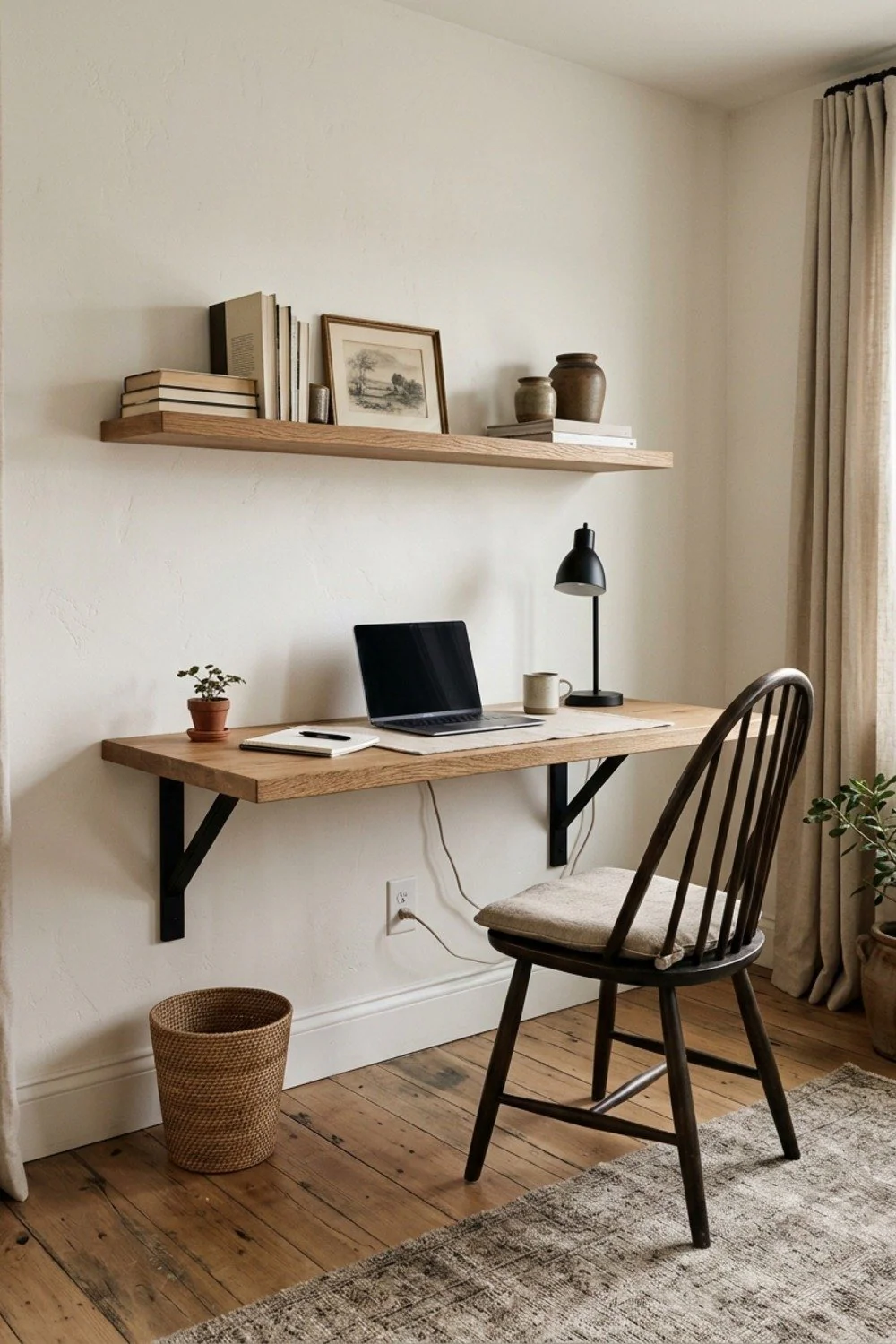
A slim desk 22 to 24 inches deep and 48 inches wide fits a 5-by-6-foot nook, and it looks more deliberate than a bulky 60-inch workstation. Boutique walnut writing tables run about $1,500. An IKEA Karlby oak countertop cut to length and mounted on two steel brackets lands near $110 and has the same horizontal, floating line.
This suits bedroom corners and hallway alcoves, where floor visibility matters. One catch: brackets must hit studs, because a laptop, monitor, and elbows add up to 40-plus pounds of downward pull.
2. Warm greige paint rather than a $110-a-gallon heritage color
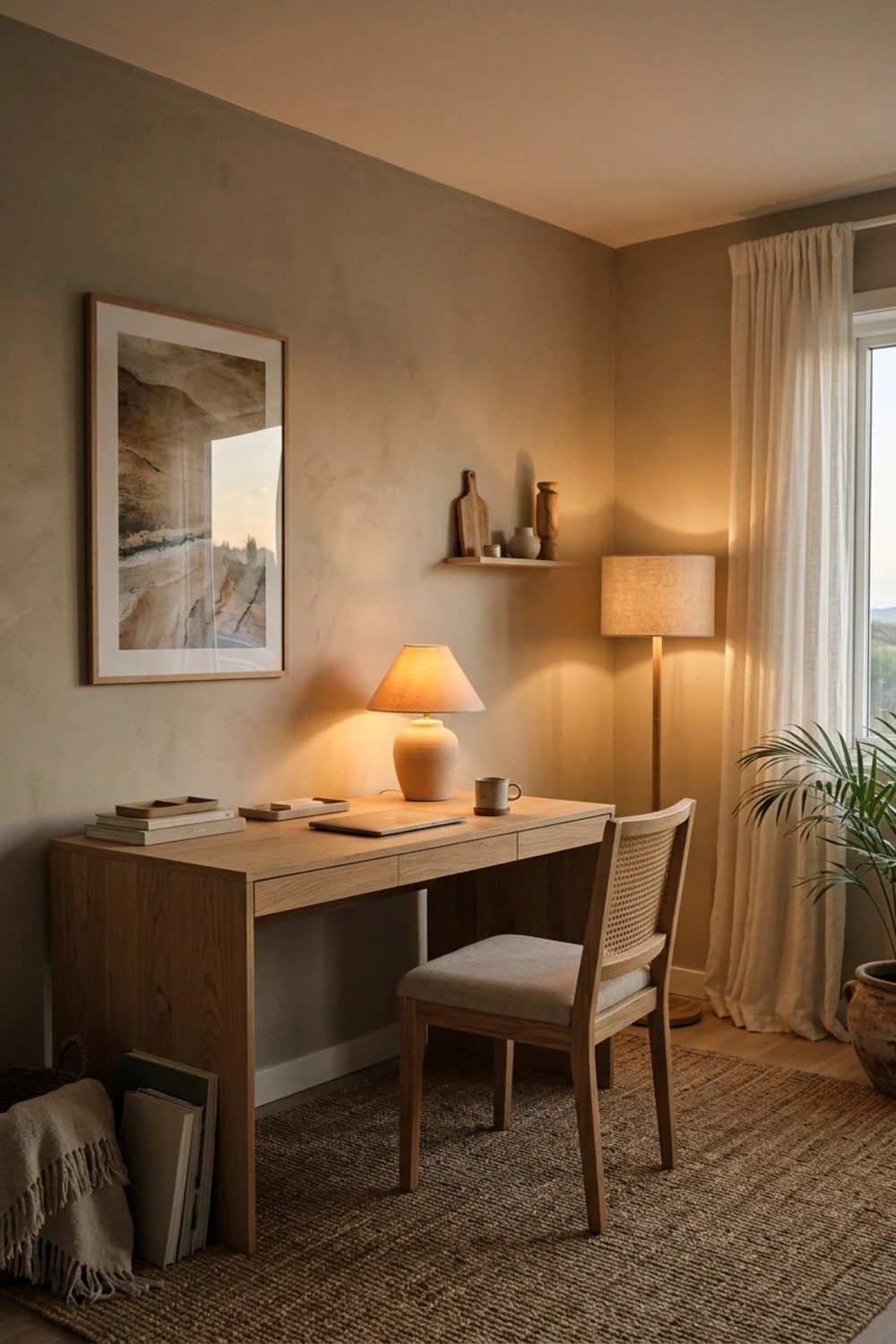
Premium British paint like Farrow & Ball Elephant’s Breath earns its reputation because the pigment leans warm without turning beige. Big-box lines mix close cousins for roughly a third of the price. Pick a swatch with a light reflectance value around 55 to 60 so a north-facing room doesn’t go dull by 3pm.
Buy the sample pot first and paint a 2-foot square on two different walls. By the second coat, most greige colors shift a shade toward green or pink, and that shift is what separates a good match from a bad one.
Choosing room colors this way costs you one $5 sample instead of a regretful gallon.
3. An arm lamp with a clean silhouette, not a $230 icon
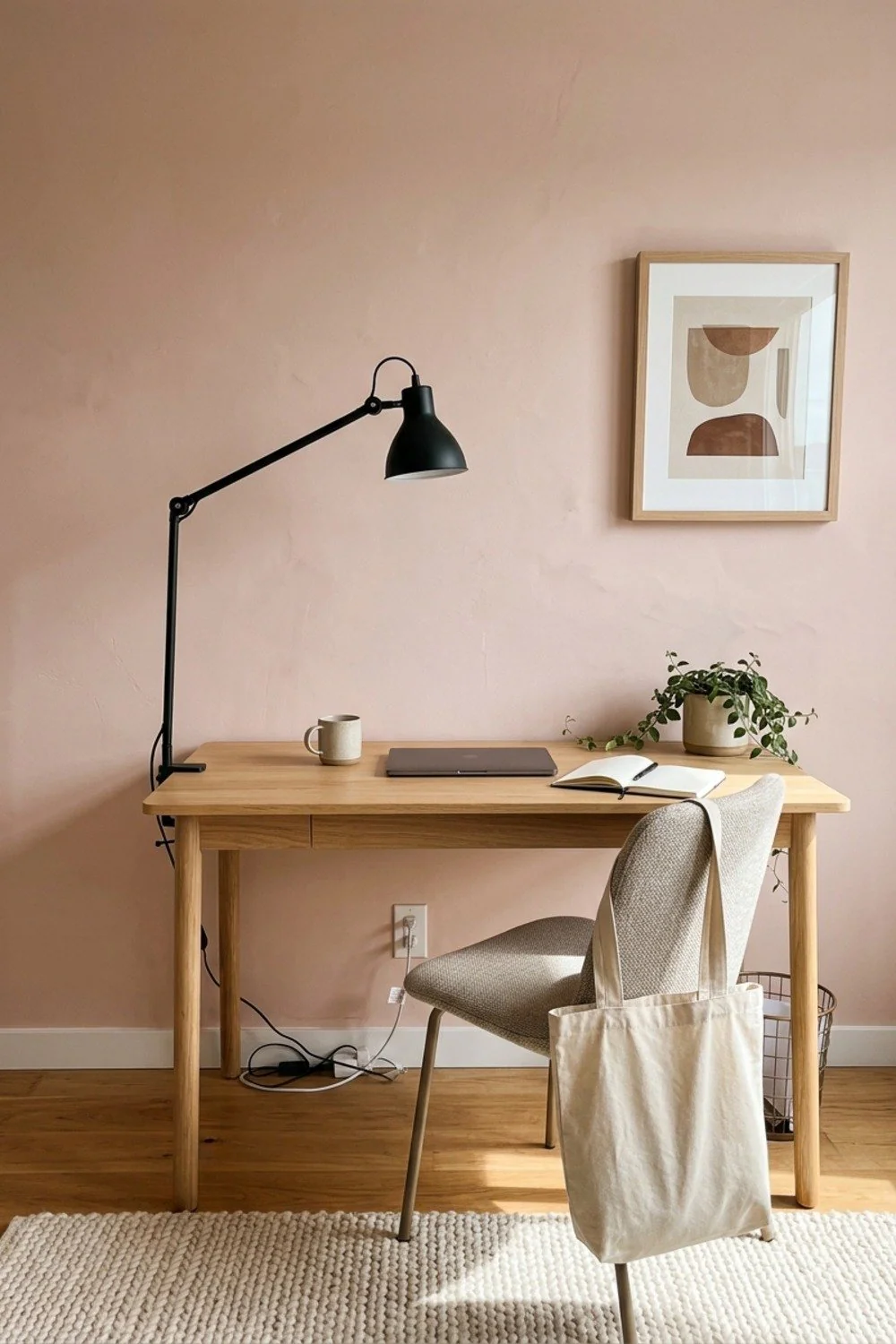
A swing-arm lamp throws light exactly where the page or keyboard sits, and that precision is what makes a desk feel designed. The Anglepoise Type 75 sells for roughly $230 or more. A matte-black clamp lamp with a 3000K warm bulb costs about $35 and does the same job from a thinner, lighter shape.
Dimmable bulbs matter more than the lamp body. On a gray February afternoon, around 4pm, a 2700K to 3000K bulb keeps the wall glowing amber, while a cold 5000K bulb makes even a $1,500 desk look like a cubicle.
4. Wool felt and oak veneer in place of full-grain leather
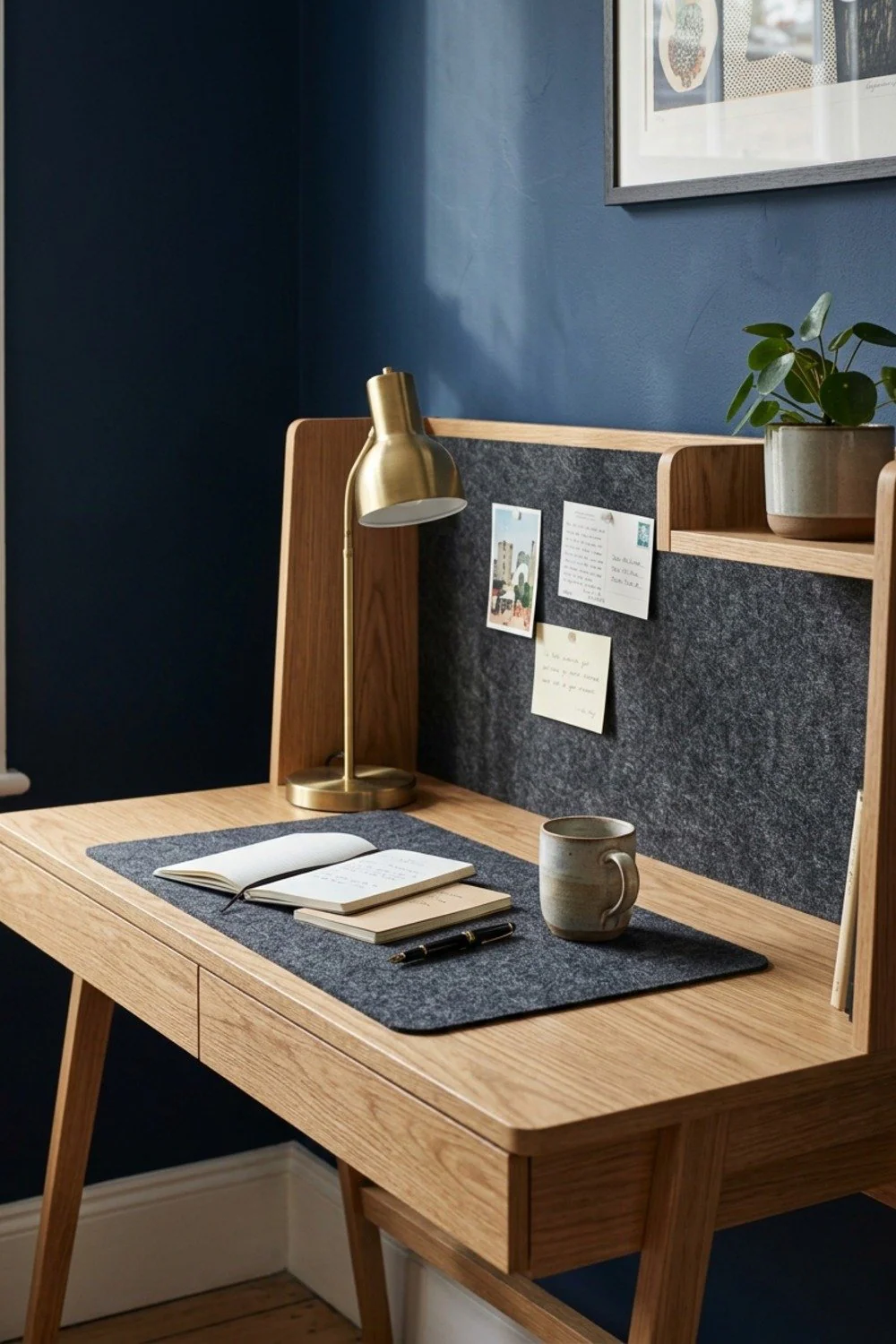
Texture is the second thing the eye reads after color. A 31-by-15-inch wool felt desk mat in charcoal feels dense and soft under the wrist, and it hides coffee rings better than pale leather does. Genuine leather mats cost multiples more and scuff within months.
For the desktop itself, real oak veneer over a stable core beats solid wood in dry climates, because it won’t cup when winter heating kicks in. Skip glossy laminate with printed grain. Light bounces off it in flat, shiny sheets that read cheap from across the room.
5. A used ergonomic chair that outperforms a new $1,400 one
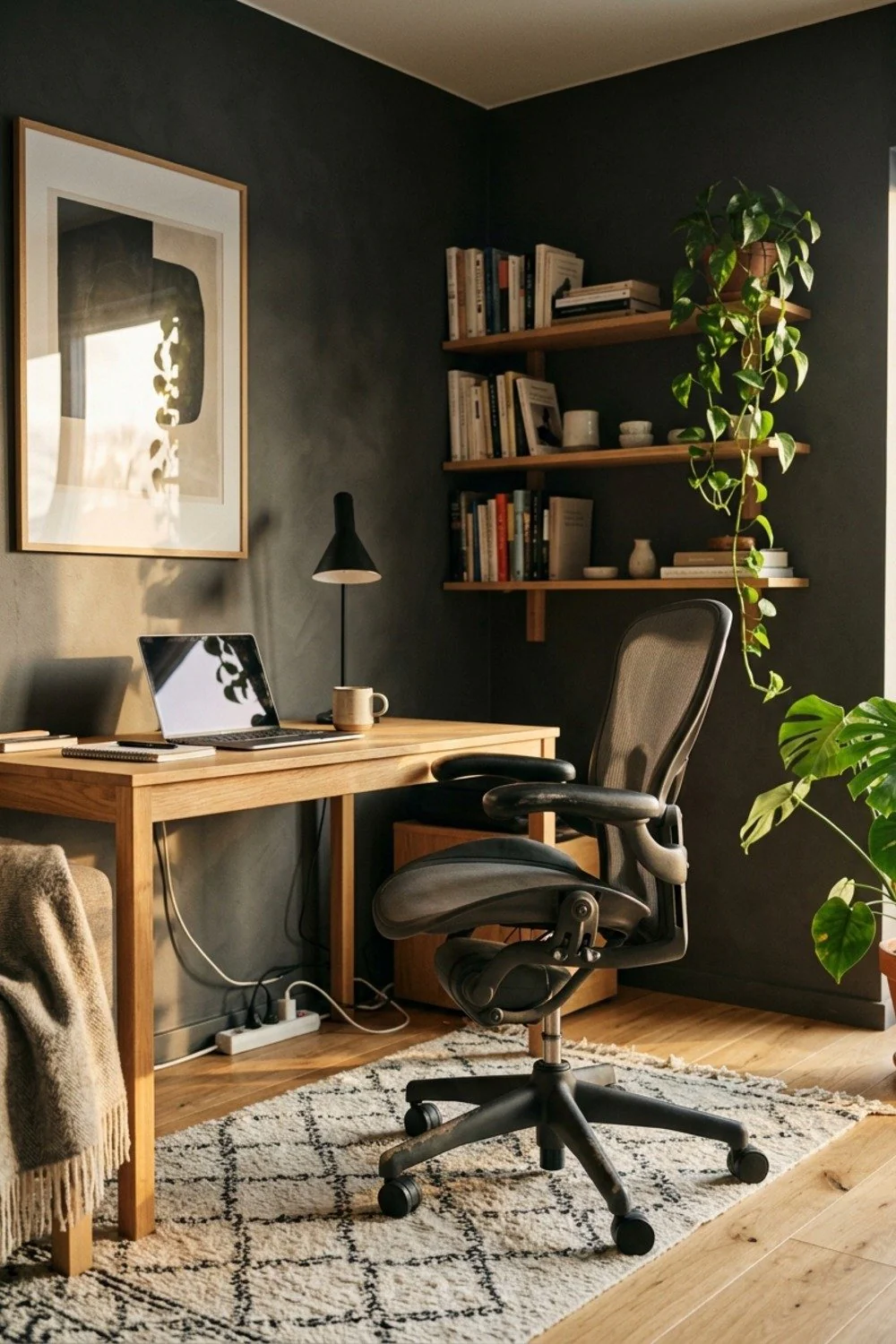
Does a two-year-old office chair from a liquidation sale really match a new Herman Miller Aeron? Exactly, in the ways that matter. Corporate lots regularly list refurbished Steelcase Leap and similar chairs for $300 to $450, and the mesh, pneumatic cylinder, and tilt mechanism are rated for heavy daily use.
Choose black or graphite so it fades into the background. Check that the seat depth adjusts and the armrests move in at least three directions. That checklist is worth more than the logo.
6. Flat-front cabinets with push-open doors, not modular steel drawers
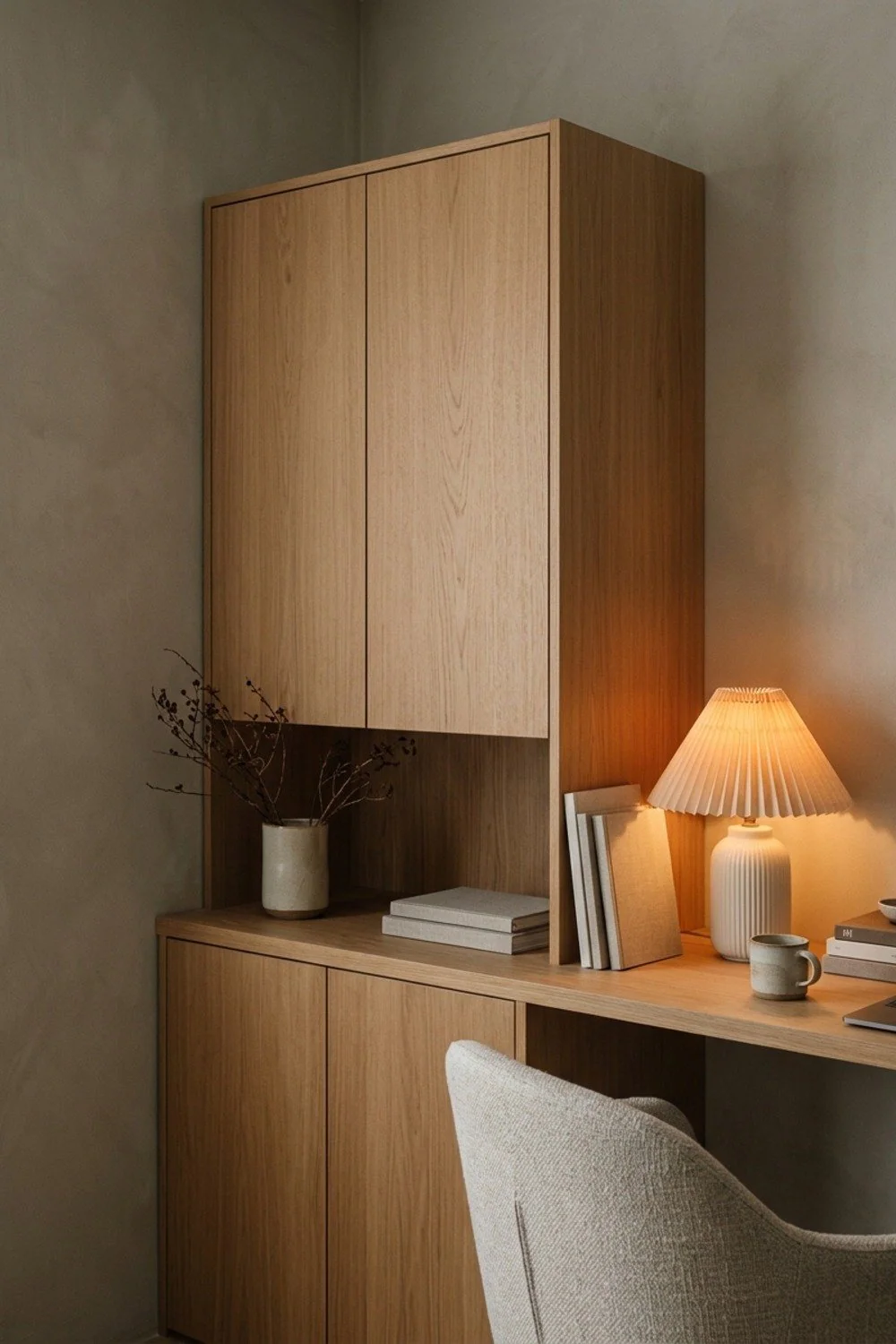
A designer modular steel system like USM Haller can cost into the thousands for a single credenza. Flat-front IKEA Besta frames with push-to-open doors give the same unbroken face for a fraction of that. Hidden hinges and zero hardware mean no visual noise.
Work out depth before buying. Cabinets 15 inches deep hold a printer and files without crowding a narrow room, while 24-inch ones eat walkway. And label the inside of the doors, since closed storage punishes forgetfulness.
7. One thrifted vessel in place of a gallery ceramic
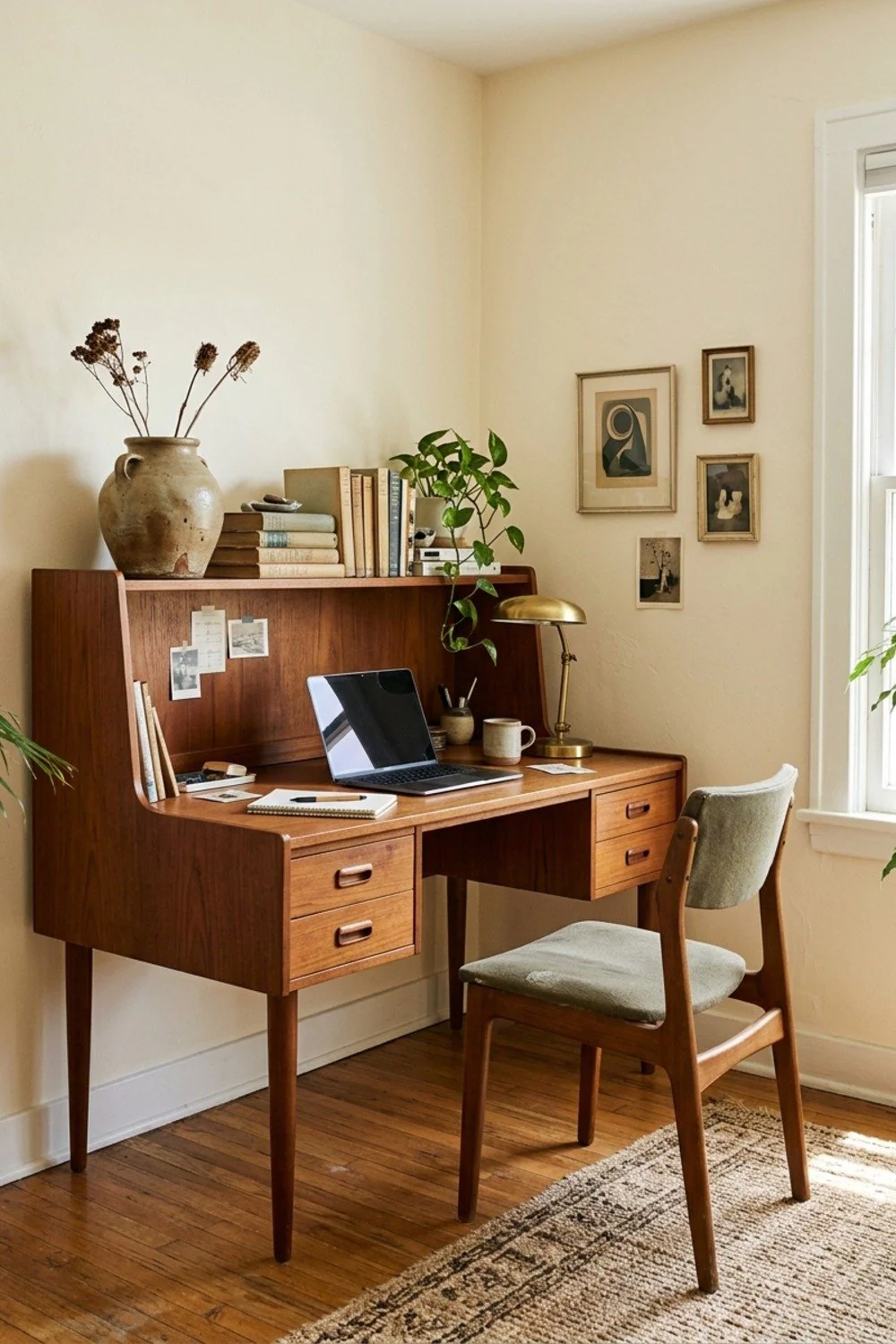
A single stoneware vessel, 8 to 10 inches tall, in an off-white or oatmeal glaze, gives a bare desk its only point of interest. Thrift stores and estate sales often have them in the $4 to $8 range. Hand-thrown pieces from design shops cost 10 times that for a similar silhouette.
The common mistake is stacking three or four objects. Stick to one vessel, one plant stem or branch, and one notebook. It’s the same one-focal-point logic that works in backyard decoration, where a single lantern beats five.
Where to Splurge and Where to Save in a Minimalist Home Office
A minimalist home office has fewer objects, so each one gets scrutinized. That changes the spending math. Put money where your body or your eyes touch the thing daily, and stay cheap where it’s just a surface.
Worth paying more for:
- A monitor arm with a gas spring, since cheap ones sag within weeks.
- A mattress-grade chair cushion if used gear isn’t an option.
- Cable management that actually hides power strips (a $25 under-desk tray qualifies).
Fine to save on:
- The desktop surface, because oak veneer and butcher block look identical in photos.
- Paint, as mid-range lines now match premium coverage in two coats.
- Decor objects, which thrift stores supply endlessly.
Here’s the counterintuitive bit: the cheapest upgrade is usually the one people skip. Does a tangled power strip cancel out a $1,500 desk? Right, it does. Fixing cables with adhesive clips and a $12 cord sleeve changes the room more than a new lamp.
Spotting Quality at Any Price
Quality in a minimalist home office shows up in edges, weight, and finish consistency. With nothing to hide behind, flaws are loud. Use this quick check in store or at a secondhand pickup.
- Run a thumbnail along every edge. Chipped or peeling veneer means moisture has already gotten in.
- Push the piece sideways. A desk that wobbles on a showroom floor will wobble worse on carpet.
- Open every drawer fully. Metal runners should glide without grinding.
- Look at color under daylight, not store LEDs. Mismatched panels show up fast near a window.
Weight is a decent tell too. Particleboard with a thick veneer feels hollow and light when tapped, while a solid-core top has a dull, even thud. For secondhand, bring a tape measure and a small level. A slight slope in a flat surface is nearly impossible to fix later.
Your Minimalist Home Office, Started Right
The cheapest route to a minimalist home office that looks costly is simple: pick one wall color, one wood tone, one metal finish, and spend only on what you touch. The rest can come from brackets, sample pots, and thrift shelves.
Save or pin this list so it’s handy when shopping begins. For a first move, measure your nook’s width and depth, then see whether a 48-inch wall desk fits before buying anything else.
Frequently Asked Questions
How much does a minimalist home office cost to set up?
A convincing version runs roughly $350 to $700 using a countertop desk, a used ergonomic chair, a clamp lamp, and paint. Pricing climbs fast with new designer chairs, so used gear is the biggest saver.
Can a minimalist home office work in a rental?
Yes, with a few adjustments. Use freestanding desks instead of wall brackets, peel-and-stick cord clips, and removable wall hooks, and test paint swatches with your landlord first. A large framed print leaned on the floor adds a focal point without a single hole.
What colors make a small desk area feel bigger?
Warm whites and light greiges with a reflectance value near 55 to 60 bounce daylight best. Keep the desk, chair, and wall within the same two or three shades so the eye doesn’t chop the room into pieces.
Is a standing desk worth it in a minimal setup?
Only if the frame is slim and the top is a matching tone. Chunky frames break up the clean look. A basic electric frame with an oak top works, but expect to pay $250 or more for something that doesn’t wobble at standing height.