
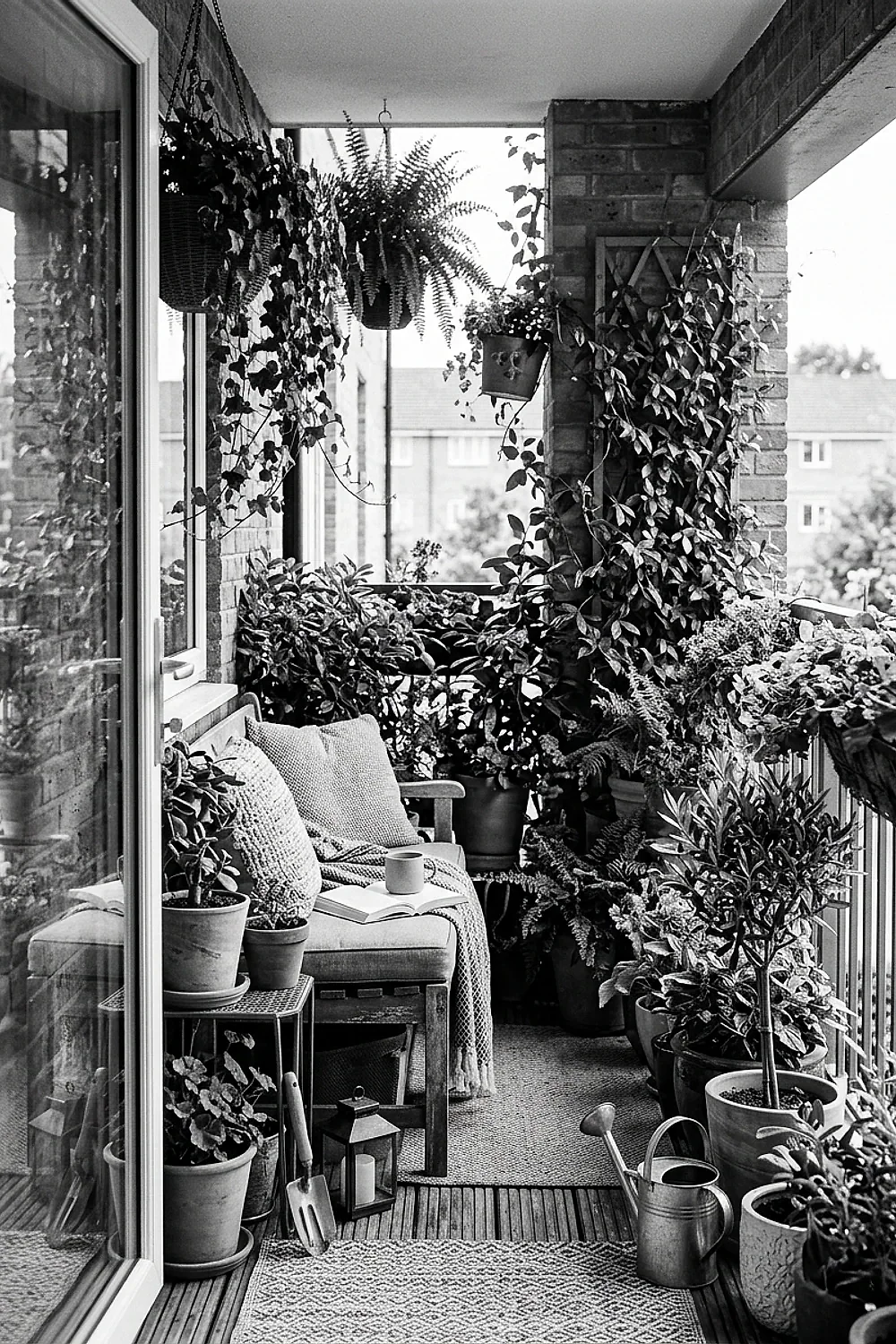
7 Small Balcony Garden Ideas That Transform Your Space
Can a balcony the size of a bath mat really hold a garden? It can, and a small balcony garden works best when it’s planned like a tiny outdoor room instead of a shelf of leftover pots.
Below are seven defining elements, then a method for combining them and a list of the mistakes that wreck the result. Expect measurements, material trade-offs and a few firm opinions.
Understanding the small balcony garden look
Small balcony garden design is container gardening with a decorator’s discipline. Its roots sit in places where land ran out first: the tsubo-niwa courtyard gardens of Kyoto townhouses, often only a few square meters, and the iron-railed balconies of Haussmann-era Paris, where window boxes of geraniums became a street habit.
Three traits define it. Plants grow in layers rather than spreading across the floor, the foliage palette stays tight, and every piece of furniture is sized down to match the footprint.
The seven elements below build on those traits, roughly in the order you’d plan them.
1. Vertical layers that start at the railing

A 36-inch planter box hooked over the inside of the railing holds three or four trailing plants and frees about 6 square feet of floor. That floor area matters more than the plants themselves on a balcony under 40 square feet, because every pot on the ground is a pot you walk around.
Hang boxes on the inside face only. Water that drips onto a neighbor’s patio is a fast way to lose goodwill, and many leases ban exterior-mounted planters outright.
Here’s a counterintuitive bit: one 20-inch pot needs watering less often than five 6-inch pots, since more soil buffers heat and drought. So go tall and big, not small and many.
2. A floor plan with one clear walking line
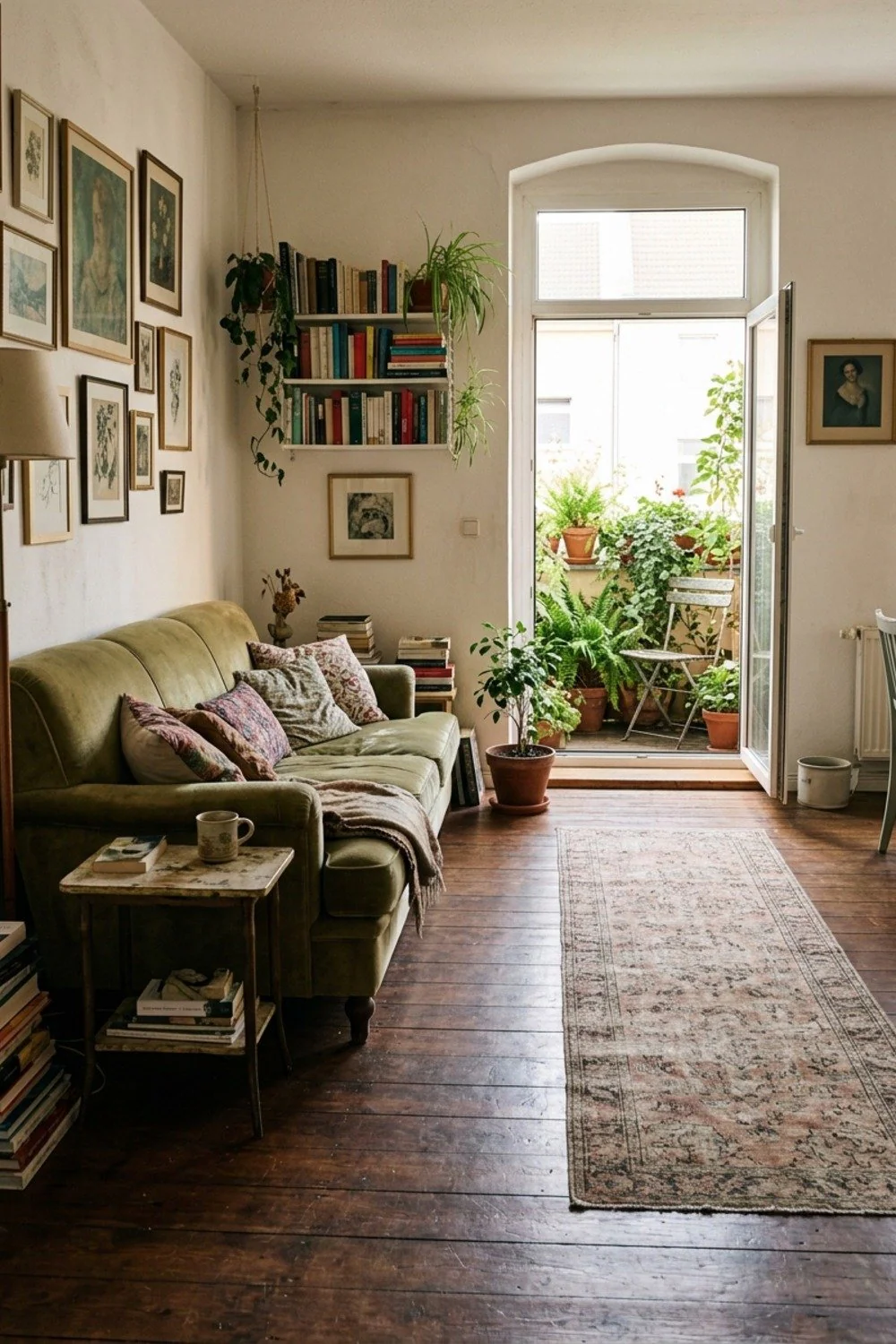
Mark a 24-inch path from the door to the railing with painter’s tape before a single pot is placed. Anything that crosses that line moves to a wall, a corner or a shelf. The balcony then reads as intentional, and nobody clips a fern with a hip while carrying a coffee.
This suits narrow balconies, the 4-foot-deep kind found on many apartment blocks, where the temptation is to line everything up like a hallway. Push the largest pots into the two far corners instead.
Check the door swing too. A pot that blocks a sliding track by even 2 inches will annoy you daily.
3. String lights at the right color temperature
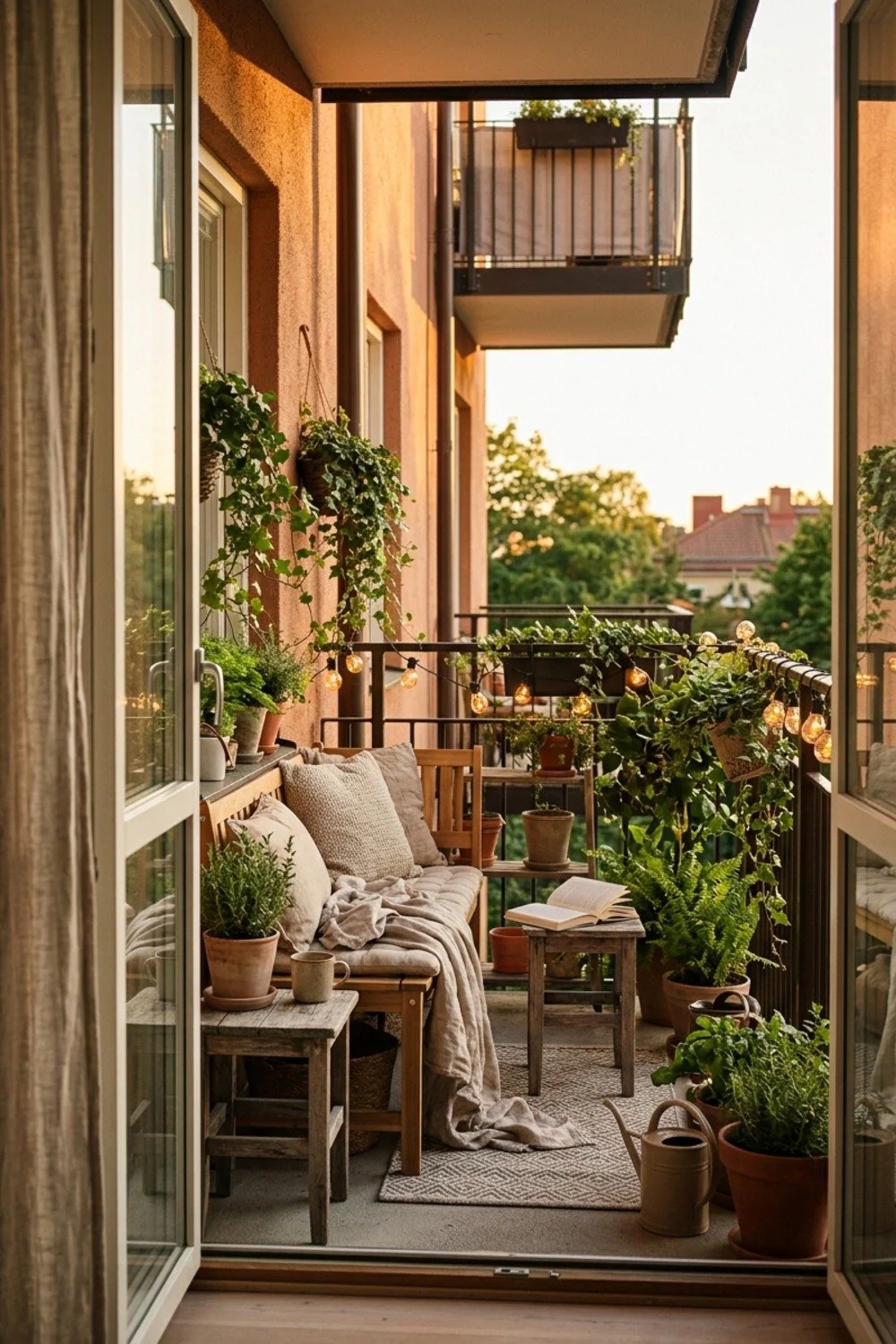
Light changes everything after 4pm, when low sun flattens into gold and then drops away. A 48-foot strand of commercial-grade S14 bulbs runs around $35, and the warm 2200K to 2700K range keeps foliage looking green rather than gray.
Cool white strands are the usual mistake. They make a green corner feel like a parking structure.
Hang the strand in a shallow zigzag at about 7 feet, clipped to hooks that suit the railing or ceiling, and plug it into a timer. Solar strands work for a rental with no outlet, though they dim noticeably by midwinter.
4. Seating sized for two elbows
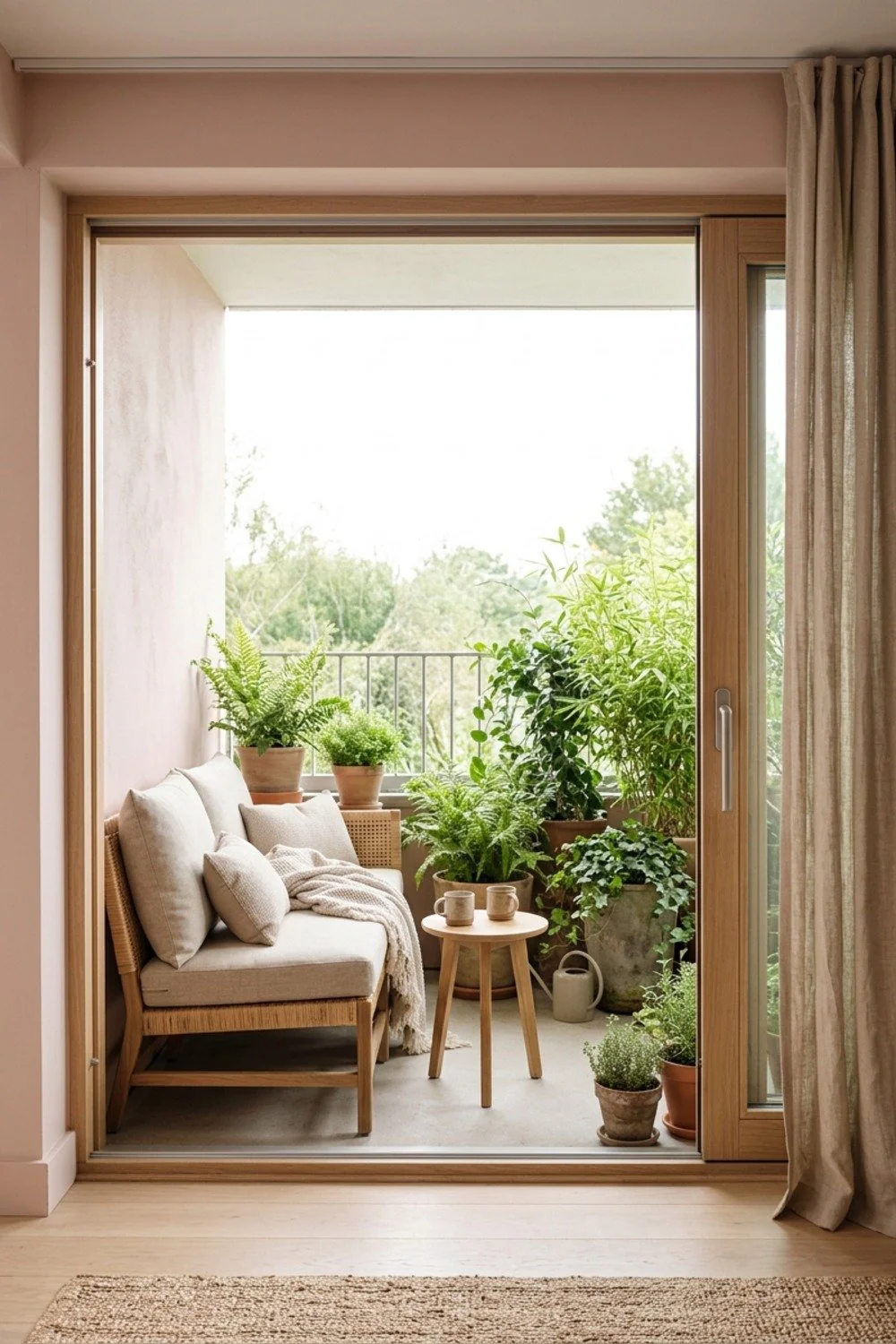
A folding bistro chair that’s 17 to 20 inches deep, paired with a 24-inch round table, fits balconies where a standard patio set would block the door. Fold-flat pieces matter here because they let the floor clear for watering or a yoga mat.
Durability should drive the buying decision. Powder-coated aluminum frames don’t rust, and cushions in solution-dyed acrylic fabric resist fading and mildew far better than cheap polyester, which turns chalky within a single summer.
Households with a dog or a toddler should skip woven wicker. Claws and small hands unravel it quickly.
5. A storage bench that doubles as a potting station
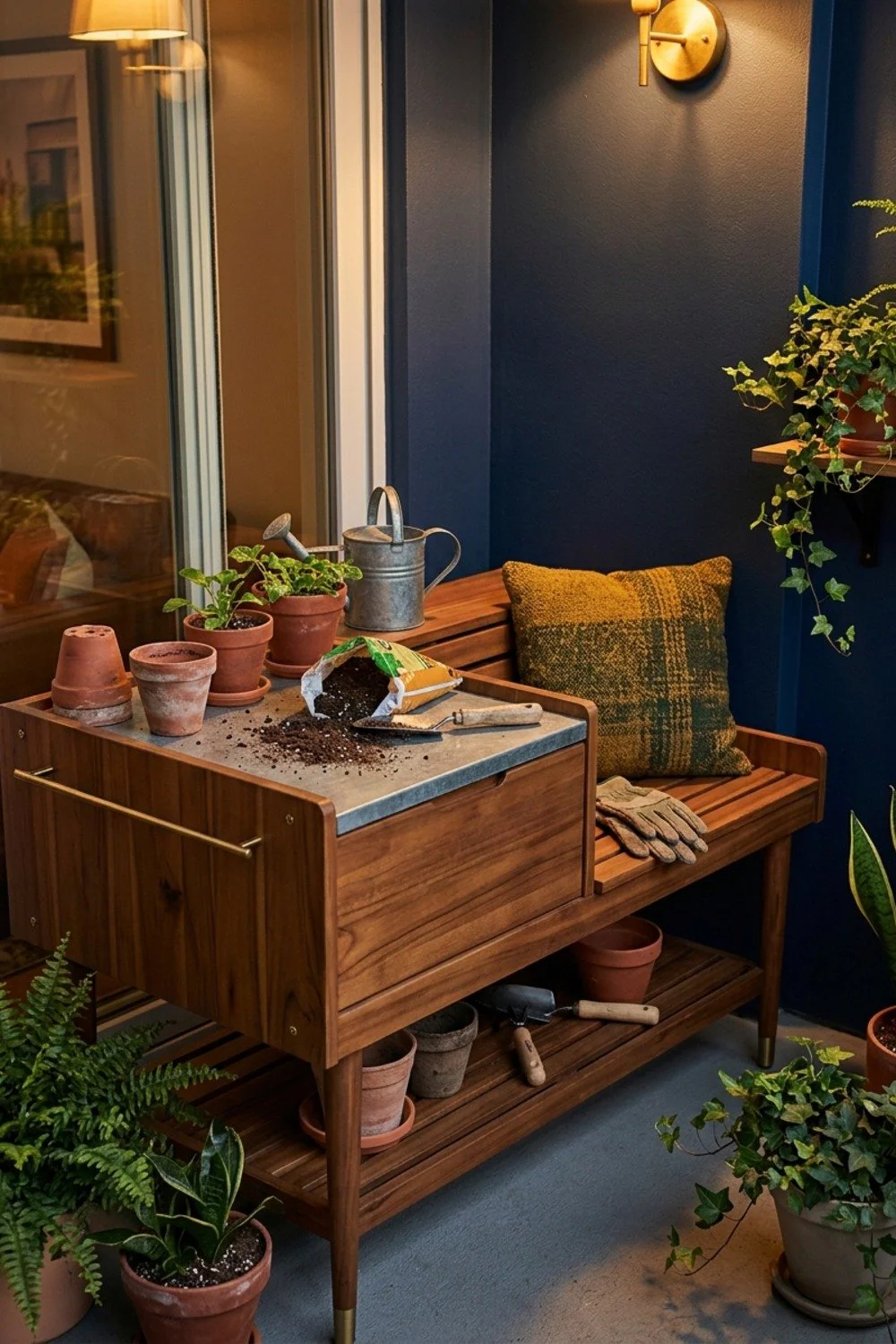
A bench around 36 inches wide and 16 inches deep swallows a 20-pound bag of potting mix, a watering can, pruners and the seat cushions. Without it, those items pile up against the wall and the whole balcony looks like a supply closet.
This is the best fit for renters without an outdoor closet. Choose resin or teak-style slatted wood with a gap in the lid, since a sealed lid traps moisture and grows mildew on everything inside.
Make sure it’s low enough that the railing stays visible from the seat, or the bench will feel like a wall.
6. Planters chosen for how they age

An 18-inch fiberglass planter costs about $60 to $90, weighs a fraction of ceramic, and shrugs off frost. That’s a real advantage on upper floors, where a pot of wet soil can pass 50 pounds before the plant is even added.
Terracotta is the obvious pick for its color and texture… actually, no, scratch that. Terracotta is the obvious pick only in mild climates. It absorbs water and flakes or cracks after repeated freezes, so in cold regions it either comes inside for winter or gets replaced.
Glazed ceramic looks richest but is the heaviest and least forgiving if knocked over by wind. Match two materials at most, so the planters read as a set.
7. A foliage palette limited to three tones
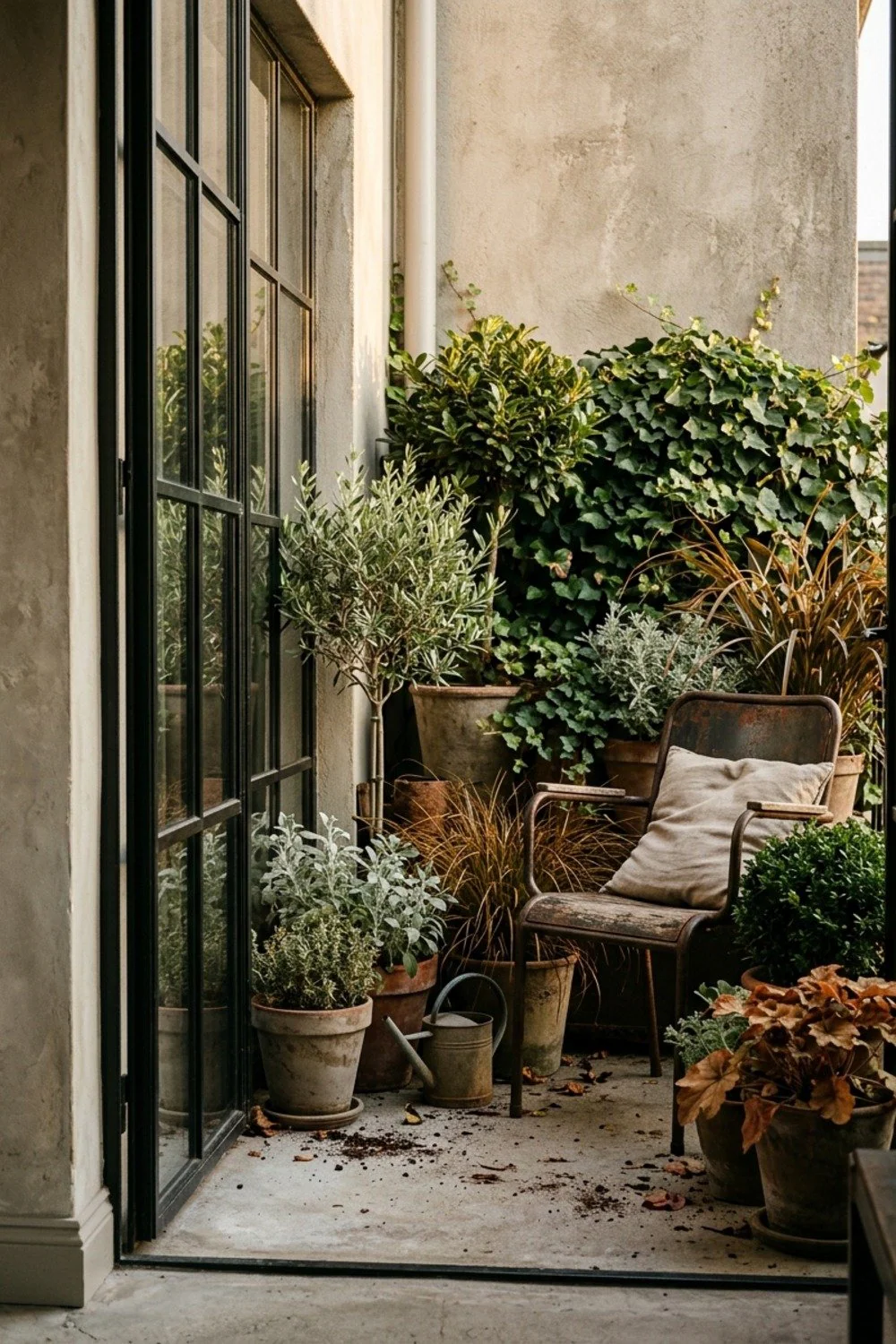
Silver-green rosemary, deep green boxwood and one burgundy accent such as coleus will look composed from the street, where a dozen flower colors would blur into noise. Foliage also lasts longer than blooms, which is why it carries the design from May through October.
North-facing balconies with under 4 hours of direct sun should lean on hostas, ferns and ivy rather than forcing sun-lovers to sulk. Sun-drenched ones suit lavender, thyme and ornamental grasses.
Pick planter colors from the building itself, such as the brick, the railing or the door, so the garden looks like part of the architecture.
How it all comes together
The small balcony garden comes together fastest when the order of decisions is right. Plants are the last purchase, not the first.
- Measure the floor and railing, then tape the 24-inch walking line and the seat footprint.
- Confirm the weight limit and lease rules before buying anything heavy.
- Choose one anchor: a tall planter, a bench or a bistro set. Everything else answers to it.
- Add rail boxes and one wall shelf for the vertical layers.
- Hang the lights, then fill the planters with the three-tone palette.
Look, a balcony under 5 by 8 feet can’t carry more than one large pot per corner plus the rail boxes. Hold the line there, and the rest of the layout stays calm.
Weigh each choice against how it ages. A matched set of three planters in the same glaze often beats six mismatched bargains, because repeating a shape quiets the eye and gives a small balcony a spine.
Things that elevate the room
A small balcony garden fails in predictable ways, and most of them come from treating the balcony like a storage shed with plants.
- Overloading one corner. Wet soil is heavy, and clustering three large pots in one spot stresses the slab and the railing.
- Buying many tiny pots. They dry out in a single afternoon in August and look fussy.
- Using indoor cushions outdoors. Rain or morning dew ruins them within weeks.
- Ignoring drainage. Saucers without a gap overflow onto the floor, stain concrete and sometimes the unit below.
- Choosing cool white lights. They wash out the green.
The common thread is durability. Anything that has to survive wind, sun and daily use should be picked for how it behaves in year three, not how it photographs on day one.
Keeping a small balcony garden alive through the seasons
During an October cold snap, tender herbs like basil and potted citrus should come inside or sit against the warmest wall, since a container’s soil freezes much faster than the ground does. Wrapping pots in burlap or bubble wrap buys a few degrees.
Summer brings the opposite problem. Between 2 and 5pm, a south-facing balcony can bake, so a 6-foot market umbrella or a slatted screen saves the plants and the person reading underneath it.
A quick weekly refresh keeps things tidy. Deadhead spent blooms, rotate each pot a quarter turn so growth stays even, and sweep the floor before it turns into a leaf mat. Twice a year, lift planters and check the slab for stains.
Bringing it home
A small balcony garden rewards restraint more than budget: three foliage tones, a clear walking line, warm light and furniture that folds. Those four choices do most of the work, and the rest is watering.
Save or pin this list so it’s handy when the weather turns. Then measure the balcony’s floor and railing first, since that single set of numbers decides which of these ideas to try first.
Frequently Asked Questions
How much does a small balcony garden cost to set up?
A modest starter setup with two large planters, a rail box, a bistro set and warm lights typically lands between $250 and $500. Spreading the purchases over a season, anchor pieces first, keeps it manageable.
Can a small balcony garden work in a rental?
Yes, as long as nothing is drilled or mounted outside the railing. Freestanding planters, over-the-rail boxes hung on the inside, and clip-on lights leave no marks, but read the lease for weight and planter rules first.
Which plants survive wind on a high balcony?
Rosemary, lavender, ornamental grasses, sedum and juniper handle exposure well, while large-leaved plants like bananas shred. Heavy, low planters also help, because tall light pots tip over in gusts.
How much weight can a balcony hold?
Many residential balconies are rated around 40 to 60 pounds per square foot, though the number varies by building and age. Ask the landlord or building manager, and spread heavy planters near the wall where the structure is strongest.